Vegetarian and Vegan India Travel: Where It's Easy, Where It's Not
40% of India is vegetarian. You will eat better here than anywhere. But there are regional traps to know.
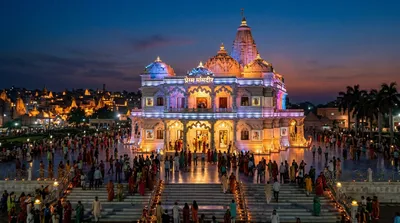
The Short Version
India is the vegetarian capital of the world. Around 40% of the population — roughly 560 million people — are vegetarian. There are entire cities where meat is banned. Restaurant menus are majority vegetarian. "Pure Veg" is a badge of honor, not a limitation.
If you're a vegetarian traveler, India is not a challenge. It's a reward.
If you're vegan, it's more complicated. But still very doable with the right vocabulary.
The Easy Cities: 100% Vegetarian
These cities effectively ban meat within city limits due to religious significance:
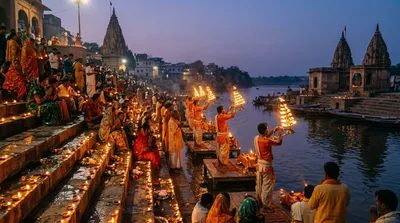
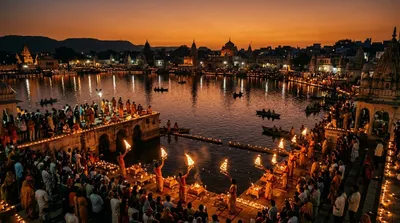
- ●Haridwar — On the Ganges. One of the seven holiest Hindu cities. Meat, alcohol, and eggs are banned. Every restaurant is vegetarian by default.
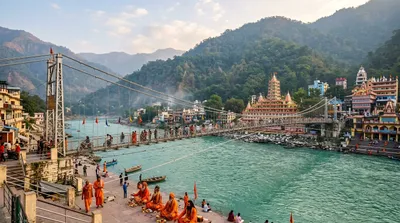
- ●Rishikesh — Yoga capital. Same rules as Haridwar. Everything is vegetarian. Many restaurants are also vegan-friendly due to the international yoga crowd.
- ●Pushkar — Sacred lake town in Rajasthan. Vegetarian only. Also bans eggs in most establishments.
- ●Vrindavan — Krishna's birthplace in Uttar Pradesh. Strictly vegetarian. The food here — especially the sweets — is extraordinary.
- ●Nathdwara — Rajasthan temple town. Pure vegetarian. Famous for its sweets and snacks.
In these cities, you don't need to ask, check, or worry. Everything on every menu is vegetarian. Just sit down and eat.
The Easy Regions: Majority Vegetarian Culture
Gujarat
The most vegetarian state in India. Roughly 60-65% of the population is vegetarian. Even non-vegetarian restaurants are a minority. Gujarati thali — a rotating set of small dishes with roti, rice, dal, sabzi, pickles, and sweets — is one of the greatest meals in Indian cuisine. Expect to eat extremely well for ₹150-400.
Rajasthan
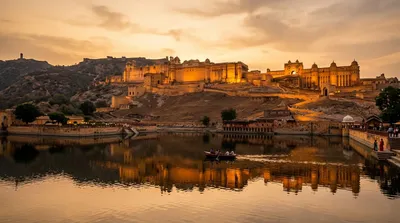
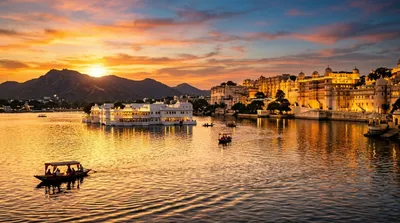
Majority vegetarian, especially in smaller towns. Dal-bati-churma (lentils with baked wheat balls and sweet crumble) is the signature dish and entirely plant-based. The Marwari business community is strictly vegetarian, so restaurants in Jaipur, Udaipur, Jodhpur, and Jaisalmer have extensive vegetarian menus.
Parts of Uttar Pradesh and Madhya Pradesh
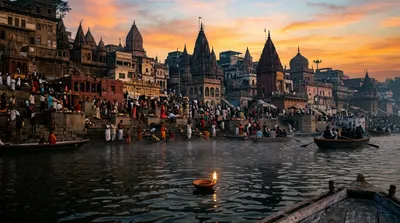
The temple belt — Varanasi, Mathura, Orchha — leans heavily vegetarian. Street food in Varanasi is almost entirely vegetarian: kachori, chaat, lassi, sweets.
Where It Gets Harder
Northeast India
Meghalaya, Nagaland, Mizoram, and Manipur have meat-heavy food cultures. Pork, smoked meats, fermented fish, and dried beef are staples. Vegetarian options exist but are limited and often afterthoughts — plain rice, dal, boiled vegetables.
If you're vegetarian and heading northeast, carry snacks and identify restaurants in advance. Hotels can usually arrange vegetarian meals with notice.
Kashmir
Wazwan — the traditional Kashmiri feast — is built around meat. Rogan josh, yakhni, gushtaba are all lamb or mutton. Vegetarian Kashmiri food exists (dum aloo, haak saag, nadru — lotus stem) but you'll need to specifically seek it out.
Coastal Areas
Goa, Kerala, Karnataka coast, Bengal — fish is everywhere. "Vegetarian" in coastal India sometimes means "no meat but fish is fine." Always specify: "No fish, no egg, pure vegetarian."
Punjab
Surprising addition: while Punjab has incredible vegetarian food (chole bhature, sarson ka saag, dal makhani), it's also a chicken-heavy food culture. Restaurants will have both. Just check the menu section.
Vegan in India: The Real Talk
India doesn't really "get" veganism as a Western concept — yet. But here's why it's still more doable than most countries:
The Problem: Dairy Is Everywhere
- ●Ghee (clarified butter) is used in almost all North Indian cooking. It's considered sacred and healthy.
- ●Paneer (cottage cheese) is the default "vegetarian protein" in North India.
- ●Dahi/curd (yogurt) accompanies most meals.
- ●Milk tea (chai) is the national drink. It's milk-based by default.
The Solution: South Indian Food
South Indian cuisine is your best friend as a vegan:
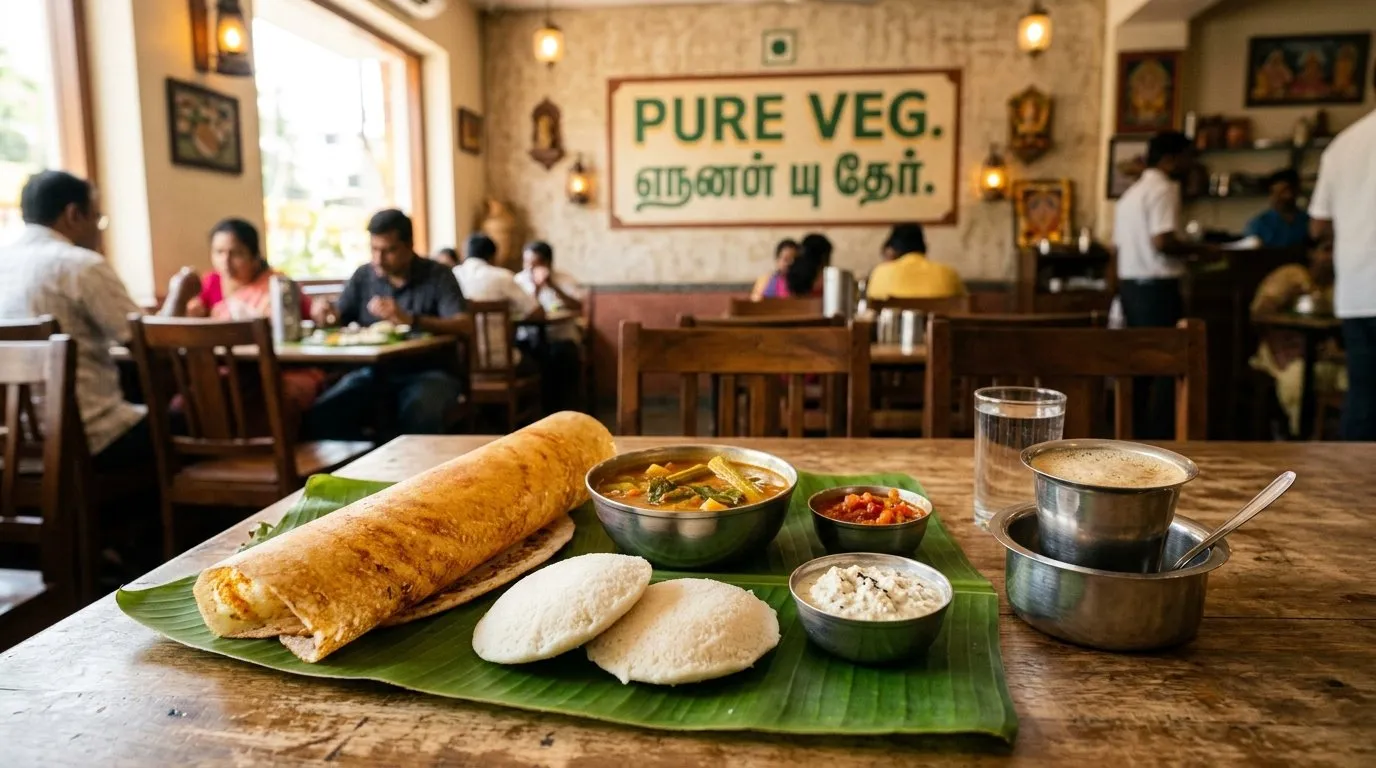
- ●Dosa — rice and lentil crepe. Naturally vegan.
- ●Idli — steamed rice cakes. Naturally vegan.
- ●Sambar — lentil and vegetable stew. Naturally vegan.
- ●Rasam — spiced tomato-tamarind soup. Naturally vegan.
- ●Coconut chutney — naturally vegan.
South Indian restaurants (called "Udupi" restaurants in many cities) are everywhere in India, not just the south. Look for them. They're your vegan safe zone.
The Phrases You Need
Learn these. They work.
| English | Hindi | Transliteration |
|---|---|---|
| Pure vegetarian | शुद्ध शाकाहारी | Shuddh shakahari |
| Without butter/ghee | बिना घी | Bina ghee |
| Without yogurt | बिना दही | Bina dahi |
| Without milk | बिना दूध | Bina doodh |
| Without cream | बिना मलाई | Bina malai |
| No egg | अंडा नहीं | Anda nahin |
Most restaurants will accommodate if you're clear. Say: "Bina ghee, bina dahi, bina doodh." They understand. They might look confused about *why* — but they'll do it.
Vegan-Adaptable Dishes
- ●Dal tadka — ask for oil instead of ghee in the tempering
- ●Rajasthani dal-bati — naturally vegan if bati is made with oil (ask)
- ●Aloo gobi / baingan bharta — often cooked in oil, but verify no cream
- ●Chana masala / chole — usually vegan, sometimes finished with cream
- ●Roti/chapati — usually vegan (flour + water). Naan sometimes has yogurt/butter.
The Green Dot / Red Dot System
India has a mandatory food labeling law that makes life easier:
- ●Green dot = Vegetarian (no meat, no fish, no egg)
- ●Red dot = Non-vegetarian (contains meat, fish, or egg)
This appears on ALL packaged food sold in India. Many restaurants also use this system on their menus and signage. It's legally enforced.
Note: Green dot means vegetarian, not vegan. Dairy and honey are green-dot approved.
Best Vegetarian Restaurants by City
Jaipur
- ●Lakshmi Mishthan Bhandar (LMB) — Johari Bazaar. Legendary thali. Operating since 1727.
- ●Rawat Mishthan Bhandar — Famous for pyaaz kachori (onion-stuffed fried bread).
Varanasi
- ●Kashi Chat Bhandar — The chaat here is a religious experience.
- ●Blue Lassi — Thick, fresh lassi in clay cups. Not vegan, but iconic.
Udaipur
- ●Natraj Dining Hall — Unlimited Rajasthani thali. Consistently excellent.
- ●Savage Garden — Rooftop with lake views. Good vegan options.
Haridwar
- ●Mohan Ji Puri Wale — The best puri-sabzi in town. ₹60 for a full plate.
- ●Hoshiyar Puri — Another legendary name. Both have been operating for decades.
Delhi
- ●Saravana Bhavan — South Indian chain. Extensive vegan-friendly menu.
- ●Sagar Ratna — Another South Indian chain. Reliable, clean, affordable.
The Bottom Line
India may be the only country in the world where being vegetarian is easier than not being vegetarian. In most of the country, vegetarian food is the default, not the exception. The variety is staggering — you could eat vegetarian in India for a year and never repeat a dish.
For vegans: it requires more effort, but India's plant-based food traditions run deeper than any Western vegan trend. South Indian cuisine, Rajasthani desert food, and Gujarati thalis were vegan before veganism had a name.
Just learn three phrases: bina ghee, bina dahi, bina doodh. You'll be fine.
Monthly Scores
| Destination | Jan | Feb | Mar | Apr | May | Jun | Jul | Aug | Sep | Oct | Nov | Dec |
|---|---|---|---|---|---|---|---|---|---|---|---|---|
| Dharamshala | 6.0 | 6.0 | 10.0 | 10.0 | 8.0 | 6.0 | 4.0 | 4.0 | 8.0 | 10.0 | 8.0 | 6.0 |
| Haridwar | 6.0 | 8.0 | 8.0 | 6.0 | 4.0 | 4.0 | 4.0 | 4.0 | 6.0 | 10.0 | 10.0 | 6.0 |
| Jaipur | 10.0 | 10.0 | 8.0 | 6.0 | 2.0 | 2.0 | 4.0 | 4.0 | 6.0 | 10.0 | 10.0 | 10.0 |
| Pushkar | 10.0 | 10.0 | 8.0 | 4.0 | 2.0 | 2.0 | 4.0 | 4.0 | 6.0 | 10.0 | 10.0 | 10.0 |
| Rishikesh | 6.0 | 8.0 | 10.0 | 8.0 | 6.0 | 4.0 | 2.0 | 2.0 | 8.0 | 10.0 | 10.0 | 6.0 |
| Udaipur | 10.0 | 10.0 | 8.0 | 6.0 | 2.0 | 2.0 | 6.0 | 6.0 | 8.0 | 10.0 | 10.0 | 10.0 |
| Varanasi | 8.0 | 8.0 | 8.0 | 6.0 | 2.0 | 2.0 | 4.0 | 4.0 | 6.0 | 10.0 | 10.0 | 10.0 |
| Vrindavan | 8.0 | 8.0 | 10.0 | 4.0 | 2.0 | 2.0 | 4.0 | 4.0 | 6.0 | 10.0 | 10.0 | 8.0 |
The Window · Every Sunday
Liked this? Get one every Sunday.
Best score of the week, one honest skip, road updates. Four minutes. No spam.
More in
Bringing American-Born Kids to India: An NRI Family's Guide
Age-by-age strategies, health prep, food tactics, and the 5 kid-tested destinations that actually work — from an Indian-origin family in Canberra who makes this trip regularly.
8 min read
Two Weeks in India: The Family-Tested Itinerary That Doesn't Suck
Most two-week India itineraries pack in too many cities and not enough breathing room. This family-tested 14-day route covers Delhi, Agra, Jaipur, Amritsar, Dharamshala, and Varanasi with real costs at three budget levels.
12 min read
India for LGBTQ Travelers: An Honest 2026 Assessment
Section 377 was struck down in 2018. Same-sex activity is legal. Same-sex marriage is not. Here is the destination-by-destination reality for LGBTQ travelers in India — honest, no sugarcoating.
8 min read- Access
- NH154 well-maintained.
- Emergency
- 108 · Zonal Hospital Dharamshala (01892-224473)
- Stay
- ₹500–8,000/night · 200 options
Go with confidence.