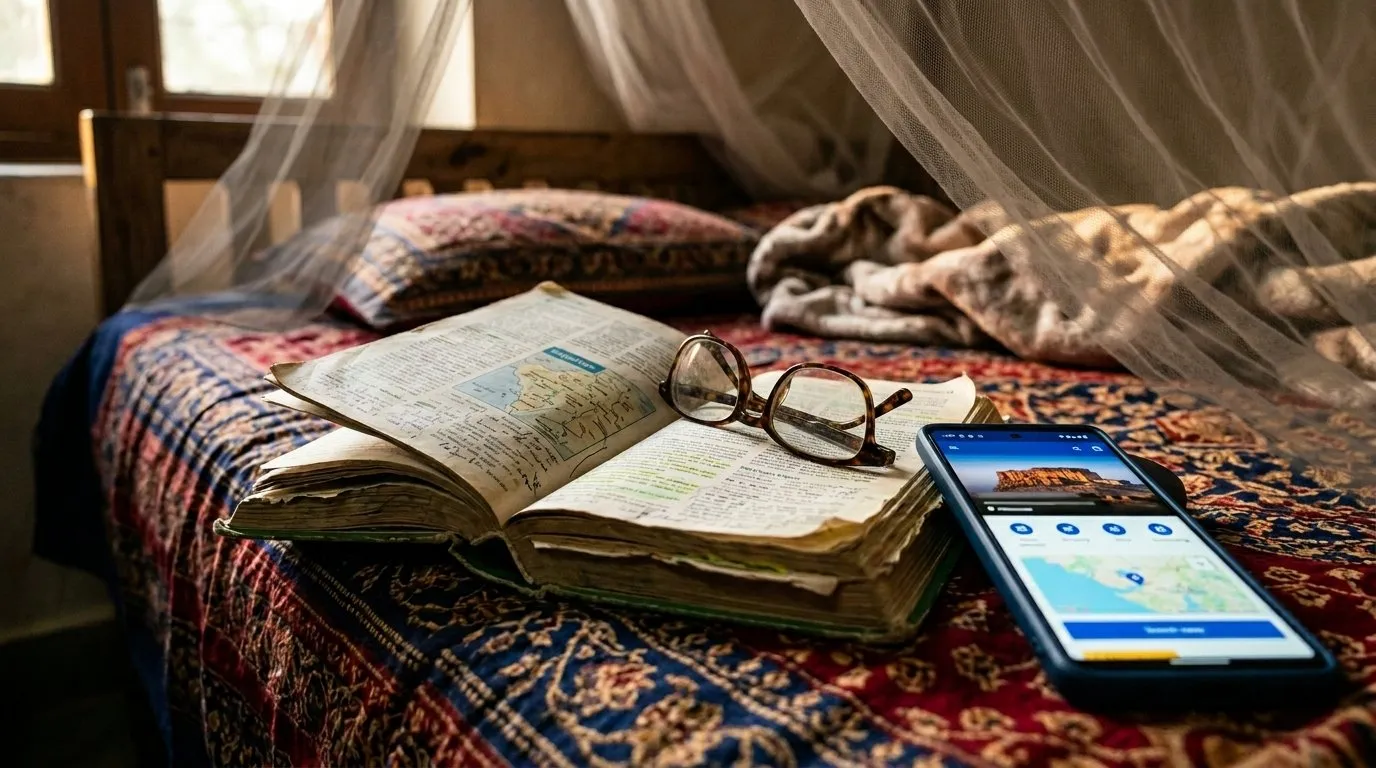
5 Things Lonely Planet Got Wrong About India in 2024
A 50-year-old guidebook company covering 200 countries vs. one platform covering 215 destinations in North India. We chose depth.
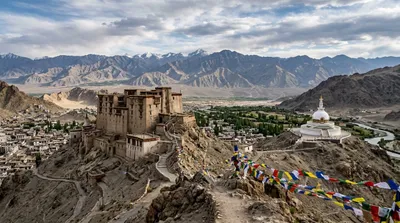
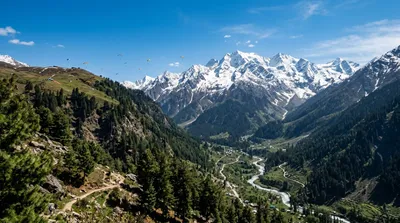
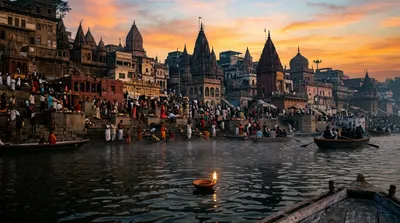
# 5 Things Lonely Planet Got Wrong About India in 2024
I own every edition of Lonely Planet India going back to 2010. They are good books. They were great books. But Lonely Planet has a structural problem: they try to cover 200 countries with the same depth, and that is not possible.
India alone has 28 states, 8 union territories, 22 official languages, and climatic zones ranging from tropical beach to frozen desert. You cannot cover this in 1,200 pages updated every 3-4 years and call it a guide. You can call it a starting point.
Here are five specific things Lonely Planet gets wrong — not because their writers are bad, but because their model cannot handle what India requires.
1. "India Is Cheap"
This was true in 2015. It is increasingly wrong in 2024-2026.
Lonely Planet's budget recommendations are consistently 3-5 years stale. Their "budget" tier for Delhi accommodation suggests ₹800-1,200 per night. Find me a room in Delhi for ₹800 that does not involve shared bathrooms, no AC, and a location where you would not want to walk at night. In 2019, that budget was realistic. Post-COVID, Indian hotel prices have risen 40-80% in tourist areas.
Real numbers for 2026:
| Category | LP Says | Reality |
|---|---|---|
| Budget hotel (Delhi) | ₹800-1,200 | ₹1,800-3,000 |
| Mid-range hotel (Jaipur) | ₹2,000-4,000 | ₹4,000-8,000 |
| Heritage hotel (Rajasthan) | ₹4,000-8,000 | ₹8,000-18,000 |
| Meal at local restaurant | ₹150-300 | ₹200-500 |
| Domestic flight (one-way) | ₹2,000-3,000 | ₹3,000-6,000 |
India is still excellent value compared to Europe or the US. A day that costs ₹5,000 ($60) in India would cost $200 in France. But telling a backpacker they can travel India on $15/day — as some LP budget guides imply — is setting them up for a miserable trip or a budget blowout.
NakshIQ includes real-time daily cost estimates for every destination. Updated quarterly. When Jaipur hotel prices spike 3x during the Jaipur Literature Festival in January, our data reflects that. Lonely Planet's printed page cannot.
2. "Varanasi Is a Must-See" — Without Saying WHEN
Varanasi appears in every "Top 10 India Destinations" list Lonely Planet publishes. Fair enough — it is one of the most intense places on earth. But LP rates it the same way year-round, which is either lazy or dishonest.
Varanasi in May:
- ●Temperature: 42-46°C (108-115°F)
- ●Power cuts: 4-6 hours daily in some areas
- ●Ganga river: at its lowest, exposing mudflats that smell
- ●Tourist infrastructure: many hotels and restaurants close or run at minimum
- ●Overall experience: punishing
Varanasi in October-November:
- ●Temperature: 25-32°C (77-90°F)
- ●Dev Deepawali festival: millions of diyas (oil lamps) on the ghats
- ●Ganga river: full, flowing, clean(er)
- ●Tourist infrastructure: fully operational, boat rides easy to arrange
- ●Overall experience: transcendent
These are two entirely different destinations sharing the same name and GPS coordinates. Lonely Planet gives Varanasi one rating. NakshIQ gives it 12 — one for each month. In May, Varanasi scores 1 out of 5 on NakshIQ. In October, it scores 5 out of 5.
This is not a minor distinction. A traveler who visits Varanasi in May because LP said it is a must-see will have a bad time and blame India for it. The problem was not India. The problem was a guidebook that does not account for seasons.
3. Route Suggestions Ignore Road Conditions
Lonely Planet describes the Manali-Leh Highway as a "great drive" and one of "the world's most spectacular road trips." Both statements are true. Neither statement is complete.
What LP does not adequately communicate:
- ●The highway is open only from June to September. Sometimes late June. Sometimes it closes for days in August due to landslides. Tourists who plan a September trip based on LP's generic recommendation arrive to find the road closed by early snowfall.
- ●There is no fuel for 365 km between Tandi and Karu. You must carry extra fuel. Many rental bikes and cars are not equipped for this. LP mentions this in passing. It should be in bold, underlined, repeated.
- ●Altitude sickness is real and dangerous. The highway crosses four passes above 4,000 meters, including Tanglang La at 5,328 meters. Acute Mountain Sickness (AMS) hits 30-40% of travelers who ascend too quickly. Symptoms range from headache and nausea to life-threatening pulmonary edema. LP recommends "acclimatization" without specifying that you need minimum 2 days in Manali (2,050m) and 2 days in Leh (3,500m) before attempting high passes.
- ●The road itself is not a road in many sections. Between Sarchu and Pang, you are driving on a track that would be condemned in any developed country. River crossings, rock falls, and stretches where the "road" is a suggestion drawn in gravel. This is part of the adventure — but it is information a traveler needs to make an informed decision.
NakshIQ has pass opening dates for every major mountain pass in North India. We have fuel stop locations with distance calculations. We have AMS risk ratings by altitude and recommended acclimatization schedules. This is the kind of granular data that saves trips — and occasionally saves lives.
4. Safety Information Is Written by Lawyers, Not Travelers
Lonely Planet's safety advice reads like it was reviewed by a legal team. Which it was. Because they are a global publisher and they cannot afford to be specific.
LP says: "Exercise caution in isolated areas after dark."
What this actually means, and what a honest guide would say:
- ●"Varanasi ghats after 11 PM are sketchy for solo women. The cremation ghat area attracts drunks and touts after midnight."
- ●"Kasol in the Parvati Valley has a significant drug problem. Charas (hashish) is sold openly. The crowd after dark is different from the daytime trekking crowd. Several tourists have gone missing in the valley over the past decade."
- ●"Delhi's Paharganj area near New Delhi Railway Station is the most common area for tourist scams. The touts know every flight arrival time. They will tell you your hotel is closed, your train is cancelled, or that they are police officers. None of it is true."
LP cannot say these things because they would get complaints from tourism boards, hotel associations, and possibly lawyers. NakshIQ can say these things because we are not trying to be diplomatic. We are trying to be useful.
Our safety scores are destination-specific and time-specific. We rate safety differently for solo women, families, and solo men — because the reality is different for each. We name specific areas to avoid at specific times. We do not use "exercise caution" because that phrase communicates nothing actionable.
5. No Monthly Scoring — The Fundamental Gap
This is the core problem, and everything else flows from it.
Lonely Planet gives each destination one composite rating. One description. One "best time to visit" range. India does not work that way.
Consider Manali:
- ●January-February: Snowfall, Solang Valley skiing, romantic winter. Score: 4/5 (if you want snow)
- ●March-April: Spring bloom, moderate temperatures, apple blossoms. Score: 5/5
- ●May-June: Peak tourist season, overcrowded, traffic jams on Mall Road. Score: 2/5
- ●July-August: Monsoon. Landslides close roads. Rohtang Pass closed. Score: 1/5
- ●September: Monsoon receding, few tourists, green valleys. Score: 4/5
- ●October-November: Autumn colors, clear skies, perfect trekking weather. Score: 5/5
- ●December: Early winter, light snow, festive atmosphere. Score: 3/5
LP gives Manali a single "best time: May to June and September to October" recommendation. They rate May-June as best time despite it being the most overcrowded and overpriced month. They do this because May-June has the best weather on paper. But weather is only one variable. Crowd density, pricing, road conditions, and local festival calendars matter equally.
NakshIQ gives every destination 12 monthly scores factoring in:
- ●Weather and temperature
- ●Crowd levels
- ●Price index
- ●Road and transport conditions
- ●Festival and event calendar
- ●Safety conditions
- ●Air quality (increasingly critical — Delhi in November scores 1/5 for air quality alone)
A destination rated once a year is decoration. A destination rated 12 times a year is intelligence.
That is the difference between a guidebook and a travel intelligence platform.
What We Are Not Saying
We are not saying Lonely Planet is bad. We are saying Lonely Planet is a 50-year-old guidebook company trying to cover 200 countries. NakshIQ covers 229 destinations in North India. That is the trade-off: breadth vs depth. They chose breadth. We chose depth.
If you are backpacking through 6 countries in Asia, buy the Lonely Planet. It will give you enough to get started in each country.
If you are spending 2-3 weeks specifically in India and you want to know which week in which month to visit which destination — and what it will actually cost, not what it cost in 2022 — that is what NakshIQ is built for.
We have 229 destinations with monthly scoring, real-time pricing, and safety data that says what it means. We do not have coverage of Thailand.
That is the trade-off. And we think, for India specifically, it is the right one.
The Meta-Point
Travel guidebooks were designed for a world without smartphones. You bought one book and it was your entire information source for a country. That model made sense in 1975. It made sense in 2005.
In 2026, you have Google Maps for navigation, Booking.com for hotels, and Instagram for inspiration. What you do not have — and what no existing platform provides well — is temporal intelligence. When to go where. What changes month to month. Which destination is perfect this week and terrible next week.
That is the gap we fill. Not a replacement for Lonely Planet. A different category entirely.
The guidebook tells you what exists. NakshIQ tells you when it is good.
Monthly Scores
| Destination | Jan | Feb | Mar | Apr | May | Jun | Jul | Aug | Sep | Oct | Nov | Dec |
|---|---|---|---|---|---|---|---|---|---|---|---|---|
| Delhi | 6.0 | 8.0 | 8.0 | 6.0 | 2.0 | 2.0 | 4.0 | 4.0 | 6.0 | 10.0 | 8.0 | 6.0 |
| Jaipur | 10.0 | 10.0 | 8.0 | 6.0 | 2.0 | 2.0 | 4.0 | 4.0 | 6.0 | 10.0 | 10.0 | 10.0 |
| Kasol | 4.0 | 4.0 | 8.0 | 10.0 | 10.0 | 6.0 | 4.0 | 4.0 | 10.0 | 10.0 | 6.0 | 4.0 |
| Leh | 2.0 | 2.0 | 2.0 | 4.0 | 6.0 | 10.0 | 10.0 | 8.0 | 10.0 | 6.0 | 2.0 | 2.0 |
| Manali | 8.0 | 8.0 | 6.0 | 8.0 | 6.0 | 6.0 | 2.0 | 2.0 | 8.0 | 10.0 | 8.0 | 8.0 |
| Varanasi | 8.0 | 8.0 | 8.0 | 6.0 | 2.0 | 2.0 | 4.0 | 4.0 | 6.0 | 10.0 | 10.0 | 10.0 |
The Window · Every Sunday
Liked this? Get one every Sunday.
Best score of the week, one honest skip, road updates. Four minutes. No spam.
More in
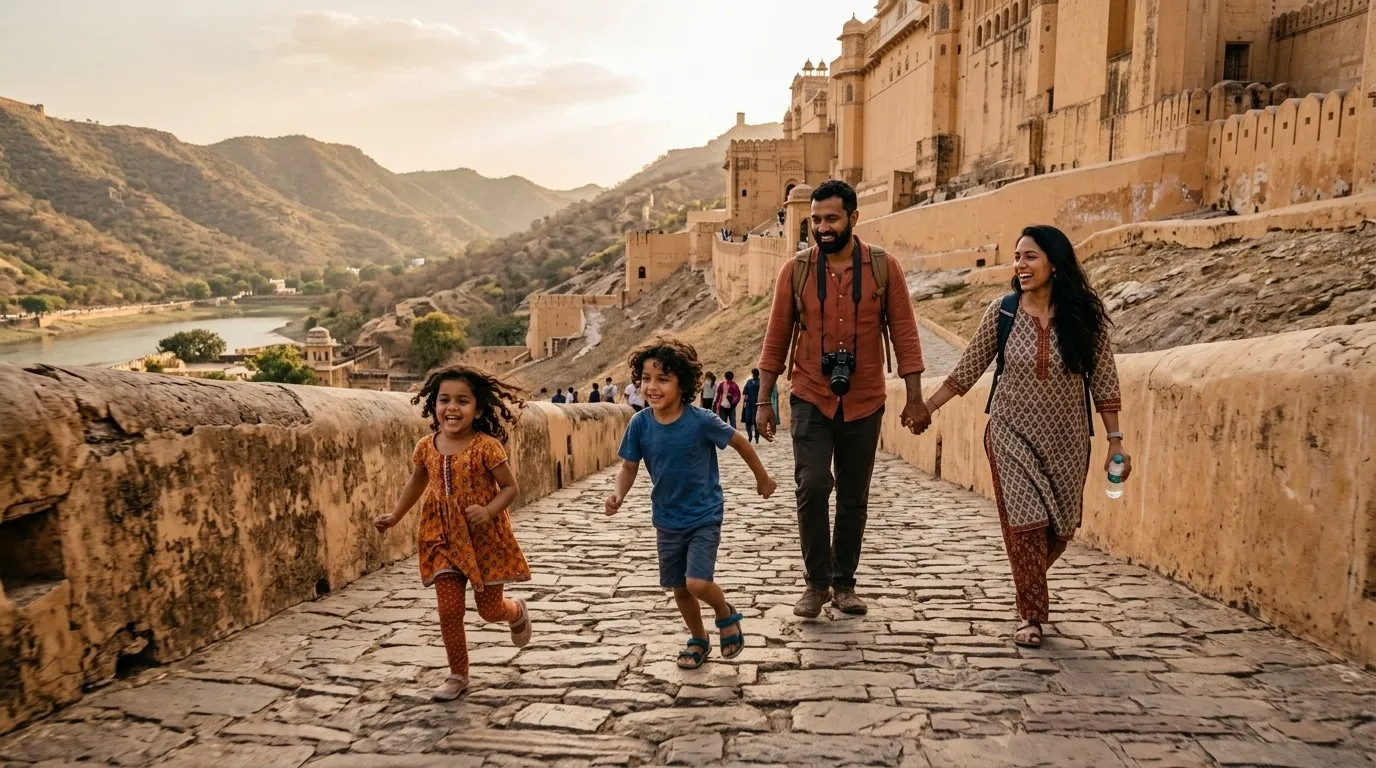
Bringing American-Born Kids to India: An NRI Family's Guide
Age-by-age strategies, health prep, food tactics, and the 5 kid-tested destinations that actually work — from an Indian-origin family in Canberra who makes this trip regularly.
8 min read
Two Weeks in India: The Family-Tested Itinerary That Doesn't Suck
Most two-week India itineraries pack in too many cities and not enough breathing room. This family-tested 14-day route covers Delhi, Agra, Jaipur, Amritsar, Dharamshala, and Varanasi with real costs at three budget levels.
12 min read
India for LGBTQ Travelers: An Honest 2026 Assessment
Section 377 was struck down in 2018. Same-sex activity is legal. Same-sex marriage is not. Here is the destination-by-destination reality for LGBTQ travelers in India — honest, no sugarcoating.
8 min read- Access
- Metro network excellent.
- Emergency
- 108 reliable · AIIMS, Safdarjung, Max, Fortis — world-class.
- Stay
- ₹500-50000/night · thousands options
Go with confidence.