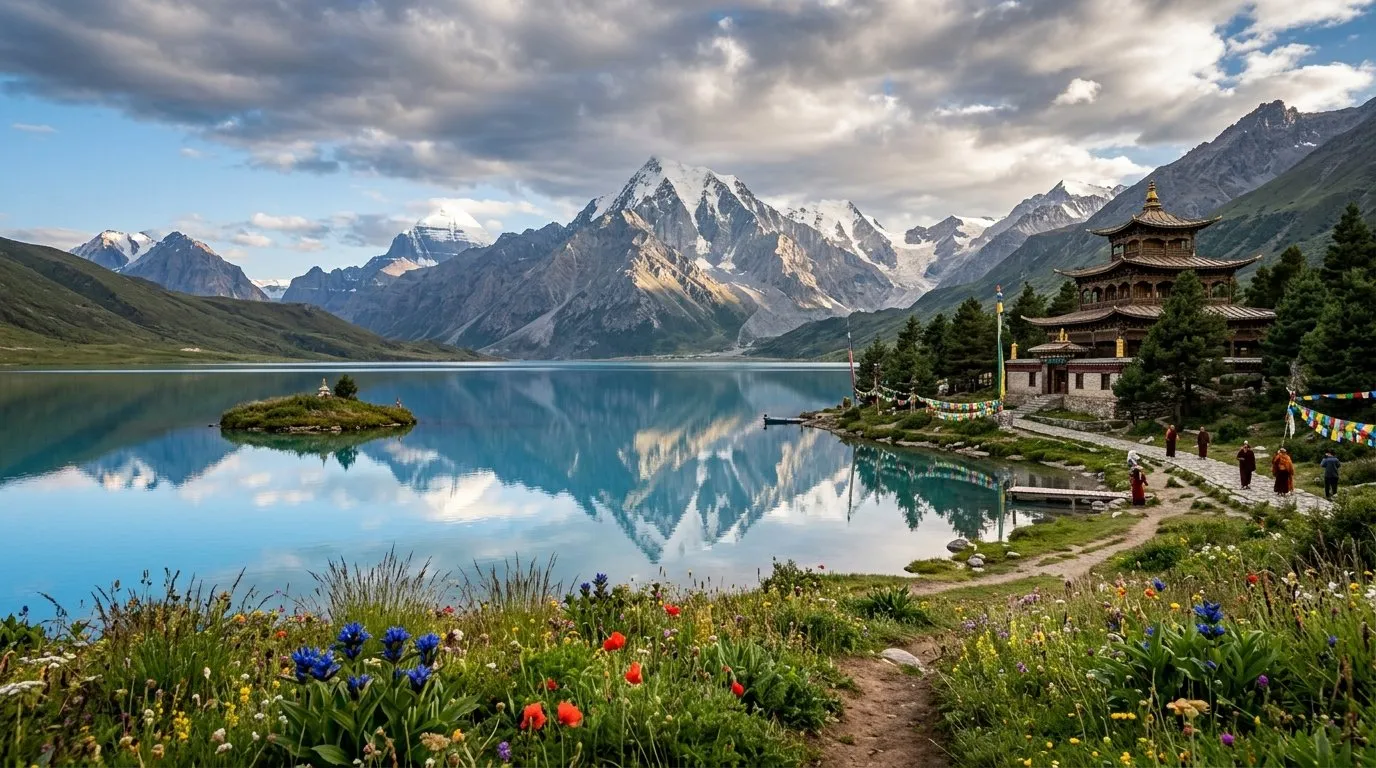
Prashar Lake's floating island — 7% lake area, moves with the wind.
Most visitors photograph the 13th-century pagoda temple from the same spot every other Instagram has, and don't walk the lake perimeter long enough to register that the small "island" in the middle is actually moving — typically 5-15m across a day depending on wind.WHY NOBODY KNOWS
The free-floating island is composed of plant matter (sedges, mosses, decomposing organics) in various stages of accumulation, held buoyant by oxygen trapped in plant roots and methane from sub-surface decomposition. It covers roughly 7% of the lake's area and slowly drifts across the surface, never quite touching either shore. Locally attributed to Sage Parashar's meditation footprint; geologically explained by a peat-mat phenomenon similar to those in Loktak (Manipur) and in Scottish lochs. The lake itself is at 2,730m, holds water year-round (frozen Dec-Feb), and the depth has never been formally surveyed — local belief says it has no bottom.