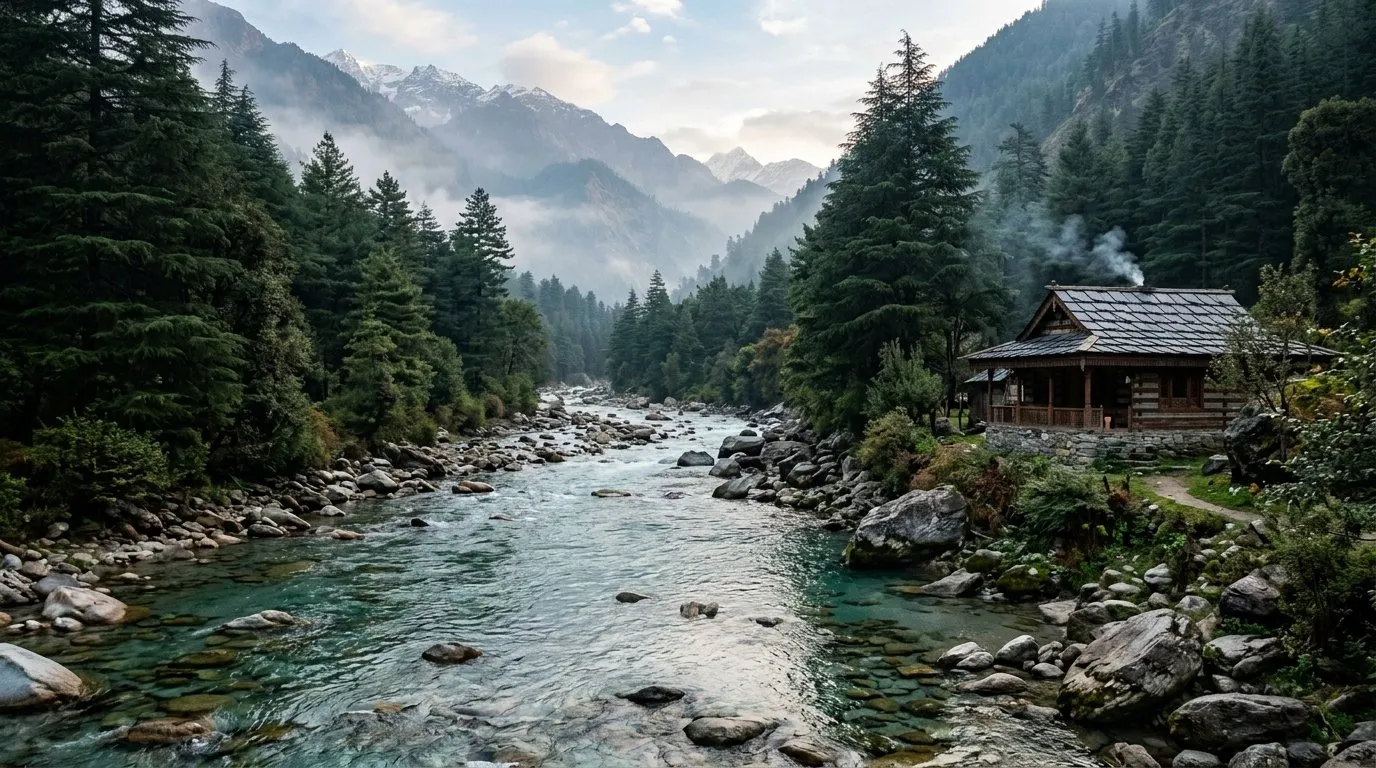
Complete Guide to Tirthan Valley
Great Himalayan National Park gateway, trout fishing, and Himachal's quietest valley
Destinations in this article
Why Go
Tirthan Valley exists because the Great Himalayan National Park (GHNP) needed a buffer. The park — a UNESCO World Heritage Site since 2014 — covers 1,171 sq km of virgin forest, and Tirthan is its primary gateway. That single fact shapes everything about this place.
Unlike Manali (80 km north) or Kasol (60 km west), Tirthan never developed a tourist strip. No Mall Road. No ATM cluster. No nightlife. What it has: the Tirthan River cutting through a narrow valley at 1,600m, forests of blue pine and deodar, and roughly 200 guesthouses scattered across villages like Gushaini, Banjar, and Shoja.
The valley's identity is built on three things. First, GHNP access — you can do day hikes to the park boundary or multi-day treks deep inside (permit required, guide mandatory). Second, trout fishing — the Tirthan is one of India's best catch-and-release streams, stocked by the state fisheries department. Third, silence. This is genuinely one of the quieter valleys in Himachal, partly because the road ends and you have to walk to most interesting places.
The elevation is moderate. At 1,600m, you get cool summers without the altitude headaches of Spiti or Ladakh. The air quality is excellent. The water is drinkable at source. The forest cover is dense enough that you'll hear langurs before you see them.
Best Month to Visit
March to June is the primary window. March is cold but the valley is waking up — rhododendrons start blooming, the river runs clear. April and May are ideal: 15-25 degrees Celsius, full daylight until 7 PM, all trails open. June gets warmer but remains comfortable at this elevation.
September to November is the second window. Post-monsoon clarity means the best mountain views of the year. October brings autumn colour — the valley turns gold and copper. November is cold but dry, with thinner crowds.
Avoid July-August. The monsoon hits Tirthan hard. Landslides close the Aut-Banjar road regularly. Leeches own the trails. The river turns brown and fishing stops.
December to February is possible but limited. Snowfall above Shoja (2,700m) cuts off upper valley access. Lower villages stay accessible but temperatures drop to 0-5 degrees Celsius at night. Few guesthouses stay open.
How to Get There
From Delhi (510 km, 10-12 hours): Delhi → Chandigarh → Mandi → Aut Tunnel → Banjar → Tirthan. The Aut Tunnel (opened 2020) saved an hour by bypassing the old Aut town switchbacks. Road quality is good until Aut, then narrows to single-lane after Banjar.
From Chandigarh (280 km, 6-7 hours): Chandigarh → Mandi → Aut → Banjar. This is the most common approach. Leave early to cross Mandi before traffic builds.
From Manali (80 km, 3-4 hours): South via Kullu → Aut → Banjar. Short but the Kullu valley road is perpetually congested.
Nearest airport: Bhuntar (Kullu), 50 km. Flights from Delhi on Alliance Air and IndiGo, but cancellations are frequent due to weather. Don't plan tight connections.
Nearest railhead: Joginder Nagar (narrow gauge from Pathankot) or Chandigarh (broad gauge). Neither is convenient — road is the realistic option.
Local transport: Almost none. You need your own vehicle or a pre-arranged taxi from Aut/Banjar. Inside the valley, walking is the primary mode. This is not a bug — it's the reason the valley stays quiet.
Infrastructure Reality
Mobile/Internet: BSNL works in Banjar and Gushaini. Jio has patchy coverage in main villages, drops out on trails. Airtel is unreliable. Don't expect to work remotely from here — download everything offline before arriving.
ATMs: One SBI ATM in Banjar. It runs out of cash on weekends during peak season. Carry cash from Aut or Mandi.
Medical: Primary health centre in Banjar. Nearest hospital is in Kullu (50 km). For anything serious, you're looking at Mandi or Chandigarh. Carry a first-aid kit and any prescription medicines.
Accommodation: Ranges from Rs 800 forest department rest houses to Rs 5,000 boutique homestays. Gushaini has the most options. Shoja has a few upscale properties. Booking ahead is essential April-June and October — places are small and fill fast.
Food: Most guesthouses offer meals. Himachali food — rajma-chawal, siddu, trout (when in season) — is the default. A few cafes in Banjar and Jibhi cater to backpackers. No restaurant strip.
Power: Electricity is reliable in main villages but outages happen. Most guesthouses have inverters. Carry a power bank.
Kids Verdict: 3/5
Tirthan works for kids who like nature and don't need structured entertainment. The river is the main attraction — wading in shallow sections, skipping stones, watching trout. Short walks (1-2 km) to waterfalls and GHNP boundary are manageable for ages 6+.
The challenges: no dedicated kids' activities, trails can be steep and slippery, leeches during monsoon edges (June and September), and medical facilities are basic. The drive in is long and winding — motion sickness is common.
Best for: Families with kids 6+ who enjoy outdoors. Not ideal for toddlers or families who need poolside convenience.
The Bottom Line
Tirthan Valley is Himachal's answer to the question: what if a valley stayed quiet? It's not undiscovered — Instagram found it years ago — but the lack of road infrastructure and commercial development keeps crowds manageable. Come for GHNP, stay for the river, leave your phone in the room. If you need nightlife, go to Manali. If you need silence, come here.
Monthly Scores
| Destination | Jan | Feb | Mar | Apr | May | Jun | Jul | Aug | Sep | Oct | Nov | Dec |
|---|---|---|---|---|---|---|---|---|---|---|---|---|
| Tirthan Valley | 4.0 | 4.0 | 8.0 | 10.0 | 10.0 | 8.0 | 4.0 | 4.0 | 10.0 | 10.0 | 8.0 | 4.0 |
The Window · Every Sunday
Liked this? Get one every Sunday.
Best score of the week, one honest skip, road updates. Four minutes. No spam.
More in Field guide
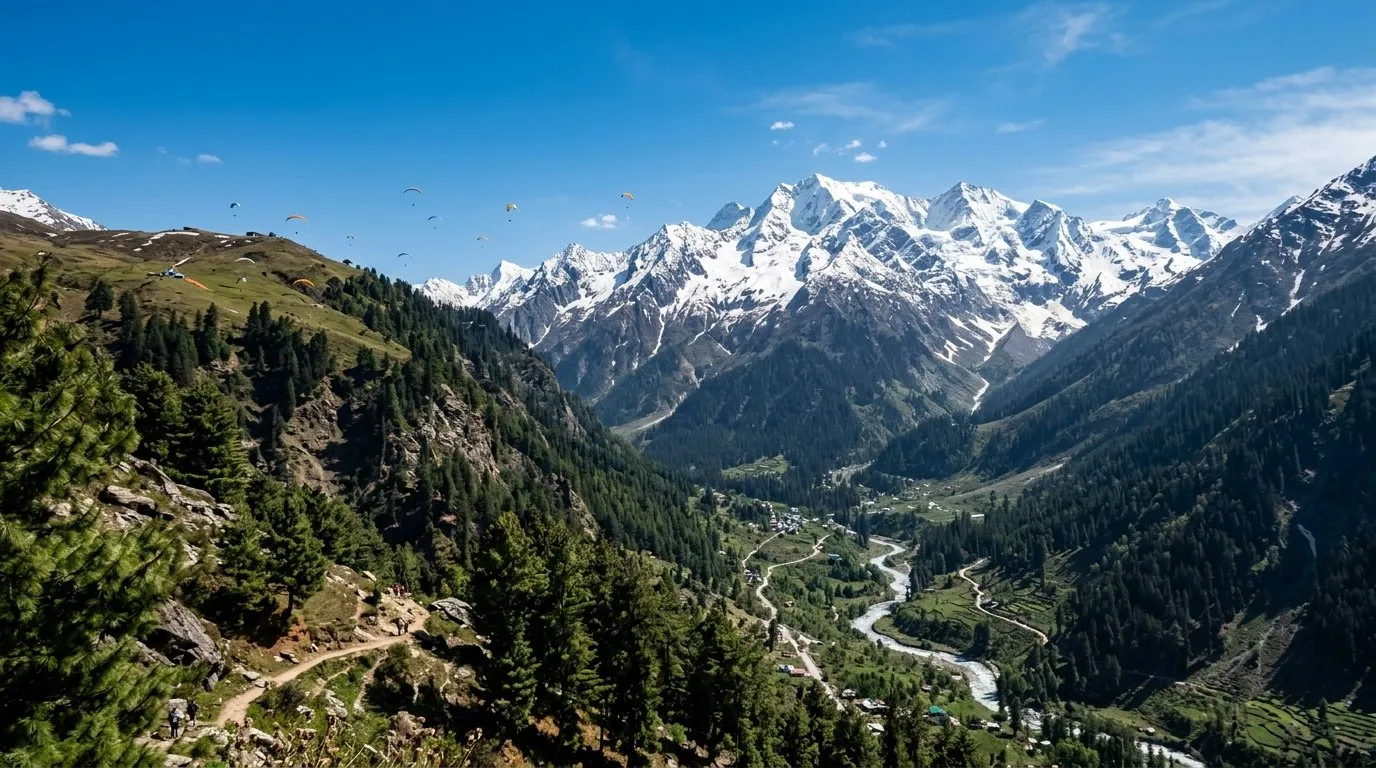
Is Manali safe for solo female travellers? Which Manali, and when
Manali is not one place. New Manali is a respectable hill town — 4/5 safe. Old Manali is the Himachal backpacker-cafe strip with party + drug scene — 2/5 after 10pm. McLeodganj 3 hours away holds 5/5 year-round. Pick deliberately.
5 min read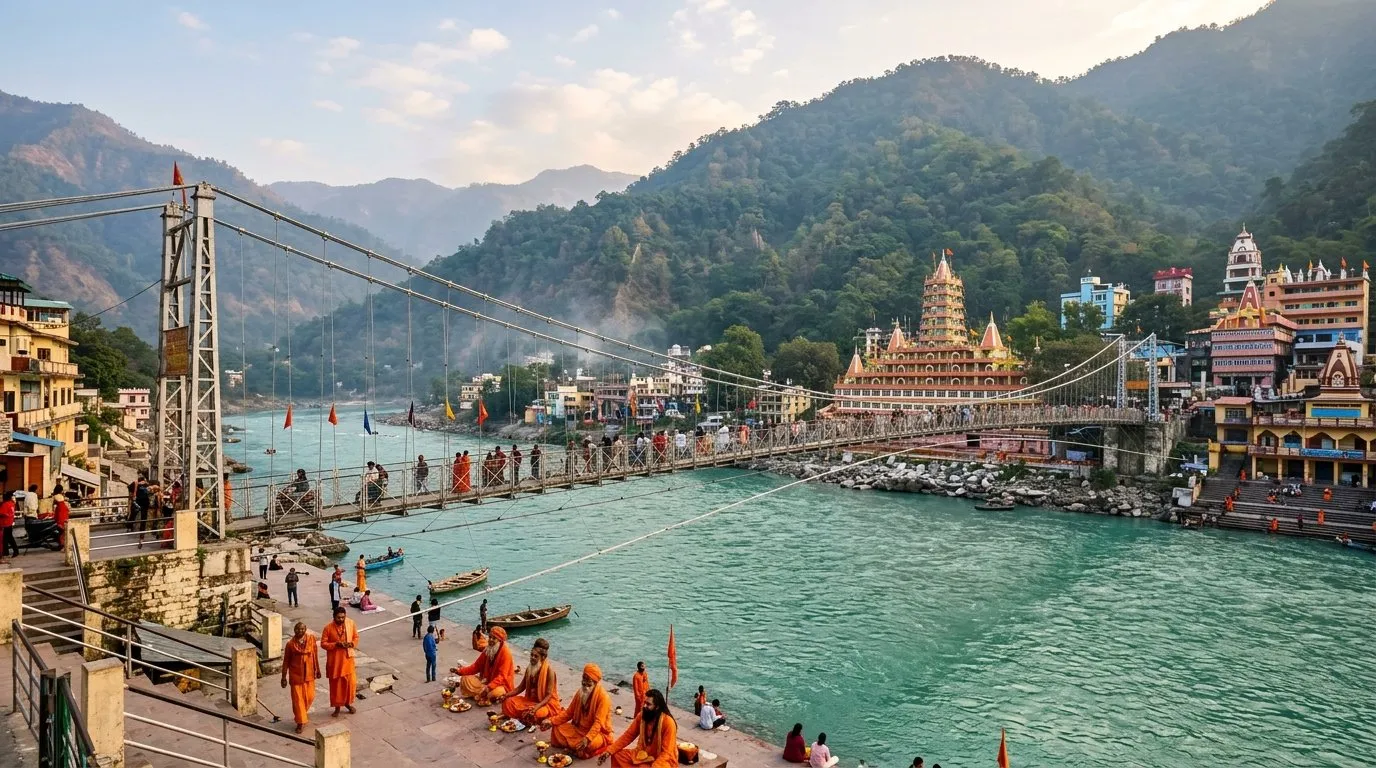
Solo-female travel in India — every destination scored, month by month
Most India travel guides tell women 'use common sense' and call it done. We rated 488 destinations on a 1-5 scale for solo-female safety, with month-specific overrides where it matters. Here's the methodology, the top 15, and the five that don't clear the bar.
10 min read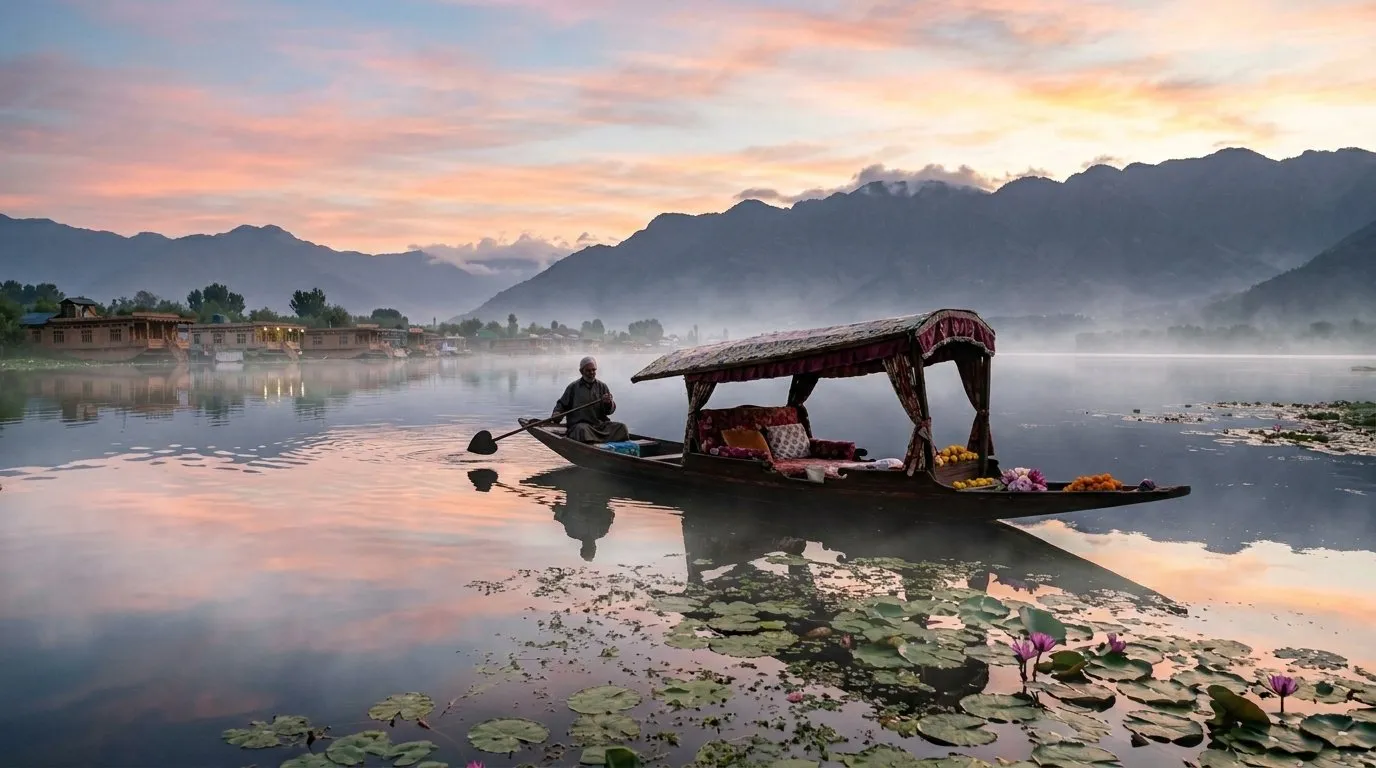
Is Kashmir safe for solo female travellers? What actually matters
Kashmir is the destination where the generic 'is India safe for women' post fails hardest. The answer depends on which month, which valley, which houseboat operator, and whether you're willing to dress differently than you would in Goa. Here's the concrete version.
6 min read- Access
- NH3 to Aut is good. Aut to Gushaini narrow but paved.
- Emergency
- 108 (may take 30-60 min) · PHC Banjar (basic). Regional Hospital Kullu 2 hours.
- Stay
- ₹800-5000/night · 30 options
Go with confidence.