Ladakh for First-Timers
Altitude, permits, routes, and the 15 things nobody tells you before your first trip
Destinations in this article
The Moment You Step Off the Plane
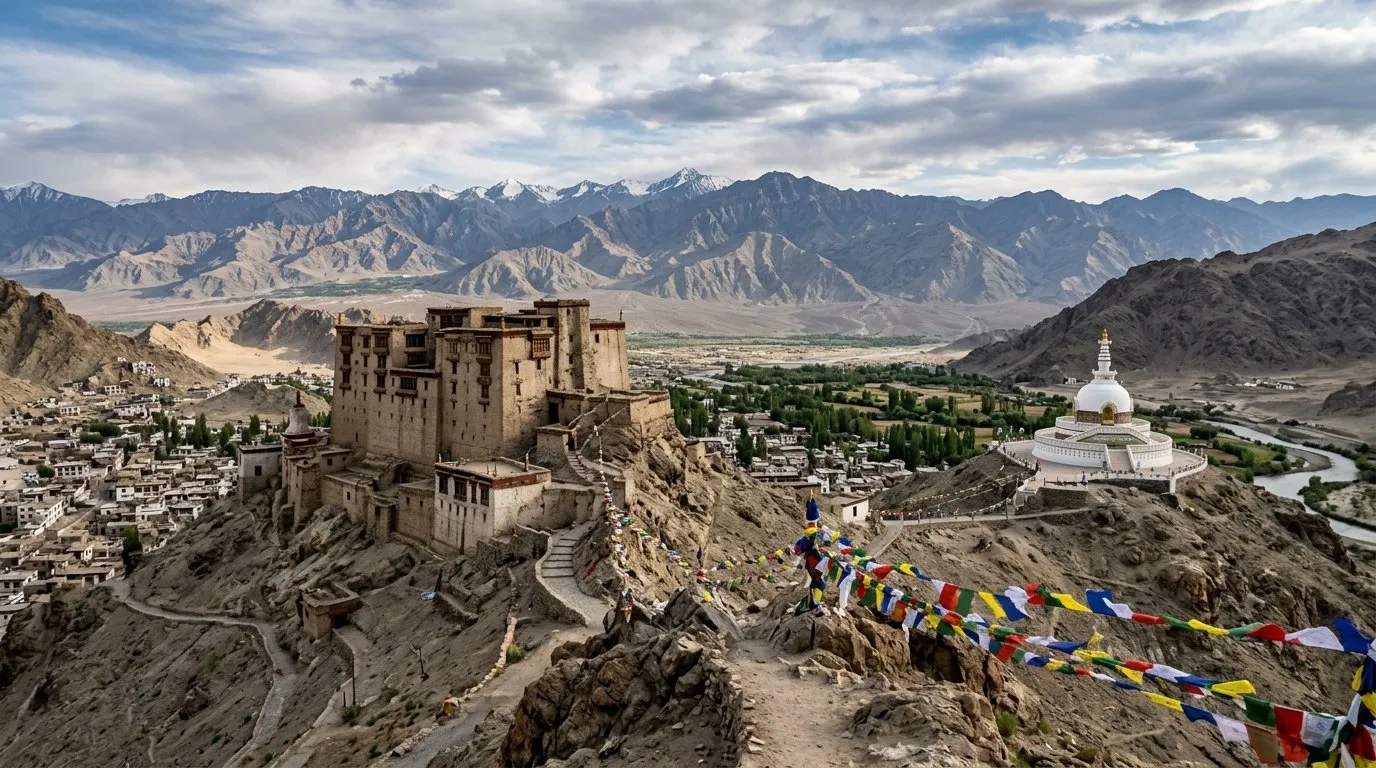
The doors open at Kushok Bakula Rimpochee Airport in Leh, and three things hit you simultaneously: the light is sharper than anywhere you've been, the air is thinner than you expected, and the mountains aren't in the distance — they're *right there*, close enough to make you feel small.
You're at 3,500 metres. That's higher than most European ski resorts. And your body knows it, even if your brain is too excited to listen.
This guide exists because Ladakh is one of those places that rewards preparation and punishes ignorance. Every year, tourists end up in SNM Hospital in Leh with altitude sickness that was entirely preventable. Every year, people get stranded at Pangong because they didn't understand the permit system. Every year, someone wears shorts and a t-shirt and gets third-degree sunburn because nobody told them that UV radiation at 3,500m is 40% stronger than at sea level.
We're going to fix all of that.
The Great Debate: Fly vs Drive
This is the first decision you'll make and it matters more than you think.
Flying into Leh gets you there in 90 minutes from Delhi. It's convenient, it's dramatic (the landing between mountains is genuinely one of the world's great aviation experiences), and it's a terrible idea for acclimatization. You go from 216m (Delhi) to 3,500m in under two hours. Your body has zero time to adjust. You WILL feel the altitude on Day 1 — headache, breathlessness, maybe nausea. This is normal. What's not normal is ignoring it and heading to Khardung La the same afternoon, which is exactly what tour operators will try to sell you.
Driving from Manali takes two days via the Manali-Leh Highway (about 475 km). It's bumpy, it's exhausting, and it's the better option for your body. You cross multiple high passes — Rohtang (3,978m), Baralacha La (4,890m), Lachalung La (5,065m), Tanglang La (5,328m) — but you do it gradually. Your body gets 48 hours to start producing extra red blood cells. By the time you reach Leh, you're partially acclimatized.
The Srinagar route via Zoji La is the third option — gentler gradients, two days, beautiful Kashmir valley en route. This is arguably the best first-timer route, but the road conditions vary year to year.
Our recommendation for first-timers: Fly in. But obey the acclimatization protocol below like it's a religious commandment.
The Acclimatization Protocol (Non-Negotiable)
Day 1: Do nothing. We mean it. Check into your hotel. Sit in the garden. Read a book. Walk to a nearby café for lunch. Walk back. Drink 3-4 litres of water. Go to bed early. Do NOT visit Khardung La, do NOT drive to Pangong, do NOT do anything above 3,600m. Your body is manufacturing red blood cells. Let it work.
Day 2: Go gentle. Walk to Shanti Stupa (a 15-minute uphill walk from the centre). If you feel fine at the top, walk through Leh's old town. Visit Leh Palace. The total elevation gain is minimal — you're staying around 3,500-3,600m. Continue drinking water aggressively. If you have a headache, take Diamox (acetazolamide) — bring it from home, it's available OTC in India but don't count on finding it in Leh.
Day 3: The test. Drive to a nearby monastery — Thiksey or Hemis. These are at similar altitude to Leh but involve some walking. If you feel strong, you're ready for the circuits.
The Permit System (It's Not Hard, It's Just Confusing)
You need an Inner Line Permit (ILP) for Pangong Lake, Nubra Valley, Tso Moriri, and the Hanle area. Indian nationals get this easily. Foreign nationals need a Protected Area Permit (PAP) and must travel in groups of two or more (solo foreign travellers — find a buddy at any Leh hostel, this is trivially easy).
How to get it: Apply online through the Ladakh UT administration portal or through any travel agent in Leh (they charge ₹100-200 for the service). You need passport-size photos and ID copies. The permit costs ₹600 per person for Indian nationals. Processing takes a few hours to a day.
Critical detail: Permits are date-specific. If your plans change, you need a new permit. Get your permits on Day 1 or 2 while you're acclimatizing — this is productive use of rest time.
The Three Circuits
Ladakh isn't one destination. It's three distinct circuits, and understanding this changes how you plan.
Circuit 1: Pangong (2 days minimum)
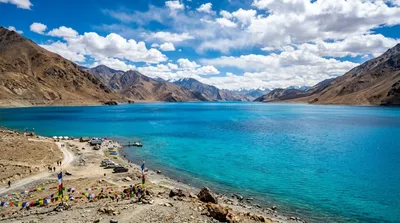
Leh → Chang La (5,360m) → Pangong Lake → overnight at Pangong → return to Leh (or continue to Tso Moriri). The lake is absurdly beautiful — that impossible blue against brown mountains. Stay one night at a lakeside camp. The drive back over Chang La feels easier because you're now better acclimatized. Don't expect phone signal, hot water, or reliable electricity at Pangong. Camps run on generators and solar.
Circuit 2: Nubra Valley (2-3 days)
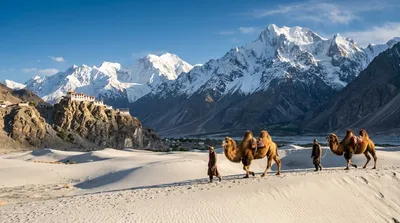
Leh → Khardung La (5,359m) → Diskit → Hunder sand dunes (yes, sand dunes in the Himalayas, with Bactrian camels) → Turtuk (the last village before Pakistan, genuinely fascinating Balti culture). Nubra is warmer than Leh, feels more lush, and has better food options. The drive over Khardung La is dramatic but the pass itself is a 10-minute photo stop, not a destination — the army base and trash somewhat diminish the romance.
Circuit 3: Sham Valley (1-2 days)
The easiest circuit. Magnetic Hill, Sangam (confluence of Indus and Zanskar rivers), Alchi Monastery (genuinely ancient, genuinely beautiful), Likir Monastery. All at or below Leh's altitude. Perfect for Day 2-3 when you're still acclimatizing, or for families who don't want high-pass adventures.
Altitude Sickness: The Real Talk
Mild altitude sickness affects 50-80% of visitors to Leh. Symptoms: headache, fatigue, mild nausea, trouble sleeping, slight breathlessness. This is normal and not dangerous. Treatment: rest, water, Diamox, time.
When to worry: Persistent vomiting, severe headache unresponsive to painkillers, confusion, inability to walk straight, gurgling sound when breathing (fluid in lungs). These are signs of HACE (High Altitude Cerebral Edema) or HAPE (High Altitude Pulmonary Edema). Both are life-threatening. Descend immediately. Not tomorrow. Not after sleep. Now. Drive to Leh (or lower). Call SNM Hospital: they see altitude cases daily and have oxygen.
The oxygen can question: Yes, buy 2-3 cans of canned oxygen from any Leh market (₹500-700 each). They're not medical devices — each can gives about 50-60 breaths. They won't save your life in a real emergency, but they'll take the edge off a rough night at Pangong. Think of them as comfort, not medicine.
Packing: The Non-Obvious List
Everyone tells you to pack warm clothes. Here's what they don't tell you:
- ●Sunscreen SPF 50+ and apply every 2 hours. UV at 3,500m is brutal. We've seen lobster-red tourists who thought they didn't need sunscreen because it was cold.
- ●Lip balm with SPF. Your lips will crack and bleed without it.
- ●Layers, not bulk. Leh can be 25°C at noon and 0°C at midnight in July. A thermal base layer + fleece + windproof jacket beats one massive parka.
- ●Moisturizer. The air is Sahara-dry. Your skin will crack.
- ●Cash. ATMs in Leh work intermittently. ATMs outside Leh don't exist. Carry ₹15,000-20,000 in cash.
- ●Power bank. Your phone battery dies 30% faster in cold temperatures.
- ●Prescription medicines. Leh has pharmacies but limited stock. Bring everything you might need.
Budget Reality Check (2026 Prices)
- ●Flights: ₹5,000-12,000 from Delhi (book 2 months ahead; prices spike in July)
- ●Accommodation in Leh: ₹800-1,500/night (guesthouse), ₹2,000-5,000/night (hotel), ₹5,000-15,000/night (luxury camp)
- ●Pangong camps: ₹1,500-4,000/night (basic to decent; don't expect luxury)
- ●Permits: ₹600/person (ILP)
- ●Food: ₹300-800/meal in Leh, limited options outside
- ●Bike rental (Royal Enfield): ₹1,200-2,000/day
- ●Total 7-day budget: ₹25,000-45,000 per person (budget), ₹60,000-1,00,000 (comfortable), ₹1,50,000+ (luxury)
Network and Connectivity
Jio works in Leh town and along the Manali-Leh highway at intervals. It does NOT work at Pangong, Nubra, or most remote areas. Airtel has patchy coverage in Leh. BSNL postpaid works in more remote areas than any private carrier — if you need connectivity at Pangong, a BSNL SIM is your only option (and even then, it's spotty).
Download offline maps (Google Maps allows this). Download entertainment. Tell your family you'll be unreachable for 24-48 hours at a time.
Medical Infrastructure
SNM Hospital in Leh is the primary facility — it's basic by city standards but the doctors are experienced with altitude cases. There's also a military hospital for emergencies. Outside Leh, medical facilities are essentially nonexistent. The nearest major hospital is in Srinagar or Chandigarh — both a full day away.
Travel insurance that covers high-altitude evacuation is not optional. Read the fine print: many policies exclude activities above 3,000m or 4,000m.
Month by Month: When to Go
- ●June: Roads opening, some still snow-blocked. Cold but spectacular. Fewer tourists. Score: 4/5.
- ●July: Peak season begins. Warm days, roads open, Pangong accessible. Crowded. Score: 5/5.
- ●August: Monsoon rain hits Manali route (landslides possible). Leh itself is rain-shadow — dry. Fly in. Score: 4/5.
- ●September: Our favourite month. Warm days, cool nights, crowds thinning, golden light. Score: 5/5.
- ●October: Getting cold. Some camps closing. Roads still open. Incredible autumn colours. Score: 3/5.
- ●November-May: Most things closed. Winter Ladakh is for experienced travellers only. Chadar Trek (frozen river) is January-February.
The Honest Truth About Khardung La
Every tourist wants the photo at the "World's Highest Motorable Road" sign. Here's the reality: Khardung La probably isn't the world's highest motorable road (that claim is disputed — Umling La in Ladakh itself is higher at 5,883m). The pass is a 10-minute stop where you take a photo next to a signboard, buy chai from an army canteen, and leave. The road to it is dramatic. The pass itself is windy, cold, and covered in truck exhaust. It's a milestone on the way to Nubra Valley — not a destination.
Don't build your trip around Khardung La. Build it around Pangong's impossible blue, Nubra's sand dunes, Turtuk's apricot orchards, and the silence of a high-altitude desert where the stars are closer than you've ever seen them.
The 15 Things Nobody Tells You
1. Carry toilet paper everywhere. Seriously.
2. The "roads" to Pangong aren't roads — they're suggestions.
3. Ladakhi food (thukpa, momos, skyu) is excellent — don't eat at tourist restaurants serving bad pizza.
4. Dogs are everywhere and friendly but not vaccinated. Don't pet strays.
5. The army presence is heavy and normal. Don't photograph military installations.
6. Alcohol hits twice as hard at altitude. That beer at dinner might floor you.
7. Sleep with an extra pillow to elevate your head — helps with altitude breathing.
8. Leh shuts down early. Dinner by 8 PM, town quiet by 9 PM.
9. Haggle for bike rentals, not for homestay prices (those families need the income).
10. The Leh-Manali highway is one of the most spectacular drives on Earth but also one of the most uncomfortable. Don't romanticize it.
11. Carry Imodium. Water quality varies.
12. June-July has 14+ hours of daylight. Use it.
13. Photography is restricted near the border and military areas. Signs are posted — obey them.
14. Homestays in villages like Turtuk are better than hotels — real food, real culture, real conversation.
15. You will want to come back. Everyone does.
Monthly Scores
| Destination | Jan | Feb | Mar | Apr | May | Jun | Jul | Aug | Sep | Oct | Nov | Dec |
|---|---|---|---|---|---|---|---|---|---|---|---|---|
| Leh | 2.0 | 2.0 | 2.0 | 4.0 | 6.0 | 10.0 | 10.0 | 8.0 | 10.0 | 6.0 | 2.0 | 2.0 |
| Nubra Valley | 2.0 | 2.0 | 2.0 | 2.0 | 4.0 | 10.0 | 10.0 | 8.0 | 10.0 | 4.0 | 2.0 | 2.0 |
| Pangong Tso | 2.0 | 2.0 | 2.0 | 2.0 | 4.0 | 10.0 | 10.0 | 8.0 | 10.0 | 4.0 | 2.0 | 2.0 |
The Window · Every Sunday
Liked this? Get one every Sunday.
Best score of the week, one honest skip, road updates. Four minutes. No spam.
More in Field guide
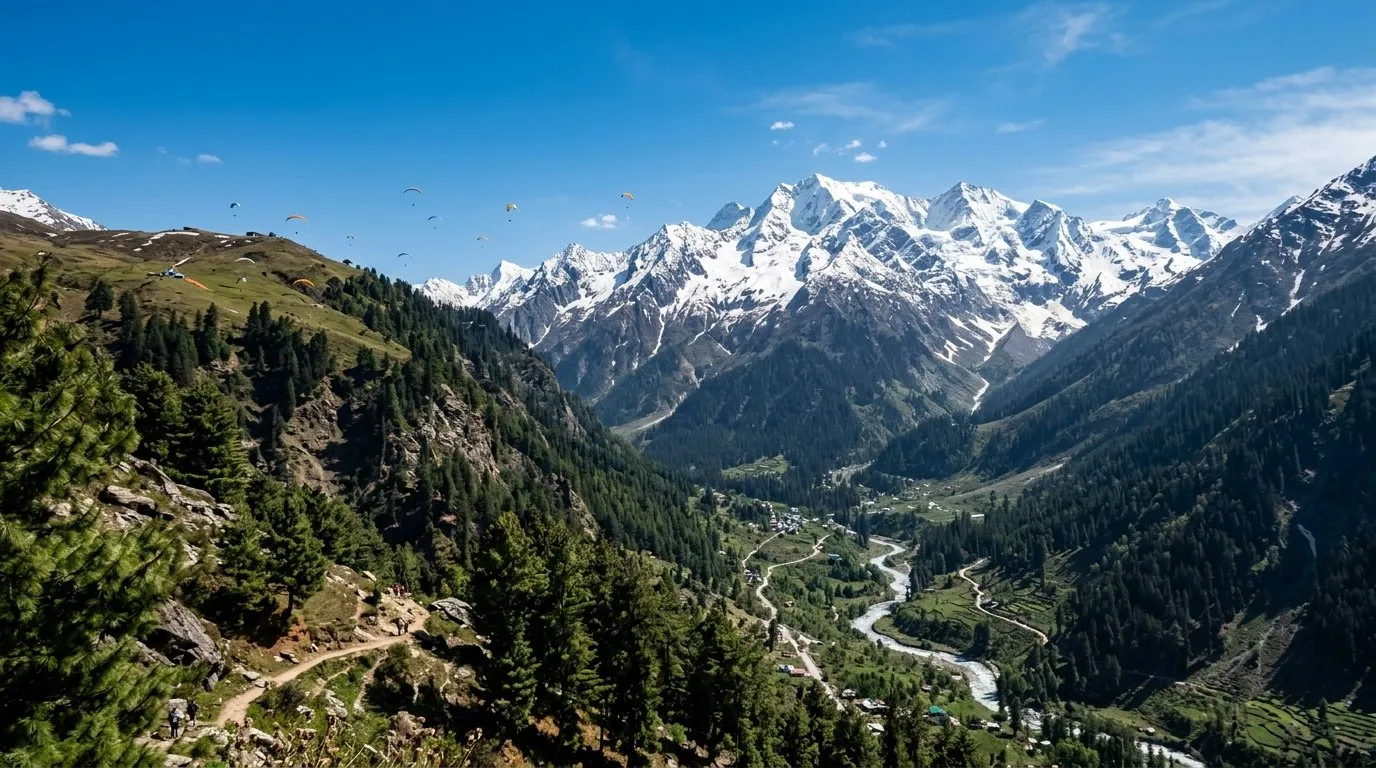
Is Manali safe for solo female travellers? Which Manali, and when
Manali is not one place. New Manali is a respectable hill town — 4/5 safe. Old Manali is the Himachal backpacker-cafe strip with party + drug scene — 2/5 after 10pm. McLeodganj 3 hours away holds 5/5 year-round. Pick deliberately.
5 min read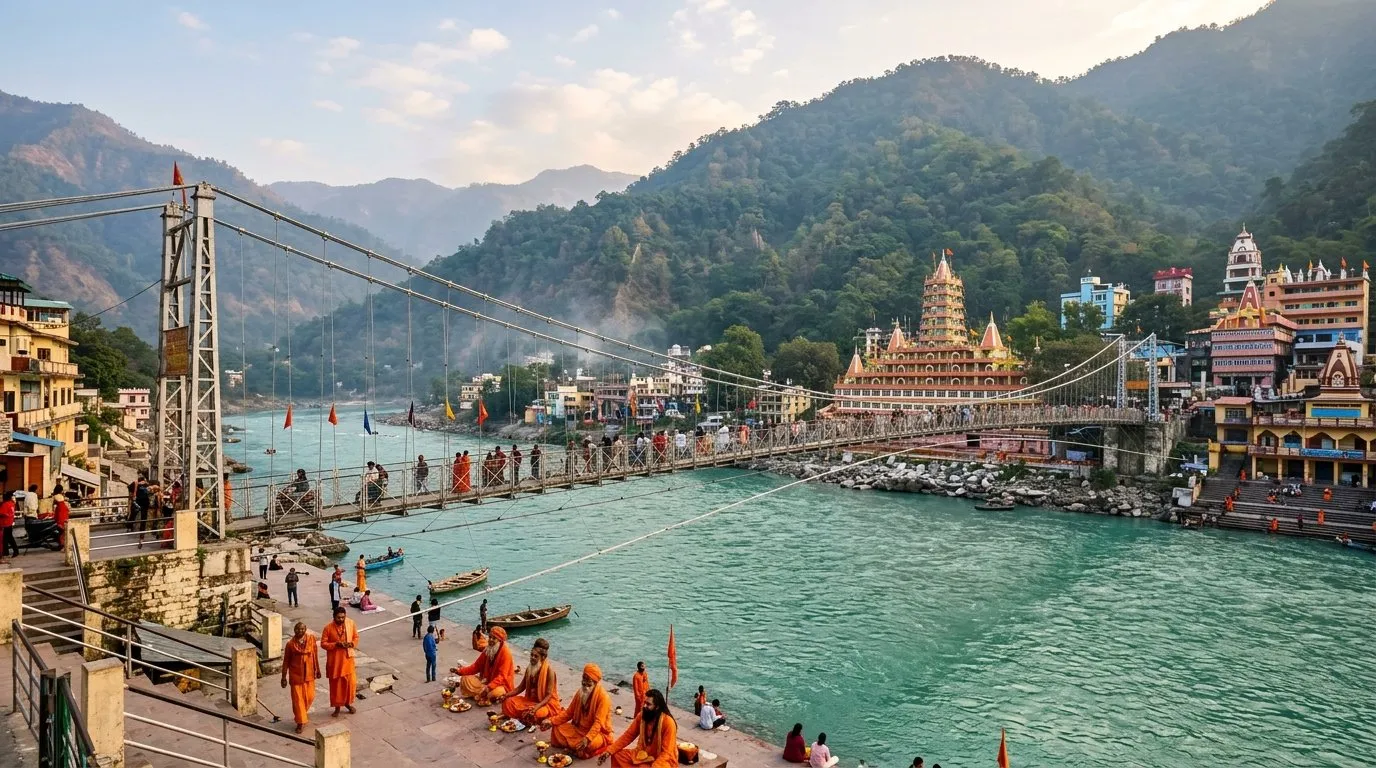
Solo-female travel in India — every destination scored, month by month
Most India travel guides tell women 'use common sense' and call it done. We rated 488 destinations on a 1-5 scale for solo-female safety, with month-specific overrides where it matters. Here's the methodology, the top 15, and the five that don't clear the bar.
10 min read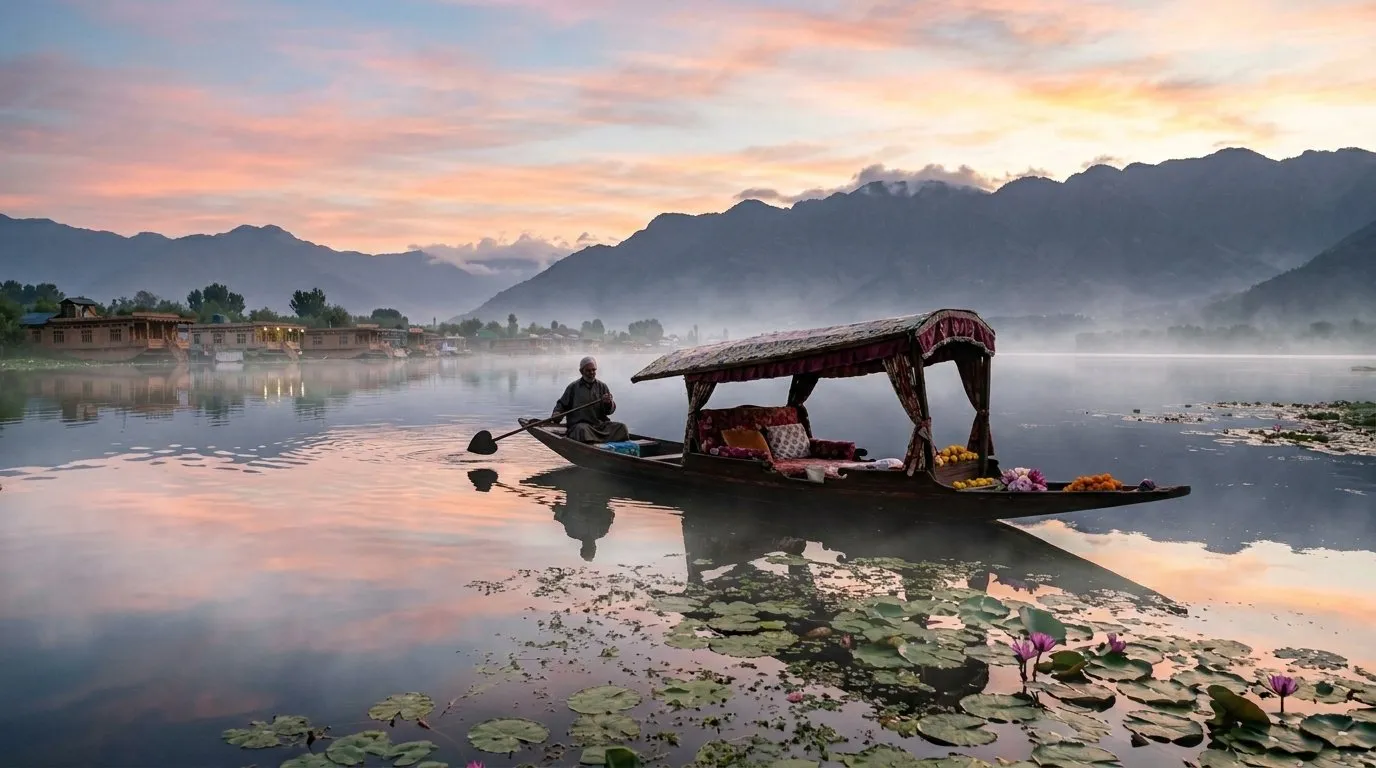
Is Kashmir safe for solo female travellers? What actually matters
Kashmir is the destination where the generic 'is India safe for women' post fails hardest. The answer depends on which month, which valley, which houseboat operator, and whether you're willing to dress differently than you would in Goa. Here's the concrete version.
6 min read- Access
- Manali-Leh: 5 passes, rough sections. Srinagar-Leh: better road.
- Emergency
- 108 (works in Leh town) · SNM Hospital Leh. Army hospital in emergency.
- Stay
- ₹500-8000/night · 200 options
- Permit required
- See the process →
Go with confidence.