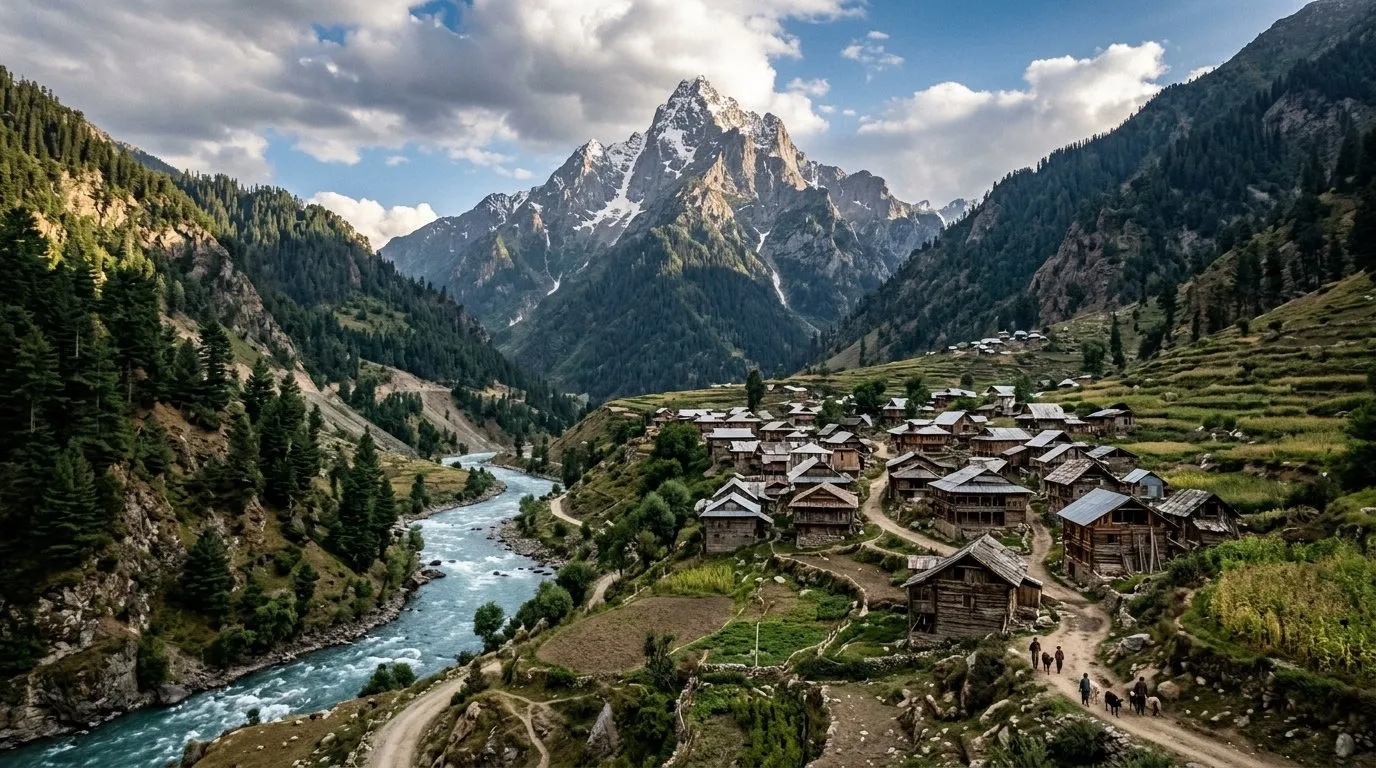
Complete Guide to Gurez Valley
The border valley that was closed to tourists until 2007 — and still feels like it
Destinations in this article
Why Go
Gurez Valley was closed to civilian visitors until 2007. For decades before that, it was a military zone — too close to the Line of Control (LoC) with Pakistan, too sensitive, too dangerous. When the Indian Army finally opened it to tourism, almost nobody came. Nearly two decades later, almost nobody still comes.
This is strange because Gurez is, by any objective measure, one of the most beautiful valleys in India. Sitting at 2,400m in the Bandipora district of Jammu & Kashmir, surrounded by mountains that peak above 4,000m, fed by the Kishanganga River (which is absurdly turquoise), and home to a distinct ethnic community with Central Asian roots — Gurez should be famous. It isn't, because getting there requires crossing a 3,300m pass that's open for only four months a year, and because the military presence reminds you that the border is close enough to matter.
The valley's centrepiece is Habba Khatoon peak, named after a 16th-century Kashmiri poetess. The peak doesn't look like a mountain — it looks like a geometric impossibility, a near-perfect pyramidal shape rising above the valley floor. Below it, the village of Dawar (the valley's administrative centre, population ~2,000) sits along the Kishanganga with wooden houses, poplar-lined paths, and a pace of life that makes Srinagar feel like Tokyo.
The people of Gurez are the Dard-Shin (also written Dard Shin or Shina), an ethnic group of Central Asian descent who speak Shina (related to languages spoken in Gilgit-Baltistan across the LoC). Their wooden architecture, facial features, and cultural practices are distinct from the rest of Kashmir. You are, culturally and genetically, in a different world.
The Best Month (and the Worst)
Best: July. The Razdan Pass (3,300m) is fully clear of snow, the Kishanganga River is at its most photogenic (turquoise-green, not muddy), wildflowers carpet the hillsides, and temperatures are pleasant — 12°C to 28°C during the day, 5°C to 10°C at night. Everything is green and the valley looks impossibly lush.
Runner-up: August. Slightly wetter than July (monsoon fringe effects reach Gurez) but still predominantly clear. The rice paddies in the valley floor are at their greenest.
For photography: September. Autumn colours hit Gurez hard — the poplars and willows turn gold and orange against the green hillsides and snow-dusted peaks. Dramatic light, fewer clouds, crisp air.
Worst: November through May. Razdan Pass closes with the first heavy snowfall (usually late October or early November) and doesn't reopen until late May or early June. During this period, Gurez is accessible only by helicopter (military, not civilian) or on foot through snow — neither of which is a tourism option. The valley receives 2-4 metres of snow in winter.
How to Get There
The only route: Srinagar → Bandipora → Razdan Pass → Dawar
- ●Distance: 125km from Srinagar
- ●Drive time: 5-6 hours (not because the distance is long, but because the road is challenging)
- ●Breakdown:
- ●Srinagar to Bandipora: 60km, 2hr (decent road, flat terrain along Wular Lake)
- ●Bandipora to Razdan Pass summit: 35km, 2hr (mountain road, switchbacks, climbing from 1,600m to 3,300m)
- ●Razdan Pass to Dawar: 30km, 1.5hr (descent into the valley, road quality deteriorates)
Road quality: Tarmac until Bandipora. After that, it's a mix of paved sections and broken mountain road. A sedan can technically make it, but an SUV is strongly recommended. During and after rain, sections become slippery.
Transport options:
- ●Rented vehicle from Srinagar: ₹3,000-4,000/day for an SUV with driver
- ●Shared jeeps from Bandipora to Dawar: occasional, unreliable, ₹300-500 per seat
- ●No bus service to Gurez
Critical requirement: Permits. Gurez is open to Indian nationals only. Foreigners are not permitted as of the latest regulations. Indian nationals need to register at the Dawar checkpost (carry government ID — Aadhaar, voter ID, or passport). There is no formal online permit system; you register on arrival. However, rules can change — verify with the Bandipora district administration before traveling.
What to Expect
The drive itself is half the experience. After Bandipora, you climb through dense forest to Razdan Pass, where the view opens up to reveal a ring of snow-capped mountains. The descent into Gurez is dramatic — tight switchbacks dropping into a valley that appears suddenly, green and wide, with the Kishanganga River winding through it like a turquoise ribbon.
Dawar is the main village and your base. It has a bazaar (small, with basic supplies), a few guesthouses, a military camp, and a distinct frontier-town energy. Soldiers outnumber tourists on most days. The military presence is visible but not oppressive — checkpoints are polite, and soldiers are generally friendly and curious about why tourists are visiting.
Key things to see and do:
- ●Habba Khatoon peak: The iconic pyramidal peak is visible from Dawar. Best viewed at sunrise when the light catches the summit. There is no formal trek to the top (it requires technical climbing), but walks towards the base offer excellent views.
- ●Kishanganga River: Walk along the river from Dawar in either direction. The water is cold, clear, and a colour of blue-green that doesn't look real. Fishing (trout) is possible with a license from the J&K Fisheries Department.
- ●Dawar village walk: The old wooden houses in Dawar are distinctive — log-cabin style construction using deodar wood, with carved balconies and steep roofs designed for heavy snow. Many are centuries old.
- ●Tulail village: 30km beyond Dawar, deeper into the valley and closer to the LoC. More remote, more military, more beautiful. The road beyond Dawar to Tulail is rough but passable.
- ●Shina culture: The Dard-Shin community is hospitable but private. If invited into a home for noon chai (salt tea), accept. The bread (girda) is baked in wood-fired ovens and is genuinely excellent.
Infrastructure Reality
Medical: One army hospital in Dawar provides basic medical care and is available to civilians in emergencies. For anything beyond first aid and stabilization — surgery, advanced diagnostics, specialist care — you need to get back to Srinagar (5-6 hours). In a genuine emergency, the army can arrange helicopter evacuation, but this is not guaranteed and depends on weather and military priorities.
Money: No ATMs in Gurez Valley. The nearest ATM is in Bandipora (60km). Carry all cash. Budget ₹1,000-2,000/day for accommodation, food, and local transport.
Power: Grid electricity is available in Dawar but unreliable. Power cuts are frequent and can last hours. Guesthouses may run generators in the evening. Carry a power bank.
Communication: BSNL postpaid has weak but functional signal in Dawar. BSNL prepaid is unreliable. Jio and Airtel do not work. There is no WiFi at guesthouses. Beyond Dawar (towards Tulail), even BSNL drops out completely.
Fuel: One petrol pump reportedly exists in Dawar but availability is erratic. Fill up in Bandipora. Your vehicle's fuel tank should handle the 250km round trip from Bandipora to Dawar and back.
Supplies: Dawar's bazaar has basic groceries, but selection is limited. Bring snacks, any specialty dietary needs, medications, and toiletries from Srinagar.
Where to Stay
Gurez has a growing but still limited set of accommodation options:
In Dawar:
- ●J&K Tourism guesthouse: The most established option, ₹1,500-2,500/night. Basic but clean rooms with attached bathroom. Book in advance through J&K Tourism (online booking available but call to confirm).
- ●Private guesthouses: 5-6 options have emerged in recent years, ₹800-1,500/night. Quality varies. Ask for rooms with river views.
- ●Homestays: ₹500-800/night including meals. The best way to experience Dard-Shin culture. Meals are simple but authentic — rice, dal, local vegetables, girda bread, and noon chai.
Camping: Permitted and popular along the Kishanganga River. Flat ground is easy to find. No formal campsites — you pick a spot. Carry all equipment. Nights are cold (5-10°C even in July) so bring a proper sleeping bag.
Beyond Dawar: Towards Tulail, there are a few very basic homestays. Don't count on availability — arrange in advance or carry camping gear.
Kids Verdict
Rating: 2/5 — The valley is gentle, getting there is not.
Gurez itself is actually kid-friendly. The valley floor is flat, the river is beautiful (keep them away from the current — it's strong), the village walks are easy, and the Dard-Shin community is warm with children. The altitude (2,400m) is manageable for most kids over 5.
The problem is the journey. The 5-6 hour drive from Srinagar includes a steep, winding climb to Razdan Pass (3,300m) that causes motion sickness in adults, let alone children. The road after Bandipora is rough enough to jostle small passengers. And if something goes wrong — car trouble, road closure, medical issue — you're hours from help on a mountain road.
If you bring kids: Keep them 8+ years old. Carry motion sickness medication. Break the drive at Razdan Pass for acclimatization and fresh air. Bring entertainment for the car. And make sure your accommodation in Dawar is confirmed — arriving at dusk with tired, carsick children and no room booked is a recipe for a bad holiday.
What to Avoid
- ●Photographing military installations. The LoC is nearby, and military sensitivity is real. Do not photograph checkpoints, bunkers, antennae, or soldiers without explicit permission. Your camera can be confiscated, and you could face questioning.
- ●Trying to visit as a foreign national. The restriction is firm. Don't try to talk your way past checkpoints — it won't work and could cause problems for your driver and guide.
- ●Driving after dark. The road between Bandipora and Dawar has no lighting, no guardrails in many sections, and occasional military vehicles moving without headlights. Start early, arrive before sunset.
- ●Underestimating Razdan Pass. At 3,300m, it's not extreme by Ladakh standards, but it's enough to cause headaches and nausea in people not acclimatized. If you're coming straight from Delhi without prior altitude exposure, take it easy at the top.
- ●Expecting a tourism infrastructure. There are no travel agencies, no tour guides, no information offices, no vetted experiences in Gurez. You are exploring on your own. This is part of the charm but also means you need to plan carefully.
- ●Going in early June. The pass officially "opens" but conditions vary year to year. Some years, snow remains on the road until mid-June. Check with locals in Bandipora before attempting the drive.
- ●Swimming in the Kishanganga. The water is glacial melt — around 4-6°C even in July. The current is strong. People have drowned. Admire it from the bank.
The Bottom Line
Gurez is what the Kashmir Valley looked like before tourism found it. The wooden houses, the turquoise river, the pyramidal peak, the frontier atmosphere, the Dard-Shin people with their Central Asian faces and Shina language — it all adds up to a place that feels like a secret, because it basically is one.
The valley has been open for nearly 20 years and still gets a fraction of the visitors that Gulmarg or Pahalgam receive. This will change — roads will improve, hotels will be built, Instagram will do its work. But right now, in 2026, Gurez is still quiet enough that you can walk along the Kishanganga for an hour and not see another tourist.
Come for the scenery, stay for the people, and leave before the road closes in October. Bring cash, carry patience, and respect the military presence that keeps this border valley safe enough for you to visit at all.
Monthly Scores
| Destination | Jan | Feb | Mar | Apr | May | Jun | Jul | Aug | Sep | Oct | Nov | Dec |
|---|---|---|---|---|---|---|---|---|---|---|---|---|
| Gurez Valley | — | — | — | — | 4.0 | 10.0 | 10.0 | 8.0 | 10.0 | 6.0 | — | — |
The Window · Every Sunday
Liked this? Get one every Sunday.
Best score of the week, one honest skip, road updates. Four minutes. No spam.
More in Field guide
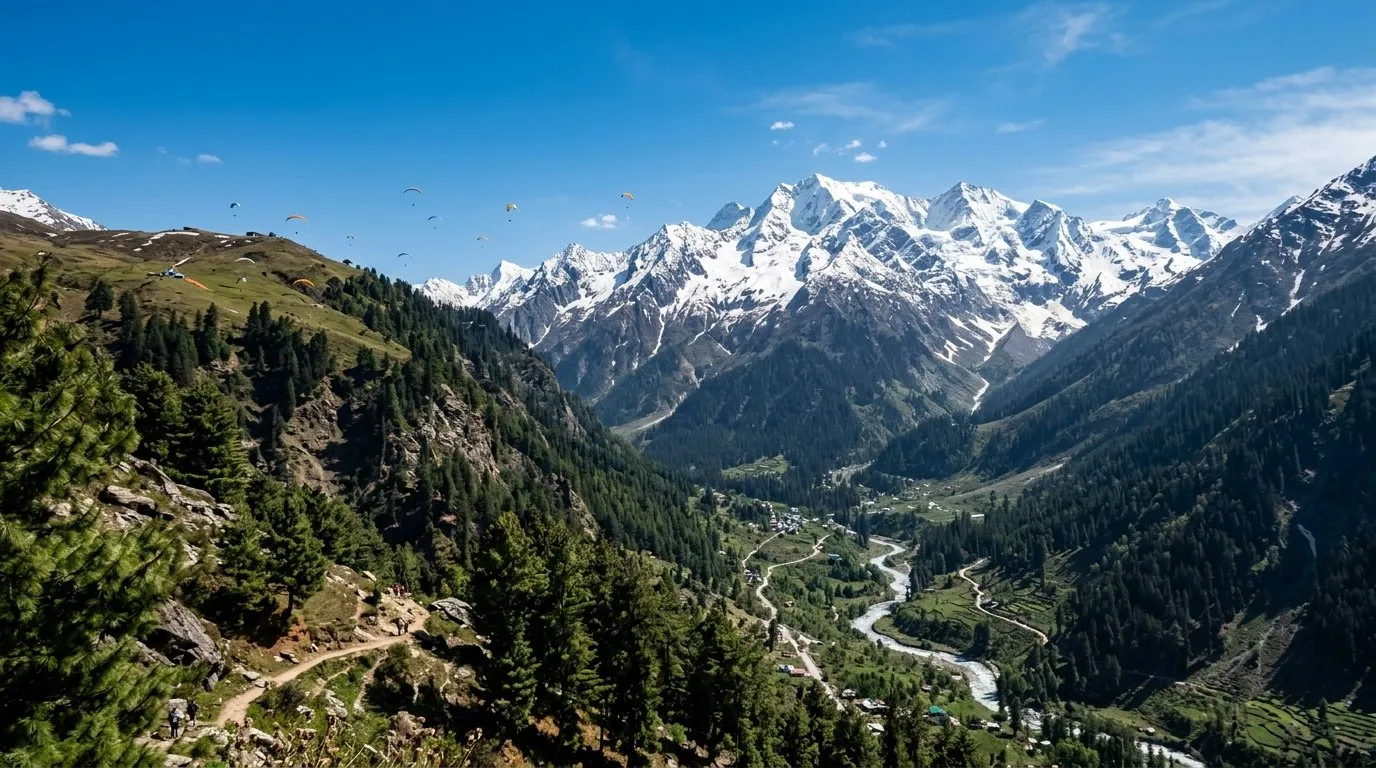
Is Manali safe for solo female travellers? Which Manali, and when
Manali is not one place. New Manali is a respectable hill town — 4/5 safe. Old Manali is the Himachal backpacker-cafe strip with party + drug scene — 2/5 after 10pm. McLeodganj 3 hours away holds 5/5 year-round. Pick deliberately.
5 min read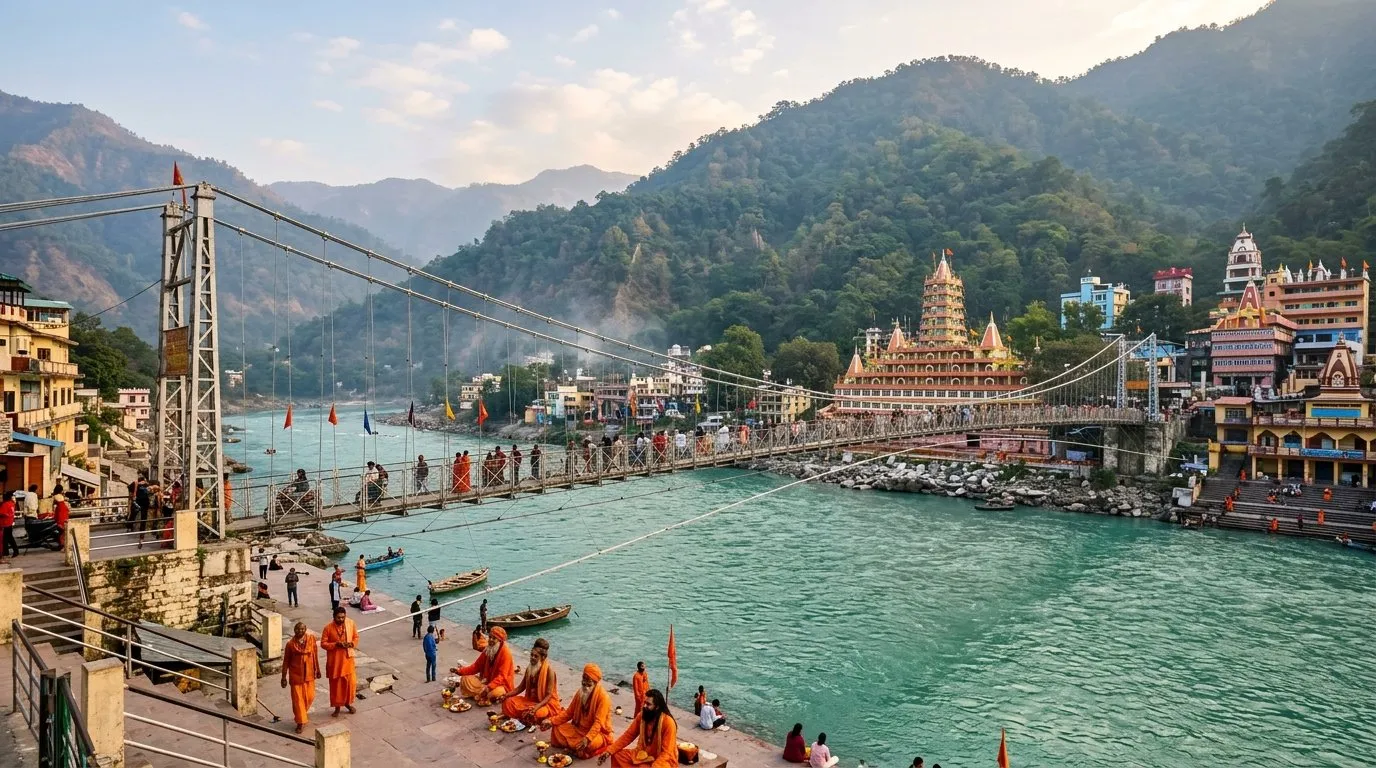
Solo-female travel in India — every destination scored, month by month
Most India travel guides tell women 'use common sense' and call it done. We rated 488 destinations on a 1-5 scale for solo-female safety, with month-specific overrides where it matters. Here's the methodology, the top 15, and the five that don't clear the bar.
10 min read
Is Kashmir safe for solo female travellers? What actually matters
Kashmir is the destination where the generic 'is India safe for women' post fails hardest. The answer depends on which month, which valley, which houseboat operator, and whether you're willing to dress differently than you would in Goa. Here's the concrete version.
6 min read- Access
- Razdan Pass steep, seasonal Jun-Oct.
- Emergency
- None reliable. · PHC Dawar (very basic). Bandipora 80km.
- Stay
- ₹500-2000/night · 5 options
Go with confidence.