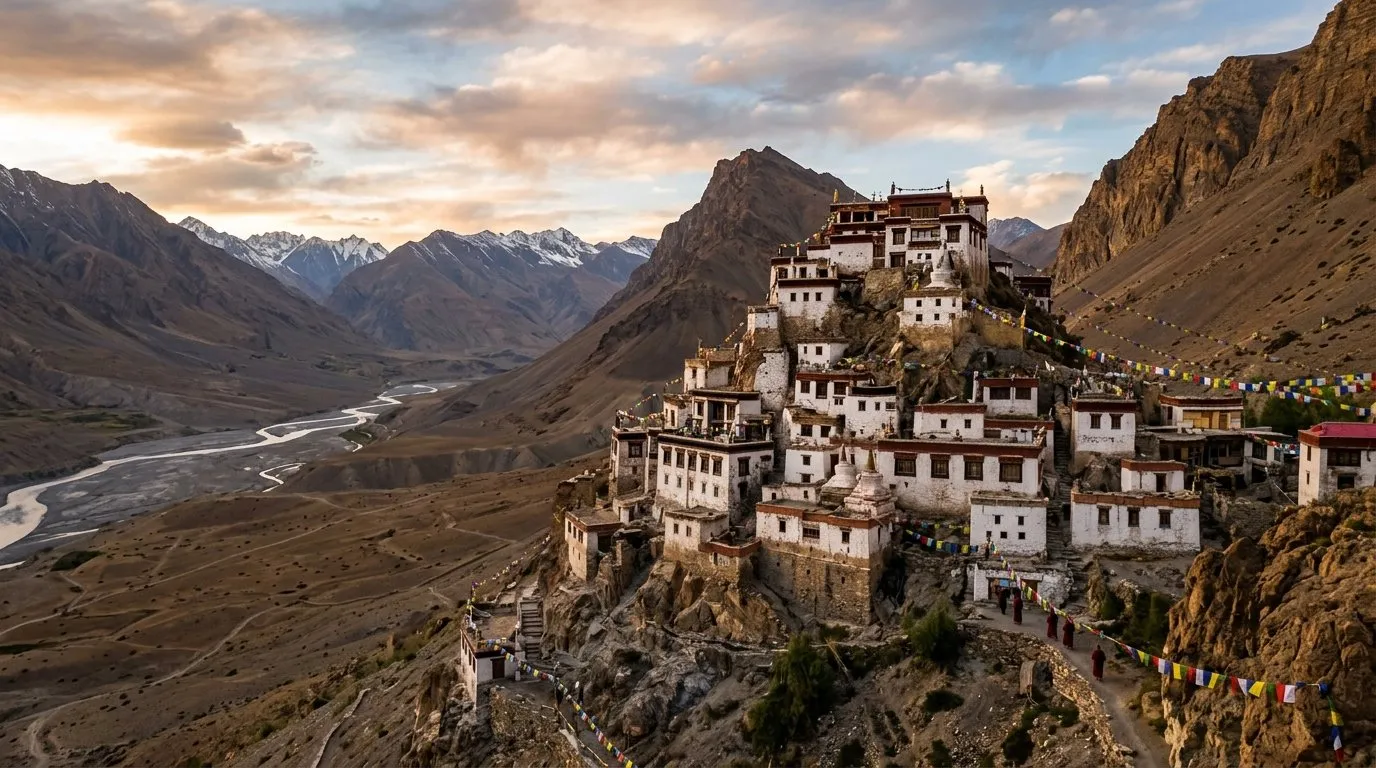
Complete Guide to Spiti Valley
Everything we know about India's cold desert — routes, villages, monasteries, and the infrastructure reality
Destinations in this article
Why Spiti Demands a Guide This Thorough
Spiti Valley sits at 3,800 metres in Himachal Pradesh's rain shadow, a high-altitude desert that feels more Tibetan than Indian. It is not a weekend trip. It is not a place you wing. Every year, travelers underestimate the altitude, the distances, the fuel situation, or the sheer emptiness of the landscape — and every year, a few pay for it with abandoned itineraries and medical evacuations.
This guide exists because Spiti deserves better than the "top 10 things to do" treatment. We have driven both routes, stayed in every key village, tracked fuel prices and ATM reliability across seasons, and mapped the medical infrastructure (or lack thereof). What follows is everything we know.
The Two Routes In: Manali–Kaza vs Shimla–Kinnaur
There are exactly two roads into Spiti, and choosing the right one shapes your entire trip.
The Manali–Kaza Route (Northern Approach)
Distance: ~200 km from Manali to Kaza. Time: 10–14 hours depending on road conditions. Open: mid-June to mid-October (Rohtang and Kunzum passes must be clear). This route crosses Rohtang Pass (3,978m) and Kunzum Pass (4,590m), making it the higher and more dramatic approach. The road between Gramphoo and Kaza is among the worst in India — landslides, river crossings, and stretches of pure boulder field. A high-clearance vehicle is non-negotiable. The payoff: you enter Spiti from its most spectacular side, with Chandratal Lake accessible as a detour.
The Shimla–Kinnaur Route (Southern Approach)
Distance: ~410 km from Shimla to Kaza. Time: 2 days minimum, with a stop in Kalpa, Reckong Peo, or Nako. Open: year-round (though winter conditions are harsh). This route follows the Sutlej and Spiti rivers through Kinnaur, passing through the terrifying but beautiful stretch near Nako. The road quality is significantly better than the Manali route, and the gradual altitude gain helps with acclimatization. This is the recommended approach for first-timers.
The Circuit
The ideal Spiti trip uses both routes: enter via Shimla–Kinnaur (gradual altitude gain, better roads) and exit via Kaza–Manali (dramatic descent, Chandratal detour). This requires the Manali route to be open, limiting it to roughly late June through September.
Village by Village: What Each Place Actually Offers
Kaza (3,650m) — The Hub
Spiti's administrative capital and the only place with anything resembling infrastructure. Population: ~3,000. This is where you refuel (literally — the only reliable petrol pump in the valley), withdraw cash (one SBI ATM that works most of the time), buy supplies, and get a phone signal. Kaza has guesthouses ranging from ₹500 basic rooms to ₹3,000 boutique stays. The old town (Kaza Gongma) has a monastery and narrow lanes worth exploring. Stay: at least one night to acclimatize before heading higher.
Key Monastery (4,166m)
The postcard image of Spiti — a whitewashed gompa perched on a conical hill, housing 300+ monks. 12 km from Kaza. The morning prayer ceremony (6–7 AM) is open to visitors. The drive up is steep and narrow. Photography is extraordinary at sunrise and sunset. Allow 2–3 hours for a visit.
Kibber (4,270m)
One of the highest inhabited villages in Asia with a motorable road. 18 km from Kaza. Known as the gateway for snow leopard treks in winter. The Kibber Wildlife Sanctuary surrounds the village. Homestays here are basic but authentic — expect shared bathrooms and home-cooked Spitian food. Network coverage: virtually none.
Tabo (3,280m)
Home to the Tabo Monastery, founded in 996 CE — over a thousand years old. Often called the "Ajanta of the Himalayas" for its ancient murals and stucco sculptures. The monastery complex includes nine temples and is an ASI-protected monument. The nearby caves were used as meditation chambers by monks. Tabo is lower than Kaza, making it an excellent first stop if entering from Kinnaur. The village has a few guesthouses and one of the valley's better medical dispensaries.
Dhankar (3,890m)
The old capital of Spiti, perched impossibly on a crumbling cliff face. The fort-monastery is genuinely precarious — it made the World Monuments Fund's list of 100 most endangered sites. The hike to Dhankar Lake (4,140m) is a 2-hour round trip with staggering views. Access: 8 km off the main road, steep and unpaved. No facilities beyond one or two basic homestays.
Langza (4,400m)
A village of perhaps 100 people sitting in a fossil-rich basin with a massive Buddha statue overlooking the valley. The fossils here are marine — this was an ocean floor 450 million years ago. Langza is 14 km from Kaza and offers some of the valley's best homestay experiences. The meadows around the village are carpeted in wildflowers in July–August.
Hikkim (4,440m)
Claims to host the world's highest post office. You can send a postcard from 4,440 metres — a genuinely delightful experience. The village is tiny. Combined with Langza and Komic, it forms a popular day-trip triangle from Kaza (roughly 40 km round trip).
Chicham (4,000m)
Connected to Kibber by Asia's highest suspension bridge (Chicham Bridge, opened 2017). Before the bridge, Chicham was a 3-hour detour. Now it is a 5-minute crossing, but the bridge itself — a cable-stayed span over a 300m gorge — is worth the visit alone.
Chandratal Lake (4,300m)
Not technically in Spiti proper but accessible from the Kaza–Manali route. A crescent-shaped glacial lake with water that shifts between turquoise and emerald. Camping here overnight is one of India's great outdoor experiences. The road is rough (14 km from the highway turnoff), and the campsite facilities are basic. Best visited in July–August. Altitude sickness is common — do not drive directly from Manali.
Driving Distances Between Key Stops
Shimla to Narkanda: 65 km (2 hrs). Narkanda to Rampur: 100 km (3.5 hrs). Rampur to Reckong Peo: 100 km (4 hrs). Reckong Peo to Nako: 110 km (5 hrs). Nako to Tabo: 50 km (2 hrs). Tabo to Kaza: 47 km (1.5 hrs). Kaza to Key Monastery: 12 km (30 min). Kaza to Langza: 14 km (40 min). Kaza to Kibber: 18 km (45 min). Kaza to Chandratal: 70 km (4 hrs via Kunzum). Kaza to Manali: 200 km (10–14 hrs).
These are under good conditions. Add 30–50% for rain, landslides, or early/late season travel.
Altitude Acclimatization: Not Optional
Spiti's average elevation is higher than most Himalayan treks. Acute Mountain Sickness (AMS) is common and potentially fatal if ignored. Rules: spend one night at Kalpa or Nako (2,960–3,600m) before pushing to Kaza. Do not exert yourself on Day 1 in Kaza. Hydrate obsessively — 3+ litres per day. Diamox (125mg twice daily, started 24 hours before ascent) is standard prophylaxis but consult a doctor. Symptoms to watch: persistent headache, nausea, dizziness, breathlessness at rest. If symptoms worsen at altitude, the only treatment is descent. There is no hospital capable of handling severe HAPE or HACE in Spiti. The nearest proper facility is in Reckong Peo or Manali.
The Infrastructure Reality
Fuel: One petrol pump in Kaza. It can run dry. Carry a 10-litre jerry can if your vehicle's range is under 400 km. Fill up in Reckong Peo or Manali before entering the valley.
ATMs: One SBI ATM in Kaza. It is sometimes empty, sometimes offline. Carry cash — ₹15,000 minimum for a week's stay. Card acceptance is nearly zero outside Kaza.
Network: BSNL has the best coverage — intermittent signal in Kaza, Tabo, and along the main road. Jio and Airtel: effectively dead in most of the valley. Get a BSNL SIM before entering Spiti. Even BSNL drops out between villages. Satellite messengers (Garmin inReach) are recommended for solo travelers.
Medical: A community health centre in Kaza with basic capabilities — stitches, antibiotics, oxygen. No surgical facilities. No blood bank. Serious injuries or illness require evacuation to Reckong Peo (6–8 hrs) or Manali (10–14 hrs). Helicopter evacuation is theoretically available but weather-dependent and expensive. Carry a comprehensive first-aid kit including AMS medication, painkillers, broad-spectrum antibiotics, and rehydration salts.
Month-by-Month Scoring
January–March (Score: 1/5): Extreme cold (-20°C to -30°C at night). Manali route closed. Shimla route technically open but treacherous. Only for snow leopard expeditions with experienced operators.
April–May (Score: 2/5): Warming begins. Shimla route passable. Manali route closed. Limited accommodation open. Some road crews still clearing landslides. Hardcore travelers only.
June (Score: 3/5): Manali route usually opens mid-to-late June. Shimla route good. Weather warming. Some facilities open. Unpredictable road conditions.
July–August (Score: 4/5): Warmest months (15–25°C daytime). Wildflowers in bloom. Chandratal at its best. Both routes open. Risk: monsoon triggers landslides on access roads, occasionally stranding travelers for 1–3 days.
September (Score: 5/5): The sweet spot. Warm days, clear skies, minimal rain, roads stable, autumn colours beginning. Both routes open. Fewer crowds than July–August. This is when we'd go.
October (Score: 3/5): Rapidly cooling. Kunzum may close early. Manali route becomes risky. Shimla route good. Golden autumn light for photography. Many guesthouses closing.
November–December (Score: 1/5): Manali route closed. Shimla route difficult. Extreme cold setting in. Minimal services. Only for the prepared.
Budget Breakdown (Per Person, Per Day)
Budget (₹1,000–1,500): Homestay dormitory or shared room (₹300–500). Meals at local dhabas (₹200–400). Shared transport or hitchhiking. Tea and snacks (₹100–200).
Mid-range (₹2,500–4,000): Private room in guesthouse (₹1,000–2,000). Restaurant meals (₹500–800). Private taxi day-trips (shared cost, ₹500–1,000/person). Activities and entry fees (₹200–500).
Premium (₹5,000–8,000): Best available rooms in Kaza or boutique camps (₹2,500–5,000). Quality meals (₹800–1,200). Private vehicle throughout (₹1,500–2,500/person). Photography guides or snow leopard tracking (seasonal).
Photography Spots Worth the Effort
Key Monastery at sunrise from the road below. Chicham Bridge from the gorge viewpoint. Langza Buddha statue with snow peaks behind (morning light). Dhankar Monastery from the opposite ridge. Chandratal Lake at first light. The Pin Valley road looking back toward Kaza. Fossil hunting meadows in Langza (macro lens essential). The Spiti River confluence near Tabo.
The Snow Leopard Connection
Kibber and the surrounding Kibber Wildlife Sanctuary are one of the world's most accessible snow leopard habitats. Peak sighting season: January–March. Operators like Snow Leopard Expeditions and Nature Science Initiative run multi-day treks with trained spotters. Success rate: roughly 60–70% on a 7-day expedition. Cost: ₹40,000–80,000 per person for a guided group trip. This is the single most extraordinary wildlife experience available in India, in one of its most extreme landscapes.
Final Notes
Spiti is not convenient. It is not comfortable. The roads will rattle your bones, the altitude will squeeze your lungs, and the isolation will test your patience. But it is one of the most profoundly beautiful places on Earth — a thousand-year-old Buddhist culture surviving in a landscape that looks like it belongs on Mars. Go prepared, go slowly, and go with respect for the fragility of both the environment and the communities that call it home.
Monthly Scores
| Destination | Jan | Feb | Mar | Apr | May | Jun | Jul | Aug | Sep | Oct | Nov | Dec |
|---|---|---|---|---|---|---|---|---|---|---|---|---|
| Spiti Valley | 2.0 | 2.0 | 2.0 | 4.0 | 8.0 | 10.0 | 8.0 | 8.0 | 10.0 | 10.0 | 4.0 | 2.0 |
The Window · Every Sunday
Liked this? Get one every Sunday.
Best score of the week, one honest skip, road updates. Four minutes. No spam.
More in Field guide
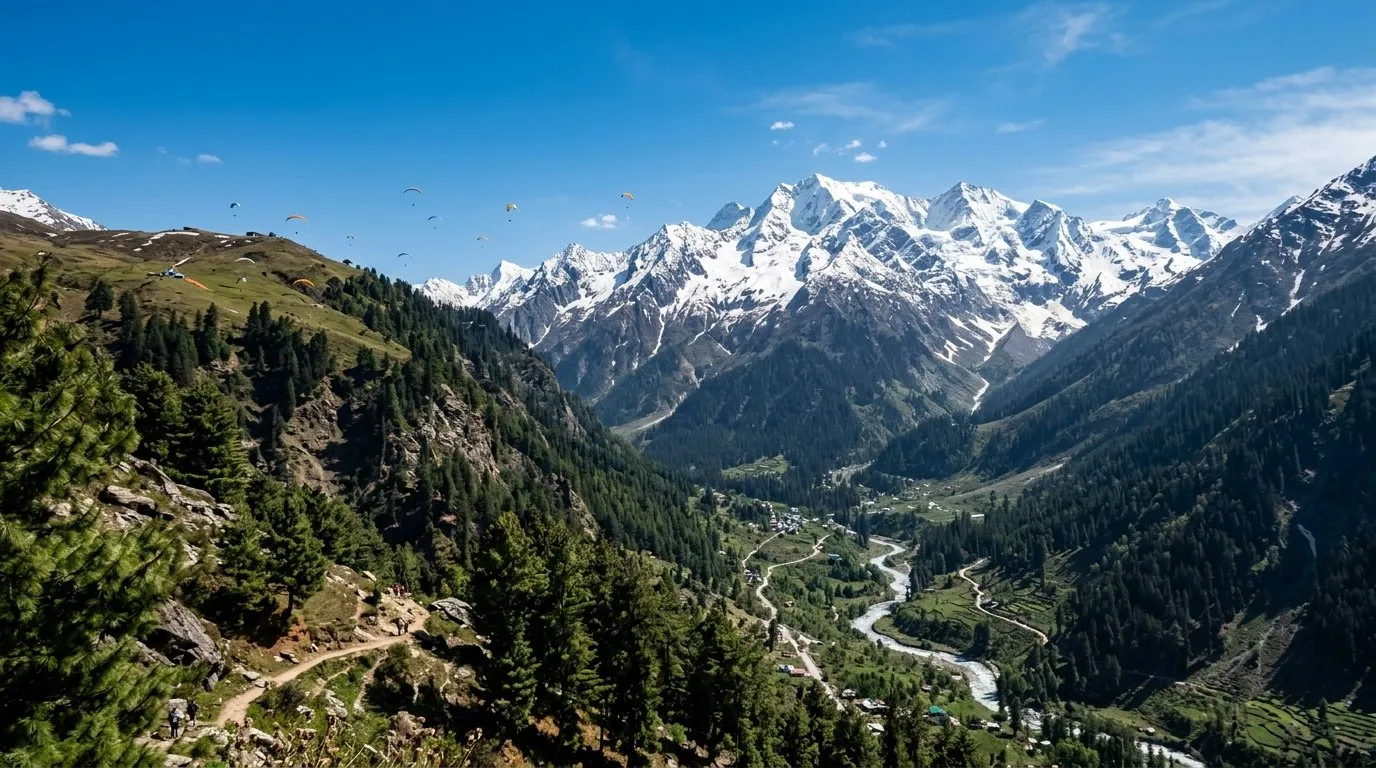
Is Manali safe for solo female travellers? Which Manali, and when
Manali is not one place. New Manali is a respectable hill town — 4/5 safe. Old Manali is the Himachal backpacker-cafe strip with party + drug scene — 2/5 after 10pm. McLeodganj 3 hours away holds 5/5 year-round. Pick deliberately.
5 min read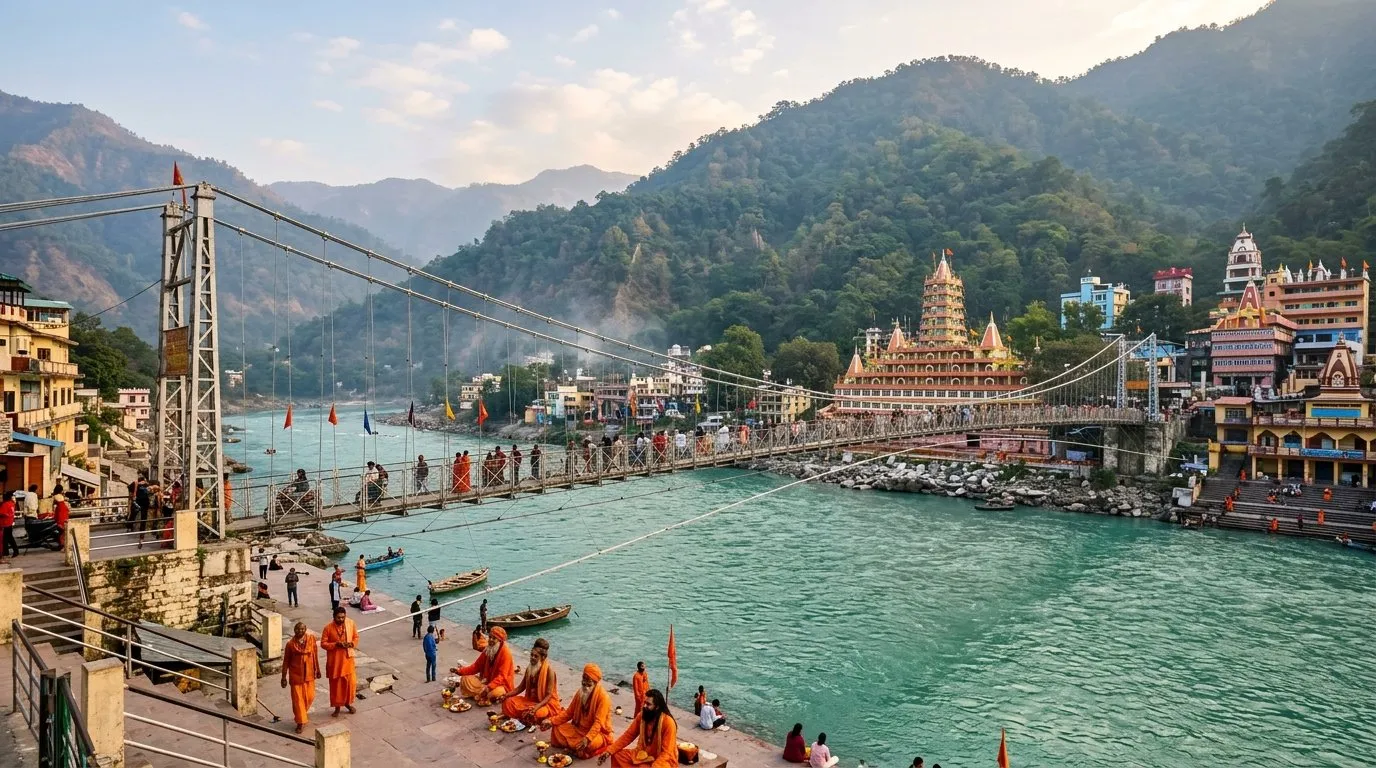
Solo-female travel in India — every destination scored, month by month
Most India travel guides tell women 'use common sense' and call it done. We rated 488 destinations on a 1-5 scale for solo-female safety, with month-specific overrides where it matters. Here's the methodology, the top 15, and the five that don't clear the bar.
10 min read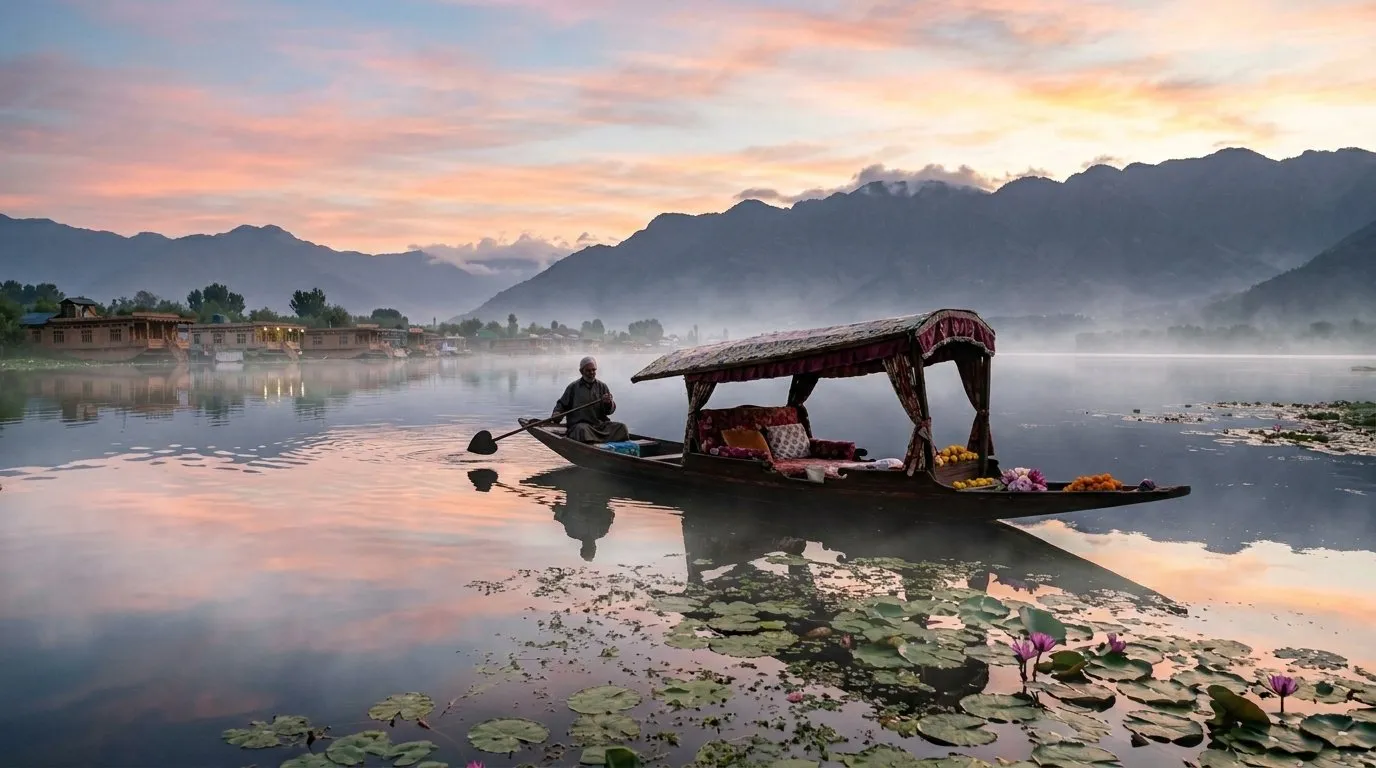
Is Kashmir safe for solo female travellers? What actually matters
Kashmir is the destination where the generic 'is India safe for women' post fails hardest. The answer depends on which month, which valley, which houseboat operator, and whether you're willing to dress differently than you would in Goa. Here's the concrete version.
6 min read- Access
- Manali side unpaved. Kinnaur side paved but landslide-prone.
- Emergency
- 108 BSNL only · CHC Kaza (basic). Real: Kullu 6-10hrs.
- Stay
- ₹500-3000/night · 25 options
Go with confidence.