Complete Guide to Chopta
Mini Switzerland of Uttarakhand — rhododendron meadows and the easiest gateway to a 4000m summit
Destinations in this article
Why Go
Chopta is a meadow at 2,680m on the Gopeshwar-Ukhimath road in Uttarakhand's Rudraprayag district. It has no town, no market, and no permanent settlement — just a cluster of dhabas, tented camps, and the trailhead for one of India's most rewarding short treks. That trek to Tungnath temple and Chandrashila summit (4,000m) is the reason Chopta exists on any traveler's map.
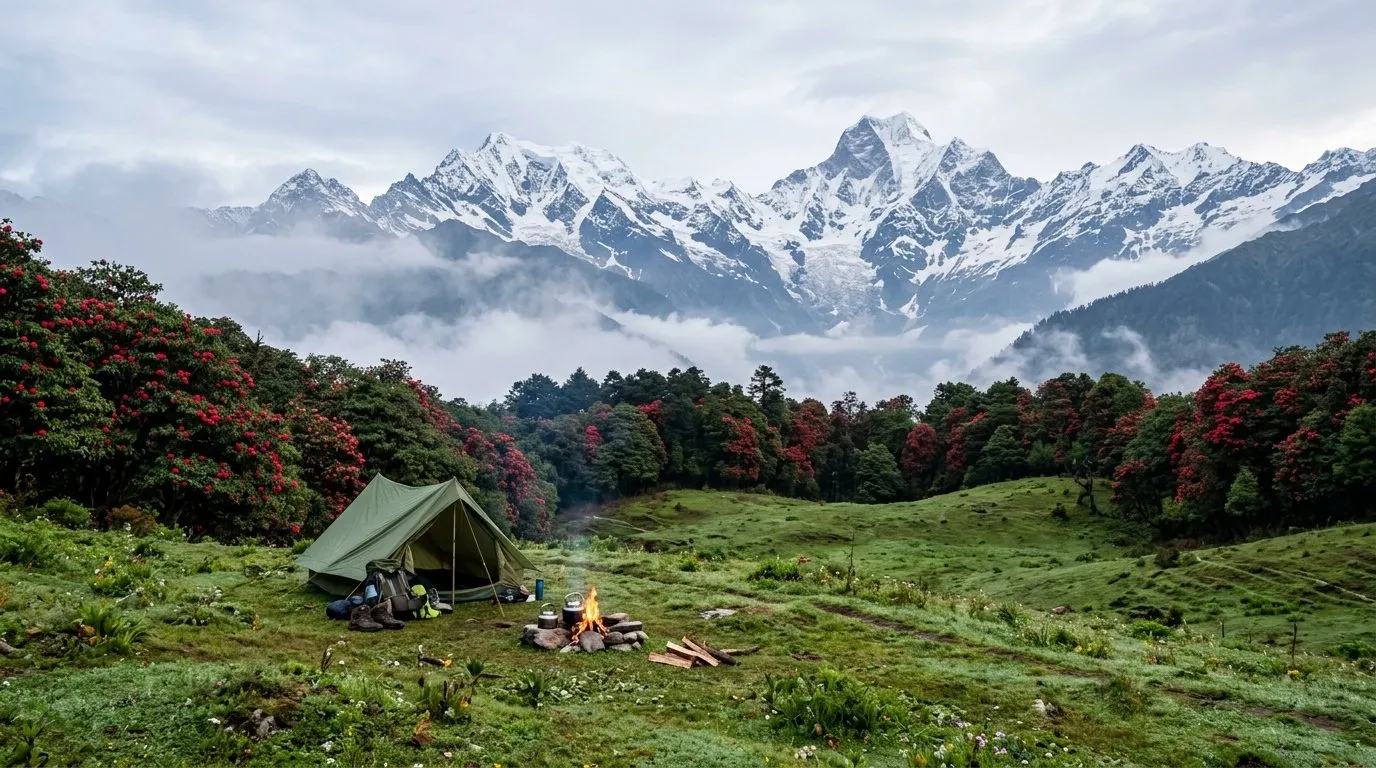
But Chopta earns its "Mini Switzerland" nickname on its own terms. The meadow sits on a ridge with views of Trishul, Nanda Devi, and Chaukhamba peaks on clear days. From April to May, the surrounding forests explode with rhododendron blooms — entire hillsides turn red and pink. The forests are dense with oak, deodar, and rhododendron, and the birding is exceptional: Himalayan monal (Uttarakhand's state bird), koklass pheasant, and numerous warblers.
The real value proposition is accessibility combined with altitude. Most 4,000m summits in India require multi-day treks with porters and gear. Chandrashila — at 4,000m with 360-degree Himalayan panoramas — is 5km from the road. You can drive to Chopta, trek up, summit, and return in a single (long) day. No other destination in India offers this return on effort.
The Best Month (and the Worst)
Best: April to May, and September to October. April-May is rhododendron season — the forests between Chopta and Tungnath turn into a natural gallery of red, pink, and white blooms. Clear skies mean sharp mountain views. September-October brings post-monsoon clarity, fresh snow on higher peaks, and green meadows. October is particularly stunning with the first winter feel.
Worst: January to February. Chopta receives 4-6 feet of snowfall. The road from Gopeshwar may close. The trek to Tungnath becomes a serious winter mountaineering exercise requiring crampons and ice axes. The dhabas and camps shut down. Only experienced winter trekkers should consider it.
Monsoon (July-August): Heavy rain, leeches on the trek trail, zero visibility, and landslide-prone roads. The meadow is green but the experience is miserable. Avoid entirely.
How to Get There
From Delhi (420km, 10-12 hours by road): Take NH-58 to Rishikesh → Devprayag → Rudraprayag → Ukhimath → Chopta. The last 30km from Ukhimath to Chopta is a scenic mountain road through dense forest.
From Rishikesh (200km, 7-8 hours): The most common starting point. The drive follows the Alaknanda River through beautiful gorge scenery. Road quality is good until Ukhimath, then becomes a typical mountain road.
From Haridwar (225km, 8-9 hours): Add an hour to the Rishikesh timings.
Bus: GMOU (Garhwal Motor Owners Union) buses run from Rishikesh to Gopeshwar and Ukhimath. From Ukhimath, shared jeeps go to Chopta (30km, 1-1.5 hours). No direct bus from Delhi to Chopta.
Nearest airport: Jolly Grant, Dehradun (250km, 8-9 hours drive). Rishikesh is the practical staging point.
Nearest railhead: Rishikesh or Haridwar.
What to Expect
The meadow — Chopta itself is a high-altitude meadow, not a town. It's a stopping point on the road. In season, 10-15 dhabas and tented camps operate here. Out of season, it's an empty clearing. The meadow offers views south toward the Himalayan range — best at dawn and dusk.
Tungnath trek — The main event. 3.5km from Chopta to Tungnath temple (3,680m), gaining about 1,000m elevation. Well-defined stone path. Takes 2-3 hours up, 1.5-2 hours down. More details in the Tungnath article — but this is the reason you're in Chopta.
Chandrashila summit — Another 1.5km beyond Tungnath to 4,000m. The last section is steep and scrambling is required. The 360-degree panorama at the summit — Nanda Devi, Trishul, Kedar Range, Chaukhamba — is one of the best in Uttarakhand.
Rhododendron forests — From late March through May, the trek to Tungnath passes through forests of blooming rhododendrons. The red and pink flowers against the snow-capped backdrop is the single most photographed scene in the region.
Deoria Tal — A detour from Chopta. This high-altitude lake (2,438m) near Sari village reflects the Chaukhamba peaks on still mornings. It's a moderate 2km uphill trek from Sari. Can be combined with a Chopta visit.
Bird watching — The oak and rhododendron forests around Chopta host exceptional Himalayan birdlife. Early mornings on the trek trail offer sightings of Himalayan monal, koklass pheasant, white-throated laughingthrush, and various woodpeckers.
Infrastructure Reality
Network: BSNL only. No Jio, Airtel, or Vi coverage at Chopta. BSNL signal is weak and drops frequently. Download everything offline before arriving. Don't count on making calls.
ATM: None within 30km. Nearest ATMs are in Ukhimath or Gopeshwar. Carry all cash you'll need (₹3,000-5,000 minimum for 2 days).
Medical: Nothing at Chopta. The nearest hospital is the District Hospital in Gopeshwar (40km, 1.5-2 hours). For a trek destination that goes to 4,000m, this is a serious consideration. Carry a comprehensive first aid kit, altitude medication, and know the symptoms of acute mountain sickness.
Fuel: Nearest petrol pump is Ukhimath (30km). Fill up before the final ascent.
Electricity: Generator-powered at the dhabas and camps. No grid supply. Charge everything before arriving or carry power banks.
Water: Stream water is available but purify it. Dhabas sell bottled water (overpriced, but available).
Where to Stay
Chopta's accommodation is exclusively basic. Manage expectations accordingly.
Dhabas with rooms (₹500-1,000/night): Simple wooden or concrete rooms attached to roadside dhabas. Shared toilets, no hot water (or bucket hot water if you're lucky), and sleeping bags recommended in shoulder season. This is the most common option.
Tented camps (₹1,500-3,500/night): Several operators set up semi-permanent tent camps in season (March-November). These range from basic sleeping tents to more comfortable ones with cots and quilts. Meals are included. KMVN (Kumaon Mandal Vikas Nigam) and private operators both offer options.
Forest rest house: The forest department rest house near Chopta offers the most solid accommodation. Book through the Uttarakhand forest department — availability is limited.
Camping (own gear): Bring your own tent and camp on the meadow. Beautiful experience on clear nights. You'll need full self-sufficiency: tent, sleeping bag, stove, food, and water purification.
Base at Ukhimath: For those who want proper hotel rooms, stay in Ukhimath and drive to Chopta early morning for the trek. This sacrifices the dawn light but gains a comfortable bed.
Kids Verdict
Rating: 3/5 — Suitable for active families, with caveats.
The trek to Tungnath is 3.5km and 1,000m elevation gain — doable for fit children 8+ but challenging. Under-8s will struggle with the sustained uphill. The altitude reaches 3,680m (Tungnath) to 4,000m (Chandrashila) — AMS risk for young children is real.
The meadow itself is fun for kids: open space, flowers in season, and a sense of adventure. But the accommodation is very basic — no bathrooms you'd want a 5-year-old using.
Best approach: families with kids under 10 should enjoy the Chopta meadow and the first 1-2km of the trek trail (through the best rhododendron sections) without pushing to the summit.
What to Avoid
- ●Attempting Chandrashila without starting by 6 AM. Afternoon clouds roll in by noon and obliterate the summit view. Early start is non-negotiable.
- ●Underestimating the trek. It's "only" 5km to Chandrashila but it's 1,300m of elevation gain. People in average fitness will feel it. Bring water (2 liters minimum), snacks, and a rain layer.
- ●Going in jeans and sneakers. The trail is rocky and can be icy in early morning. Proper trekking shoes and layered clothing are essential.
- ●Monsoon visits. Leeches, zero views, dangerous roads. Just don't.
- ●Leaving garbage on the trail. Tungnath trek has a growing waste problem. The temple committee tries to maintain the trail but tourist volume is increasing. Carry a trash bag.
The Bottom Line
Chopta is not a destination — it's a launchpad. You come here to trek to Tungnath and Chandrashila, and the trek delivers one of the best effort-to-reward ratios in the Indian Himalayas. A 5km walk gets you a 4,000m summit with panoramic views that rival multi-day expeditions. The accommodation is basic, the infrastructure is minimal, and there's nothing to do in Chopta itself. But the rhododendron forests, the mountain views, and that summit panorama make it one of Uttarakhand's most worthwhile stops. Budget two days: arrive afternoon, trek next morning, leave by evening.
Monthly Scores
| Destination | Jan | Feb | Mar | Apr | May | Jun | Jul | Aug | Sep | Oct | Nov | Dec |
|---|---|---|---|---|---|---|---|---|---|---|---|---|
| Chopta | 6.0 | 6.0 | 8.0 | 10.0 | 10.0 | 8.0 | 4.0 | 4.0 | 10.0 | 10.0 | 8.0 | 6.0 |
The Window · Every Sunday
Liked this? Get one every Sunday.
Best score of the week, one honest skip, road updates. Four minutes. No spam.
More in Field guide
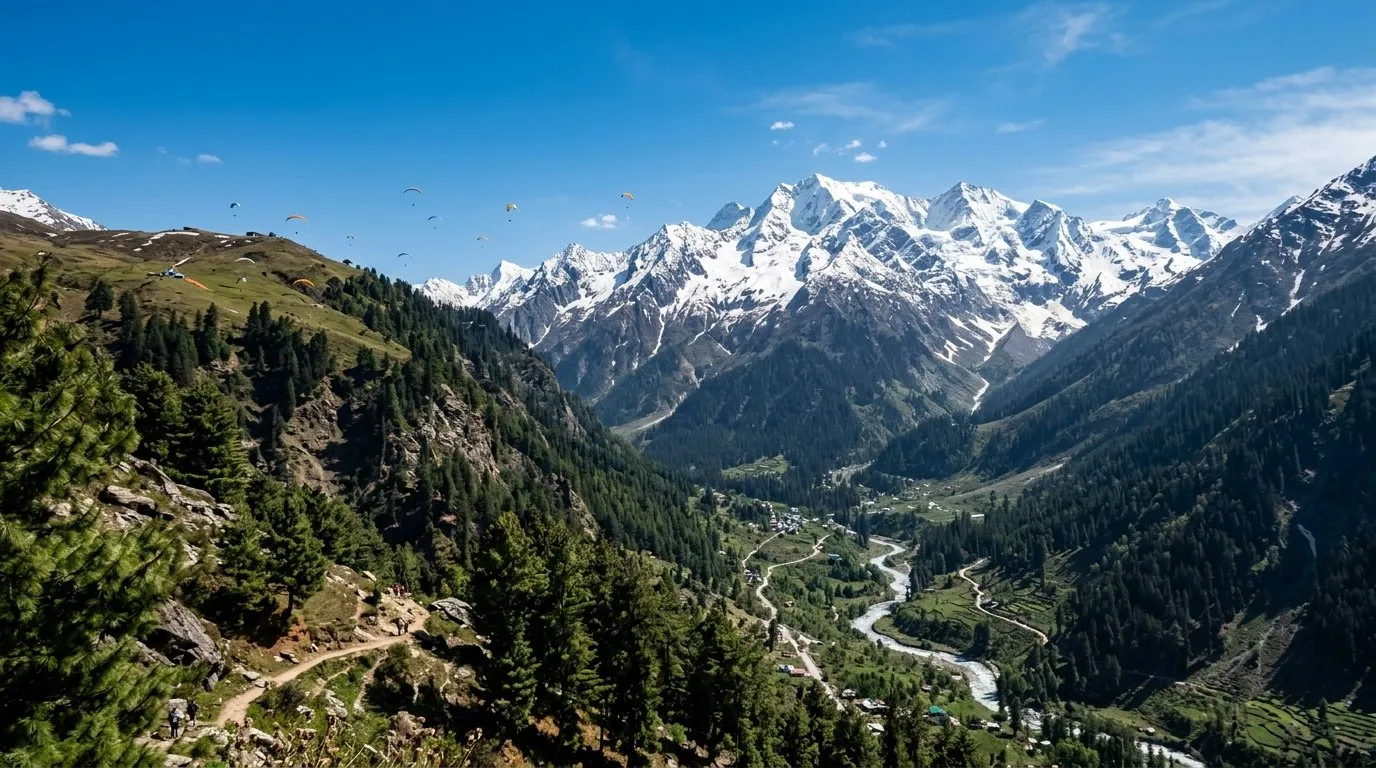
Is Manali safe for solo female travellers? Which Manali, and when
Manali is not one place. New Manali is a respectable hill town — 4/5 safe. Old Manali is the Himachal backpacker-cafe strip with party + drug scene — 2/5 after 10pm. McLeodganj 3 hours away holds 5/5 year-round. Pick deliberately.
5 min read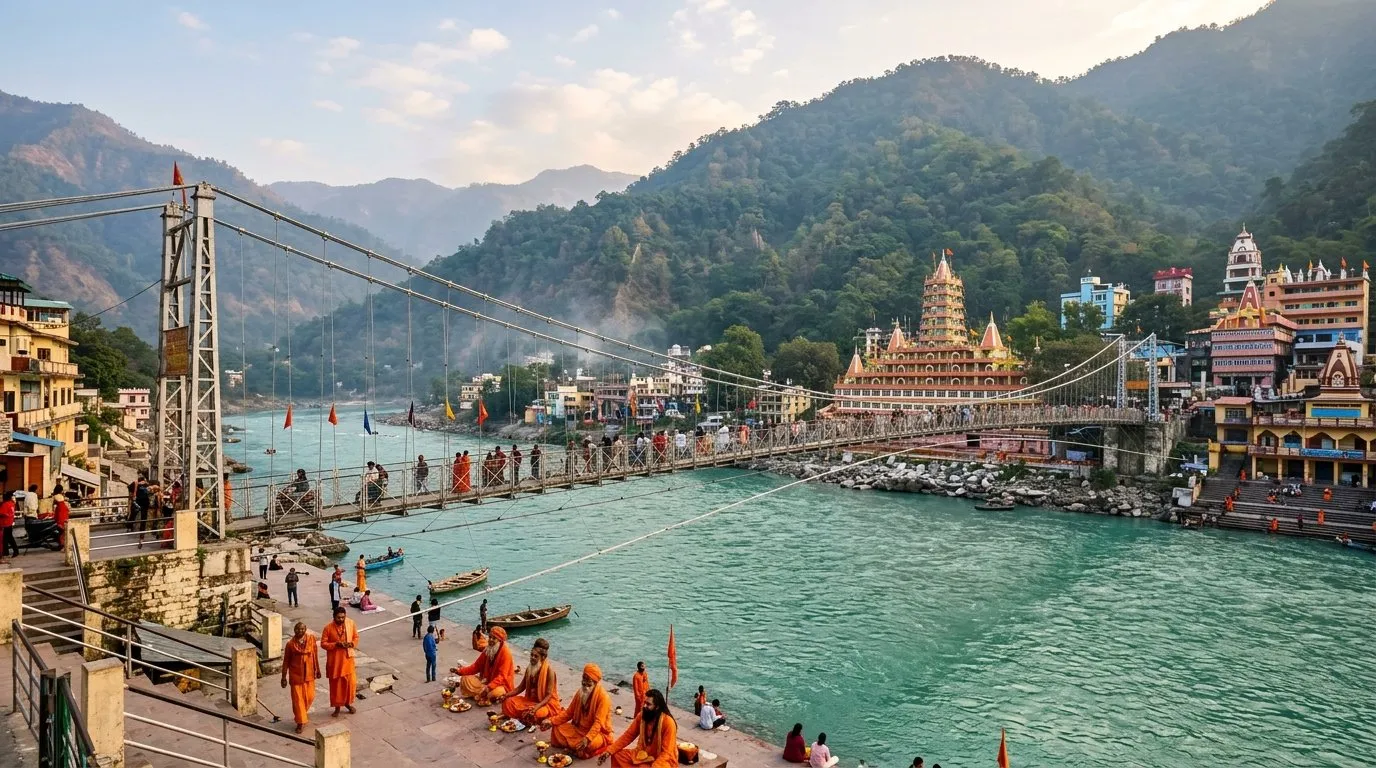
Solo-female travel in India — every destination scored, month by month
Most India travel guides tell women 'use common sense' and call it done. We rated 488 destinations on a 1-5 scale for solo-female safety, with month-specific overrides where it matters. Here's the methodology, the top 15, and the five that don't clear the bar.
10 min read
Is Kashmir safe for solo female travellers? What actually matters
Kashmir is the destination where the generic 'is India safe for women' post fails hardest. The answer depends on which month, which valley, which houseboat operator, and whether you're willing to dress differently than you would in Goa. Here's the concrete version.
6 min read- Emergency
- 108 (slow — remote area) · Gopeshwar District Hospital 40km
Go with confidence.