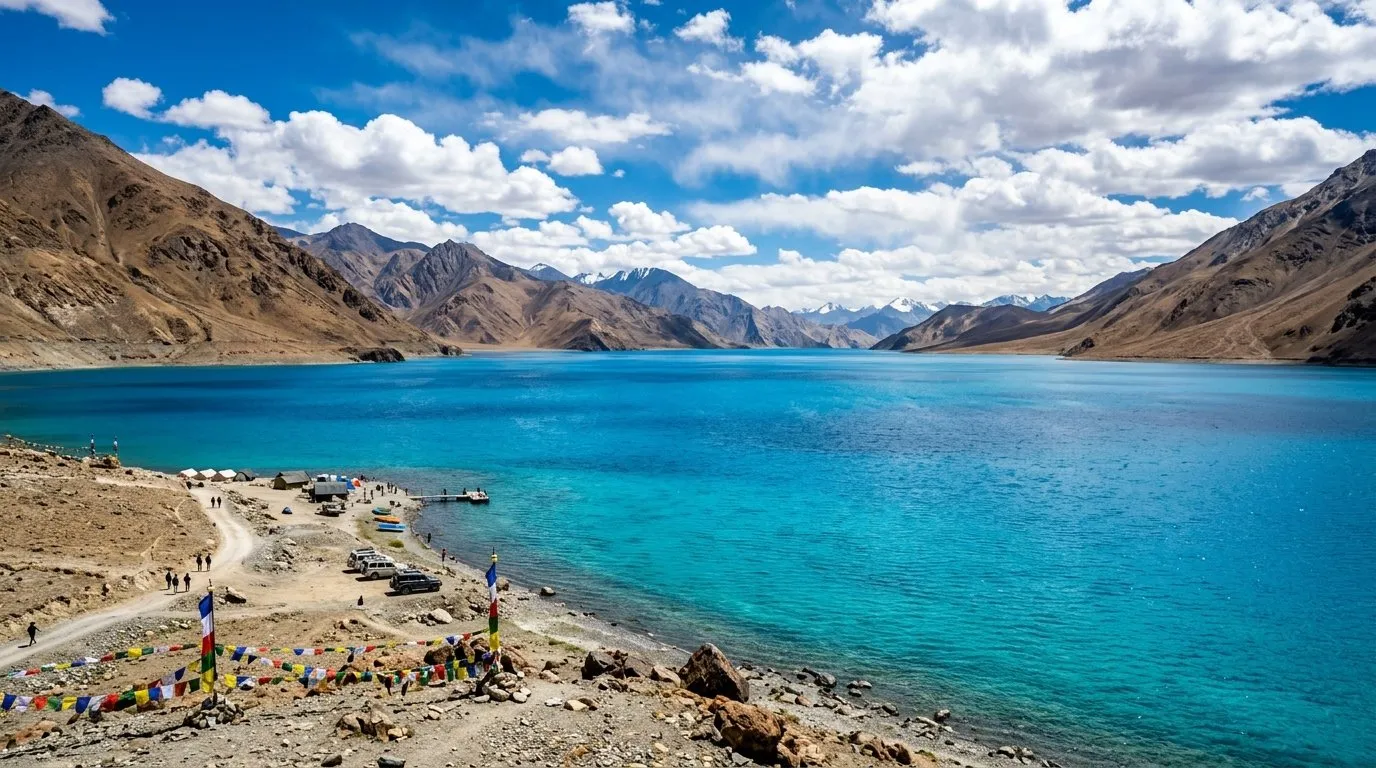
Complete Guide to Pangong Tso
That blue. The altitude. The 6-hour drive from Leh. Here's everything the Instagram posts don't tell you.
Destinations in this article
State: Ladakh | Elevation: 4,350m | Difficulty: Hard
Why Go
Pangong Tso is 134 kilometres of lake stretched across the Himalayas — two-thirds of it sitting inside China, the remaining third in Indian territory. The water shifts between turquoise, cobalt, and near-violet depending on the time of day, cloud cover, and your own altitude-addled perception. No photo does it justice. Every photo looks like it was edited. It wasn't.
The lake became globally famous after the climactic scene of "3 Idiots" was filmed here in 2009. That single Bollywood moment turned a remote military zone into a once-in-a-lifetime destination for millions. Before the film, maybe a few thousand tourists reached Pangong annually. Now it's tens of thousands — and the infrastructure hasn't kept up. Not even close.
But here's the thing: Pangong Tso is genuinely one of the most extraordinary bodies of water on the planet. It sits in an endorheic basin — no outlet, no river flowing out — at 4,350 metres above sea level. The salinity changes along its length, freshwater at the Indian end shifting to brackish toward China. The colour comes from the depth, the minerals, and the angle of high-altitude sunlight cutting through thin atmosphere. It is, objectively, spectacular.
The question isn't whether Pangong is beautiful. It is. The question is whether 10-12 hours of driving through one of the most punishing roads in India is worth 2-3 hours at the lake. For some people, absolutely. For others — especially families, anyone with health concerns, or people who dislike rough travel — it's a hard no.
The Best Month (and the Worst)
Best: June to September. July and August bring the most stable weather, warmest daytime temperatures (10-15°C, dropping to -5°C at night), and the most vivid lake colours. June is slightly colder but less crowded. September is gorgeous but camps start closing.
Peak: July-August. Every camp is full. Book 2-3 weeks ahead minimum.
Worst: November to May. The lake freezes from January through March — dramatically beautiful in photos, completely inaccessible for most tourists. The road via Chang La closes intermittently from October and fully from November. Don't plan a Pangong trip outside June-September unless you're prepared for military-grade logistics.
Rating: June-September: 5/5. Rest of year: not applicable — you can't get there.
How to Get There
From Leh, Pangong Tso is approximately 160 km via the Chang La pass route. Despite the relatively short distance, expect 5-6 hours minimum driving time each way. Here's why:
The road crosses Chang La at 5,360 metres. A sign at the top claims it's the "world's highest motorable pass." It isn't — Umlingla at 5,883m holds that record, and Khardung La's sign also lies. But Chang La is high enough to make most people feel terrible. Headache, nausea, shortness of breath — standard symptoms at this altitude.
Route: Leh → Karu → Chang La (5,360m) → Durbuk → Tangste → Pangong Tso (4,350m)
Requirements:
- ●Inner Line Permit (ILP) — mandatory for all Indian tourists, obtainable in Leh (DC office or online via Ladakh UT portal). Foreign nationals need a Protected Area Permit (PAP) arranged through a registered tour operator.
- ●A rented vehicle with driver (₹4,000-6,000 for a return trip) or a shared taxi arrangement. Do NOT attempt this on a rented motorcycle unless you're an experienced high-altitude rider. Breakdowns at Chang La are not a joke — there's no rescue service.
- ●Fuel: fill up completely in Leh. There are no petrol stations between Leh and Pangong.
By air: Fly to Leh (Kushok Bakula Rimpochee Airport). Multiple daily flights from Delhi. Allow minimum 2 days in Leh for acclimatization before attempting the Pangong drive.
What to Expect
The drive itself is the experience. You'll cross one of the highest passes in the world, drive through stark brown valleys with zero vegetation, pass occasional military convoys, and watch the landscape shift from mountain desert to sudden, shocking blue as the lake appears.
At the lake, you'll find a cluster of tented camps near Spangmik and Man-Merak. The famous "3 Idiots" point is marked. There are a few chai stalls. And that's essentially it.
The lake is mesmerizing. Most people spend 1-2 hours walking along the shore, taking photos, sitting in stunned silence at the colour. Then the altitude headache kicks in, the cold wind picks up, and reality reasserts itself.
What most people don't expect:
- ●The altitude fatigue is real. At 4,350m, you have roughly 60% of sea-level oxygen. Walking 100 metres feels like walking 300.
- ●It's cold. Even in July, the wind off the lake cuts through everything. Bring layers — a proper down jacket, not a fashion puffer.
- ●There is ZERO mobile network at the lake. No Jio, no Airtel, no BSNL. Your phone is a camera and nothing else.
- ●There are ZERO ATMs. Carry all cash from Leh. Camps don't accept cards.
Infrastructure Reality
This is where the dream meets the gravel road.
Accommodation: Tented camps with basic cots, sleeping bags, and sometimes a generator that runs from 6-10 PM. Expect shared dry toilets. A few "deluxe" camps offer attached toilets and slightly better bedding. Don't expect hot water reliably. Rates: ₹1,500-3,500 per night including basic meals.
Food: Camp kitchens serve dal-rice, maggi, basic Indian food. It's fuel, not cuisine. Bring your own snacks, energy bars, and water.
Medical: The nearest hospital is in Leh, 5-6 hours away. There is a small army medical post at Tangste (2 hours back from the lake) that may help in emergencies. Carry a comprehensive first-aid kit and any prescription medications you need. If you have heart conditions, respiratory problems, or blood pressure issues — do not come here. This is not overcautious advice; it's based on actual medical evacuations.
Electricity: Generator only, limited hours. Charge all devices in Leh before leaving.
Water: Bring purification tablets or a filter bottle. The lake water is not reliably potable at the eastern end despite appearing clean.
Where to Stay
At the lake (tented camps):
- ●Basic camps at Spangmik: ₹1,500-2,500/night. The cheapest option. Don't expect anything beyond a cot and meals.
- ●"Deluxe" camps at Man and Merak: ₹2,500-4,000/night. Marginally better. Some have attached toilets.
- ●Booking: Many camps aren't online. Your driver or a Leh travel agent will know which ones are operational. Don't expect Booking.com to help here.
In Leh (before and after):
- ●Budget guesthouses: ₹800-1,500/night
- ●Mid-range hotels: ₹2,000-4,000/night
- ●Premium: The Grand Dragon, Stok Palace Heritage: ₹8,000-15,000/night
Pro tip: Many experienced travellers do Pangong as a day trip — leave Leh at 4 AM, reach by 10 AM, spend 2-3 hours, return by evening. It's exhausting but avoids the discomfort of overnight at altitude with zero infrastructure.
Kids Verdict
Rating: 1/5 — Not recommended for families.
The altitude alone rules out children under 10. At 4,350m, with a 5,360m pass crossing, altitude sickness risk for children is significant and harder to detect. Children can't articulate symptoms clearly. The nearest hospital is 5-6 hours away. The camps have no heating, inconsistent food safety, and shared toilets.
If your children are teenagers, experienced with travel, and you've already spent 3+ days acclimatizing in Leh — it's possible. But even then, it's not enjoyable for most kids. There's nothing to do at the lake beyond looking at it. No playground, no activities, no entertainment. It's a contemplative experience, and most children are not contemplative.
What to Avoid
1. Going without acclimatization. Minimum 2 full days in Leh (3,500m) before attempting the drive. This is non-negotiable. People have died from pulmonary oedema on this route.
2. Relying on Diamox as a substitute for acclimatization. It helps with symptoms. It doesn't replace gradual altitude adjustment.
3. Riding a motorcycle without experience. The road has loose gravel, water crossings, and sections at 5,000m+ where your reaction time drops. Every year, inexperienced riders crash on this route.
4. Expecting the "3 Idiots" experience. The film crew had trailers, catering, medical support, and helicopters on standby. You have a tent and a headache.
5. Carrying insufficient cash. Budget ₹3,000-5,000 per day per person (camp, permit, vehicle share, food). All cash. No exceptions.
6. Ignoring weather forecasts. Rain can close the road at Chang La. Check conditions in Leh before departing.
The Bottom Line
Pangong Tso is real. The colour is real. The scale is genuinely striking. It's one of the most photogenic places on the planet, and photos still undersell it.
But the experience is 10 hours of hard driving, 2-3 hours of awe, and a night of altitude-induced insomnia in a tent with generator power. Most people come back saying: "The lake was incredible, but I'd never do it again."
Go if: You're physically fit, you've acclimatized properly, you don't need comfort, and you understand that the journey IS the destination. The drive through Changthang plateau is otherworldly.
Skip if: You have health concerns, you're travelling with young children, you need reliable communication, or you expect the infrastructure to match the Instagram aesthetic.
Budget: ₹3,000-5,000 per day including camp, permits, vehicle share, and food. All cash from Leh.
Monthly Scores
| Destination | Jan | Feb | Mar | Apr | May | Jun | Jul | Aug | Sep | Oct | Nov | Dec |
|---|---|---|---|---|---|---|---|---|---|---|---|---|
| Pangong Tso | 2.0 | 2.0 | 2.0 | 2.0 | 4.0 | 10.0 | 10.0 | 8.0 | 10.0 | 4.0 | 2.0 | 2.0 |
The Window · Every Sunday
Liked this? Get one every Sunday.
Best score of the week, one honest skip, road updates. Four minutes. No spam.
More in Field guide
Is Manali safe for solo female travellers? Which Manali, and when
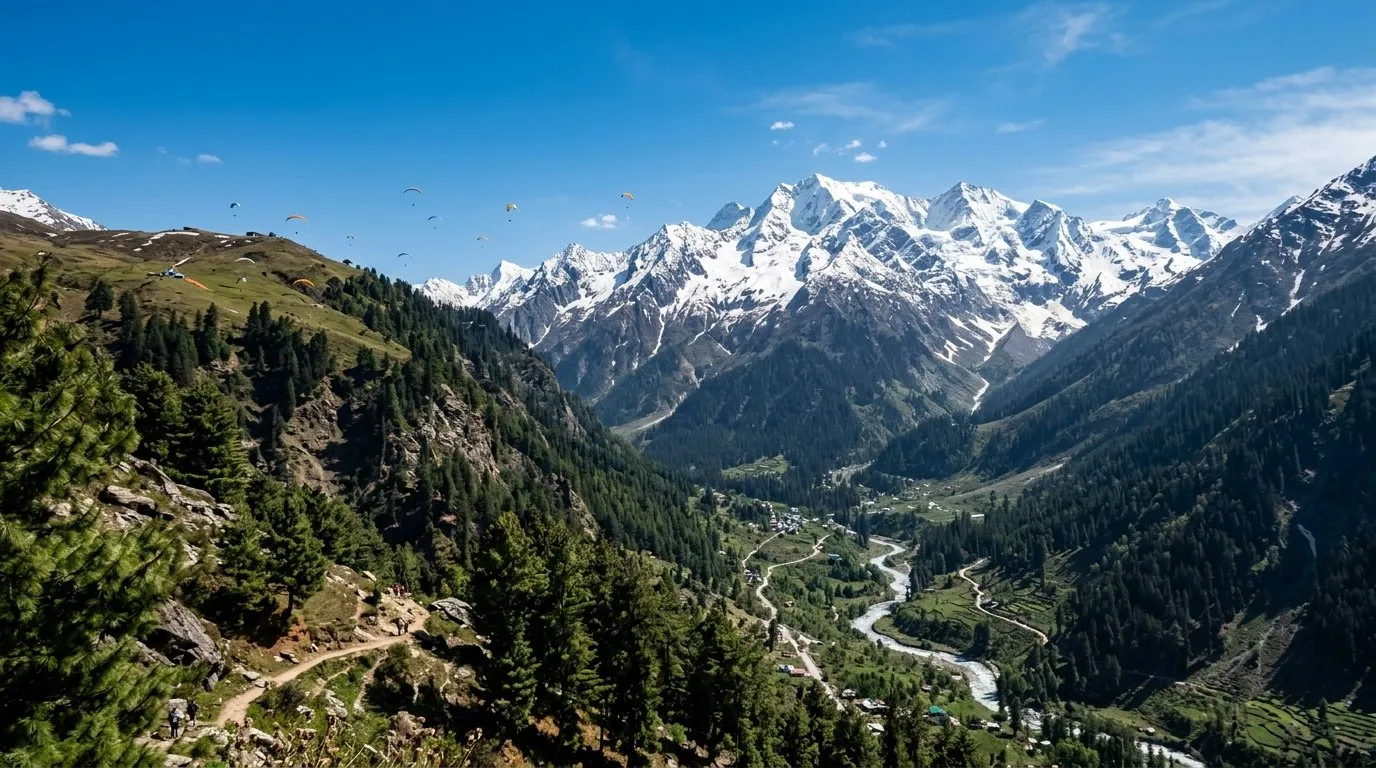
Manali is not one place. New Manali is a respectable hill town — 4/5 safe. Old Manali is the Himachal backpacker-cafe strip with party + drug scene — 2/5 after 10pm. McLeodganj 3 hours away holds 5/5 year-round. Pick deliberately.
5 min read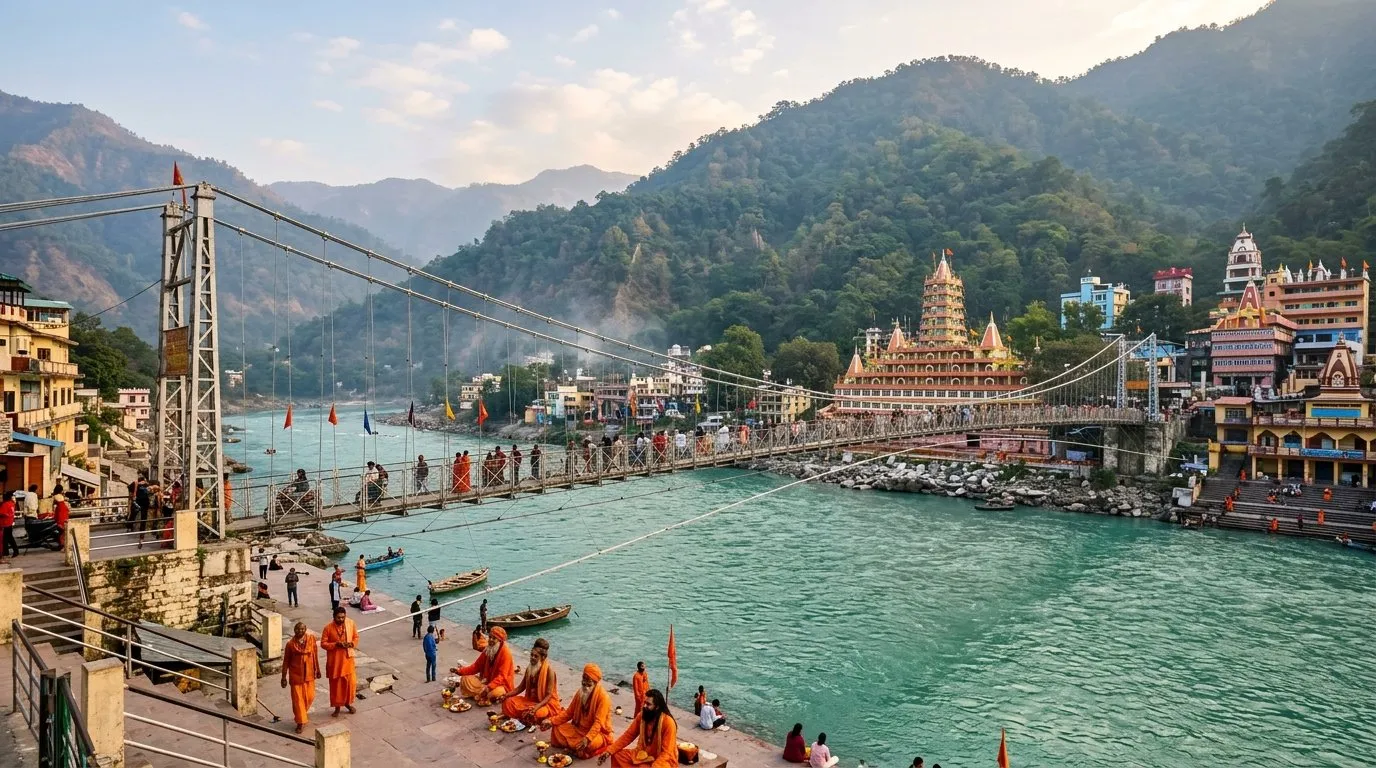
Solo-female travel in India — every destination scored, month by month
Most India travel guides tell women 'use common sense' and call it done. We rated 488 destinations on a 1-5 scale for solo-female safety, with month-specific overrides where it matters. Here's the methodology, the top 15, and the five that don't clear the bar.
10 min read
Is Kashmir safe for solo female travellers? What actually matters
Kashmir is the destination where the generic 'is India safe for women' post fails hardest. The answer depends on which month, which valley, which houseboat operator, and whether you're willing to dress differently than you would in Goa. Here's the concrete version.
6 min read- Access
- Rough, unpaved sections. Chang La is extreme.
- Emergency
- None. Army helicopter in extreme emergency (weather permitting). · NOTHING. Nearest: Leh 5hrs.
- Stay
- ₹1000-4000/night · 15 options
- Permit required
- See the process →
Go with confidence.