Complete Guide to Chitkul
The last inhabited village before Tibet — where India ends and the road literally stops
Destinations in this article
Why Go
Chitkul is the last inhabited village on the old Hindustan-Tibet road. At 3,450m in Himachal Pradesh's Kinnaur district, it sits so close to the Indo-Tibetan border that the road simply stops. There's nowhere further to drive. That alone makes it worth the trip — but Chitkul earns its reputation on more than geography.
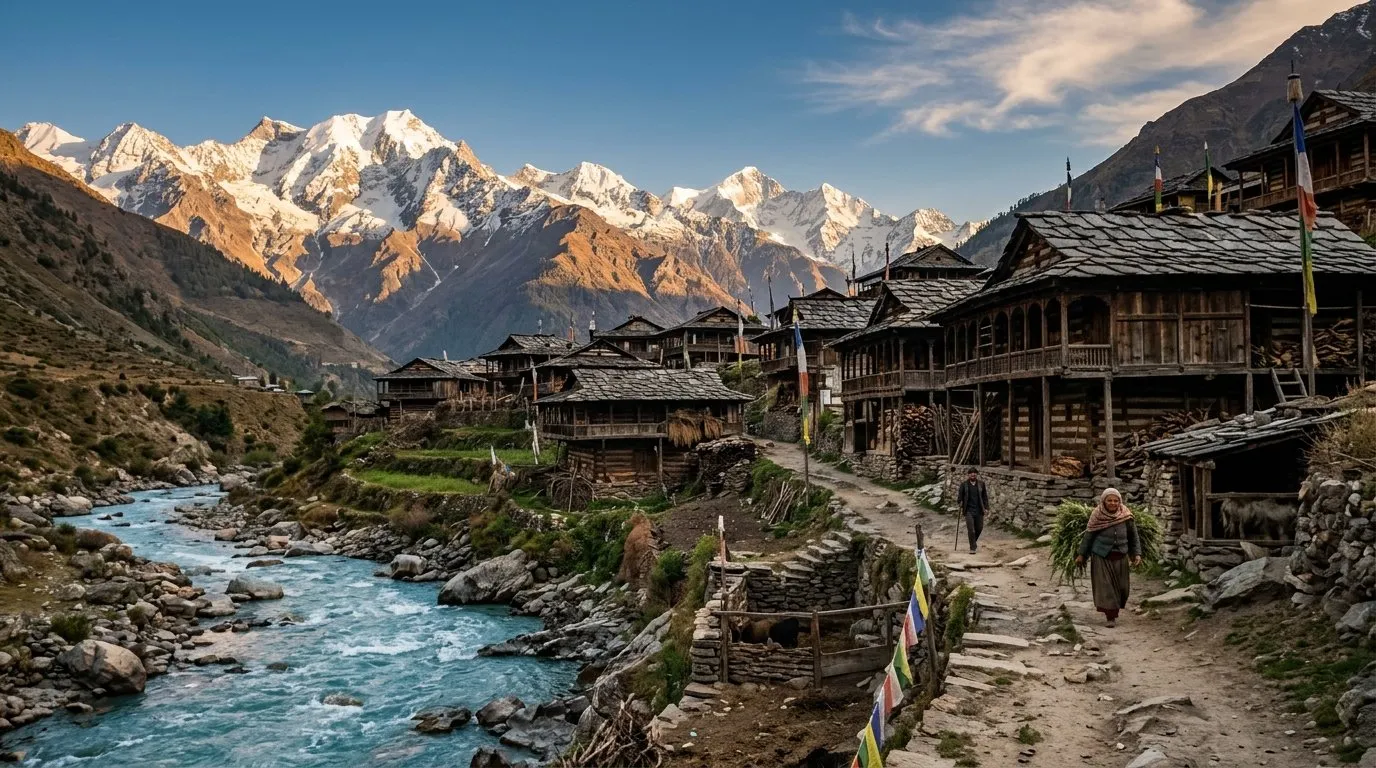
The village is small: roughly 600 residents, most of them Kinnauri farmers growing potatoes, rajma, and green peas during the short summer season. Apple orchards line the valley floor. The Baspa River runs alongside — glacier-fed, freezing cold, and a shade of blue-green that looks photoshopped but isn't. The wooden houses use traditional Kinnauri architecture: stacked stone and timber with slate roofs, a construction style that's survived centuries of heavy snowfall.
The real draw is the raw, unpolished remoteness. Chitkul has no ATM, no petrol pump, and exactly one famous landmark: Hindustan Ka Aakhri Dhaba, the last food stall in India. You eat rajma-chawal at a wooden table while looking at mountains that mark the border with Tibet. There's nothing vetted about this experience — it's just a village at the edge of the country.
The Best Month (and the Worst)
Best: Late May to mid-June, and late September to mid-October. May-June gives you wildflowers and the apple blossoms starting. The valley is green, the river is full, and temperatures hover around 10-18°C during the day. September-October delivers crystal-clear skies after the monsoon clears, with the apple harvest in full swing and the first hints of autumn gold on the trees.
Worst: December through March. The road from Sangla to Chitkul closes entirely. Snowfall buries the village under 3-5 feet of snow. The few residents who stay survive on stored supplies. There's no tourist infrastructure operating. Even November is risky — the road can close without warning after early snowfall.
Monsoon (July-August): Technically open but dangerous. Landslides are frequent on NH-5 and the Sangla-Chitkul road. In 2023, a major landslide near Karcham blocked the road for 11 days. Not worth the risk unless you have a very flexible schedule.
How to Get There
From Delhi (580km, 14-16 hours by road): Take NH-5 via Shimla → Narkanda → Rampur → Karcham. At Karcham, leave NH-5 and turn right into the Sangla Valley. From Karcham to Chitkul is another 40km of narrow mountain road. Most people break the journey at Shimla or Narkanda overnight.
From Shimla (240km, 8-10 hours): A full day's drive through some of Himachal's most dramatic road scenery. The road after Rampur gets progressively narrower and more exposed.
Nearest railhead: Shimla (narrow gauge) or Kalka (broad gauge). Neither is close.
Nearest airport: Shimla (Jubbarhatti), but it has limited and unreliable flights. Chandigarh airport is more practical — then drive 12-14 hours.
Local transport: HRTC buses run from Reckong Peo to Chitkul (3 hours), but only 1-2 per day and schedules shift seasonally. Hiring a private taxi from Sangla or Karcham is more reliable.
Road condition reality: The Karcham-Sangla-Chitkul road is single-lane in many sections. Expect construction delays, especially post-monsoon. The last 5km into Chitkul can be rough with potholes and loose gravel.
What to Expect
Chitkul is not a destination with a checklist of attractions. You go there to exist in a place where India runs out of road. Here's what fills a visit:
Hindustan Ka Aakhri Dhaba — A simple roadside eatery serving rajma-chawal and Maggi. The food is average. The claim to fame is real: it's genuinely the last food stall before the border. Worth one meal for the experience.
Baspa River walk — Follow the river upstream from the village. The water is glacier-fed and brutally cold. The valley opens up into meadows with mountain views on both sides. A 2-3 hour walk is plenty.
Village architecture — Chitkul's wooden temple dedicated to the local deity Mathi is beautifully carved. The residential houses use traditional Kinnauri pagoda-style construction that you won't find in most Himalayan villages.
Potato and pea fields — Not a tourist attraction per se, but the terraced fields against the mountain backdrop are genuinely photogenic, especially in June when everything is green.
Do nothing, intentionally — Chitkul rewards slow time. Sit outside your homestay. Watch clouds move across the mountains. This is the actual product.
Infrastructure Reality
Network: BSNL only. Jio, Airtel, and Vi have zero coverage. BSNL works intermittently — expect signal drops. Download offline maps and any content you need before arriving.
ATM: None. The nearest ATM is in Sangla (25km) or Reckong Peo (70km). Carry sufficient cash. Some homestays accept UPI when BSNL is cooperating, but don't count on it.
Medical: No hospital or clinic in Chitkul. The nearest hospital is the Regional Hospital in Reckong Peo, 70km away (2.5-3 hours by road). Carry a personal first aid kit, altitude medication (Diamox if needed), and any prescription medicines.
Fuel: No petrol pump. Nearest fuel is Sangla or Reckong Peo. Fill up before entering the valley.
Electricity: Available but inconsistent. Power cuts are common, especially in bad weather. Carry a power bank.
Water: Tap water comes from mountain streams and is generally safe, but carry a filter or purification tablets if you have a sensitive stomach.
Where to Stay
Chitkul has roughly 15-20 guesthouses and homestays. No luxury hotels. No chains. This is all family-run accommodation.
Budget (₹500-1,200/night): Basic rooms in family homes. Shared bathrooms are common. Quilts provided but bring a sleeping bag in shoulder season. Expect wooden rooms, simple but clean.
Mid-range (₹1,500-3,000/night): A few guesthouses offer attached bathrooms and room heaters. The Wanderer's Nest and Hotel Chitkul get decent reviews. Hot water is solar-heated and available in limited windows.
Camping: Possible along the Baspa River with proper gear. No formal campsites. You'll need to be self-sufficient — carry everything including food.
Book ahead for May-June and September-October. Chitkul has limited rooms and the popular weekends sell out. Calling the guesthouse directly (if BSNL cooperates) works better than online platforms.
Kids Verdict
Rating: 2/5 — Not recommended for young children.
The 14-16 hour road journey from Delhi is grueling for kids. The altitude (3,450m) can cause mild altitude sickness in children under 5 — headaches, nausea, poor sleep. There's no medical facility within 70km. Network coverage is unreliable, which means no calling for help easily.
Older kids (10+) who enjoy mountain walks and can handle basic accommodation will find it memorable. But for families with children under 8, Sangla Valley (lower altitude, better infrastructure) is a smarter choice in the same region.
What to Avoid
- ●Driving to Chitkul after dark. The road from Sangla has no streetlights and several blind curves. Arrive before 4 PM.
- ●Skipping acclimatization. If you're coming from the plains, spend at least one night at a lower altitude (Sangla or Kalpa) before heading to 3,450m.
- ●Expecting restaurants. There are 3-4 dhabas. That's it. Meals are simple: rajma, dal, rice, Maggi, eggs. Vegetarian options dominate.
- ●Littering. Chitkul has had increasing issues with tourist waste. Carry out everything you carry in.
- ●Swimming in the Baspa. The current is strong and the water is near-freezing. People have died.
The Bottom Line
Chitkul is India's full stop — the point where the road runs out and the border begins. It's not comfortable, it's not convenient, and it's not for everyone. The infrastructure is minimal, the journey is long, and the network barely works. But if you want to stand at the edge of the country in a village that still lives by the rhythm of seasons and harvests, Chitkul delivers something no resort or hill station can. Go before it changes — because the road is being widened, more guesthouses are being built, and the Instagrammers have already found it.
Monthly Scores
| Destination | Jan | Feb | Mar | Apr | May | Jun | Jul | Aug | Sep | Oct | Nov | Dec |
|---|---|---|---|---|---|---|---|---|---|---|---|---|
| Chitkul | 2.0 | 2.0 | 2.0 | 4.0 | 8.0 | 10.0 | 6.0 | 6.0 | 10.0 | 10.0 | 4.0 | 2.0 |
The Window · Every Sunday
Liked this? Get one every Sunday.
Best score of the week, one honest skip, road updates. Four minutes. No spam.
More in Field guide
Is Manali safe for solo female travellers? Which Manali, and when
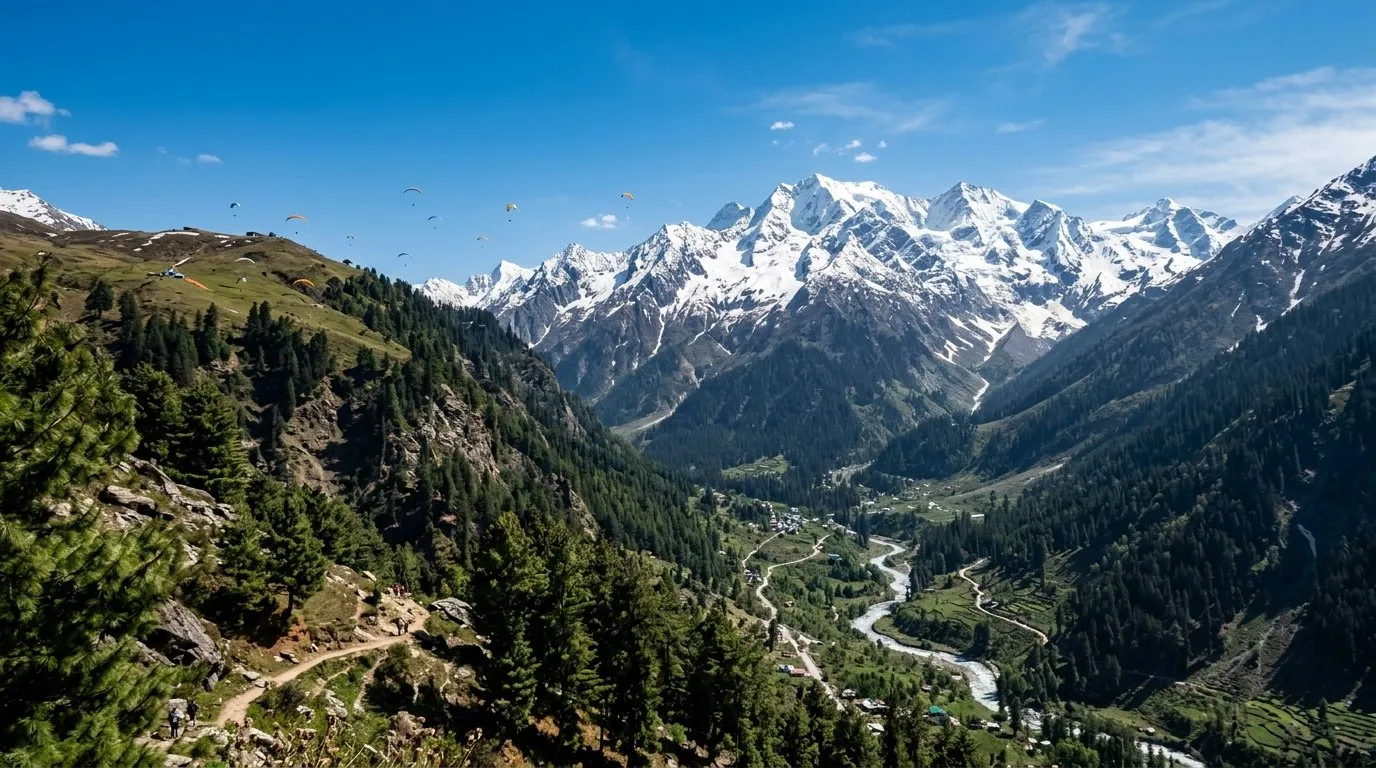
Manali is not one place. New Manali is a respectable hill town — 4/5 safe. Old Manali is the Himachal backpacker-cafe strip with party + drug scene — 2/5 after 10pm. McLeodganj 3 hours away holds 5/5 year-round. Pick deliberately.
5 min read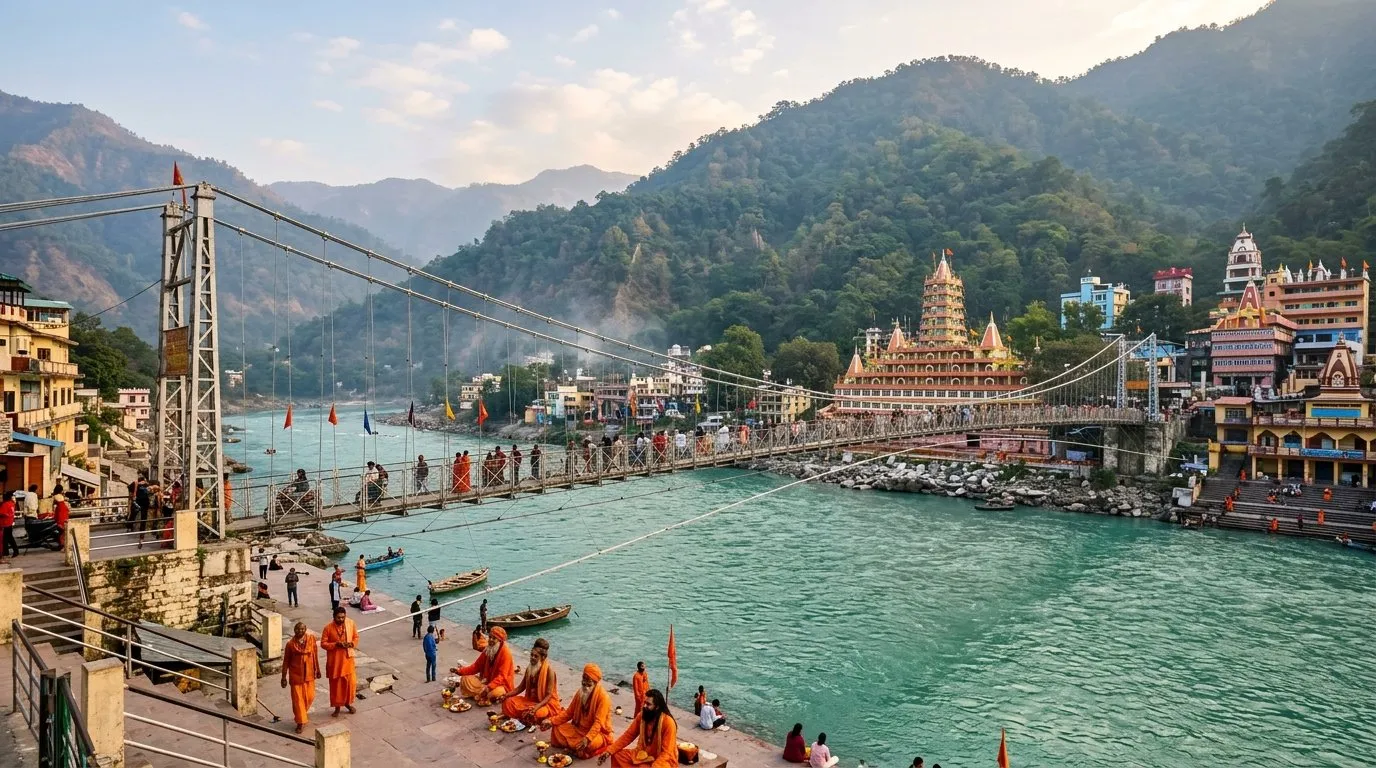
Solo-female travel in India — every destination scored, month by month
Most India travel guides tell women 'use common sense' and call it done. We rated 488 destinations on a 1-5 scale for solo-female safety, with month-specific overrides where it matters. Here's the methodology, the top 15, and the five that don't clear the bar.
10 min read
Is Kashmir safe for solo female travellers? What actually matters
Kashmir is the destination where the generic 'is India safe for women' post fails hardest. The answer depends on which month, which valley, which houseboat operator, and whether you're willing to dress differently than you would in Goa. Here's the concrete version.
6 min read- Emergency
- 108 (2+ hours response) · Reckong Peo District Hospital 70km
Go with confidence.