Khonoma.
Self-declared green village — banned hunting in 1998, zero marketing budgetWHY NOBODY KNOWS
India's first green village — the Angami Naga warriors who chose conservation over conflict
DISPATCH · ISSUE Nº 48
Naga warrior heritage, WWII cemetery, and the legendary Hornbill Festival — where 16 tribes celebrate as one.
VERIFIED JUN 2026 · ISSUE Nº 48
4 MIN READ·Or skip to the verdict ↓
“Naga warrior heritage, WWII cemetery, and the legendary Hornbill Festival — where 16 tribes celebrate as one.”
WHY SPECIAL
Kohima is the capital of Nagaland and site of the decisive WWII Battle of Kohima (1944) that stopped the Japanese advance into India. The Kohima War Cemetery is hauntingly beautiful with the famous epitaph: "When you go home, tell them of us and say, for your tomorrow, we gave our today." The Hornbill Festival (1-10 December) at Kisama Heritage Village is Northeast India's biggest cultural event — 16 Naga tribes showcase traditional dances, food, music, and sports including Naga wrestling and fire-eating. Kohima Cathedral, State Museum, and the vibrant local markets complete the picture.
Know before you go
Every month rated on the 0–10 editorial scale. Click any cell to read the month-specific verdict — what to do, what to skip, what crowds you'll meet.
↑ Tap any month for the full read · colours match verdict bands
Read our scoring methodology →
ELEVATION
Kohima is the capital of Nagaland and site of the decisive WWII Battle of Kohima (1944) that stopped the Japanese advance into India. The Kohima War Cemetery is hauntingly beautiful with the famous epitaph: "When you go home, tell them of us and say, for your tomorrow, we gave our today." The Hornbill Festival (1-10 December) at Kisama Heritage Village is Northeast India's biggest cultural event — 16 Naga tribes showcase traditional dances, food, music, and sports including Naga wrestling and fire-eating. Kohima Cathedral, State Museum, and the vibrant local markets complete the picture.
Every destination carries trade-offs. The cards below score the practical ones: confidence in the data, kids-suitability, solo-female read, and the emergency floor.
Dimapur — 74km, 3hr (mountainous road). Guwahati — 340km, 8hr.
Road: NH29 Dimapur-Kohima decent but winding. City roads narrow and steep.
Public transport: Shared taxis from Dimapur. City taxis/autos.
Self-drive: Doable — parking limited in city.
₹₹800-1500/night — guesthouses – ₹2000-4000/night — Hotel Vivor, Razhu Pru/night
Nearest: Main town — 2-3 pumps
EV charging: Available
Hospital: Naga Hospital Kohima — government, decent. Zion Hospital (private)
Police: Kohima North PS, Kohima South PS
Rescue: SDMA Nagaland
Ambulance: 108 active in Nagaland
Helpline: 100, 108
WiFi: Hotels and some cafes
Good 4G in Kohima city. Very patchy outside city. No signal at Dzukou Valley.
KIDS · FAMILY READ
HIGHLIGHTS FOR KIDS
REASONS
CONCERNS
Nagaland capital — Hornbill Festival (Dec) draws female solo travellers; Razhu Pru and similar community homestays are vetted. Off-festival, standard caution.
Nagaland capital with WWII history (Battle of Kohima). Angami Naga tribal culture. Hornbill Festival in December is the biggest tribal festival. Naga people are majority Christian.
Modest — conservative dressing recommended. Warm layers at 1,444m.
Restaurants serve Naga cuisine (pork, smoked meats, axone/fermented soybean), North Indian, and Chinese. Vegetarian options very limited. Safe in established places. Bottled water.
None — Naga hospitality is genuine
Limited — ATMs available (SBI, Axis). Better hotels accept cards. Cash preferred for most transactions.
Moderate — state capital with educated population. Nagamese (Naga pidgin) widely used.
Airtel and Jio work in Kohima town. Patchy in outskirts.
Kolkata (~1,500km). Guwahati (~330km).
e-Visa for India. ILP MANDATORY — apply at Dimapur checkpoint or online. Kohima is the ILP processing hub.
EMERGENCY · SOURCE-VERIFIED
One of the largest cathedrals in Asia. Center of Nagaland's predominantly Christian community.
Commonwealth War Graves Commission cemetery. Marks the site of the Battle of Kohima (1944) — turning point of WWII in Asia.
Artifacts, weapons, textiles, and ceremonial objects of all 16 Naga tribes. Tribal heritage showcase.
Venue of the famous Hornbill Festival (Dec 1-10). Naga tribal morungs, bamboo architecture, and cultural showcases.
NEIGHBOURHOODS · WITHIN KOHIMA
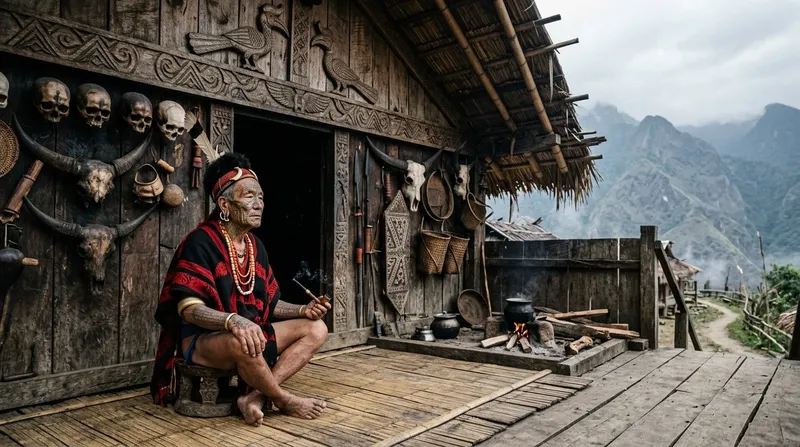
Naga tribal artifacts — ceremonial headgear, traditional weapons, weaving patterns from all 16 Naga tribes
Naga tribal artifacts — ceremonial headgear, traditional weapons, weaving patterns from all 16 Naga tribes
Starting point for the Dzukou Valley trek from Kohima side — 8km trek to the valley of lilies
Starting point for the Dzukou Valley trek from Kohima side — 8km trek to the valley of lilies
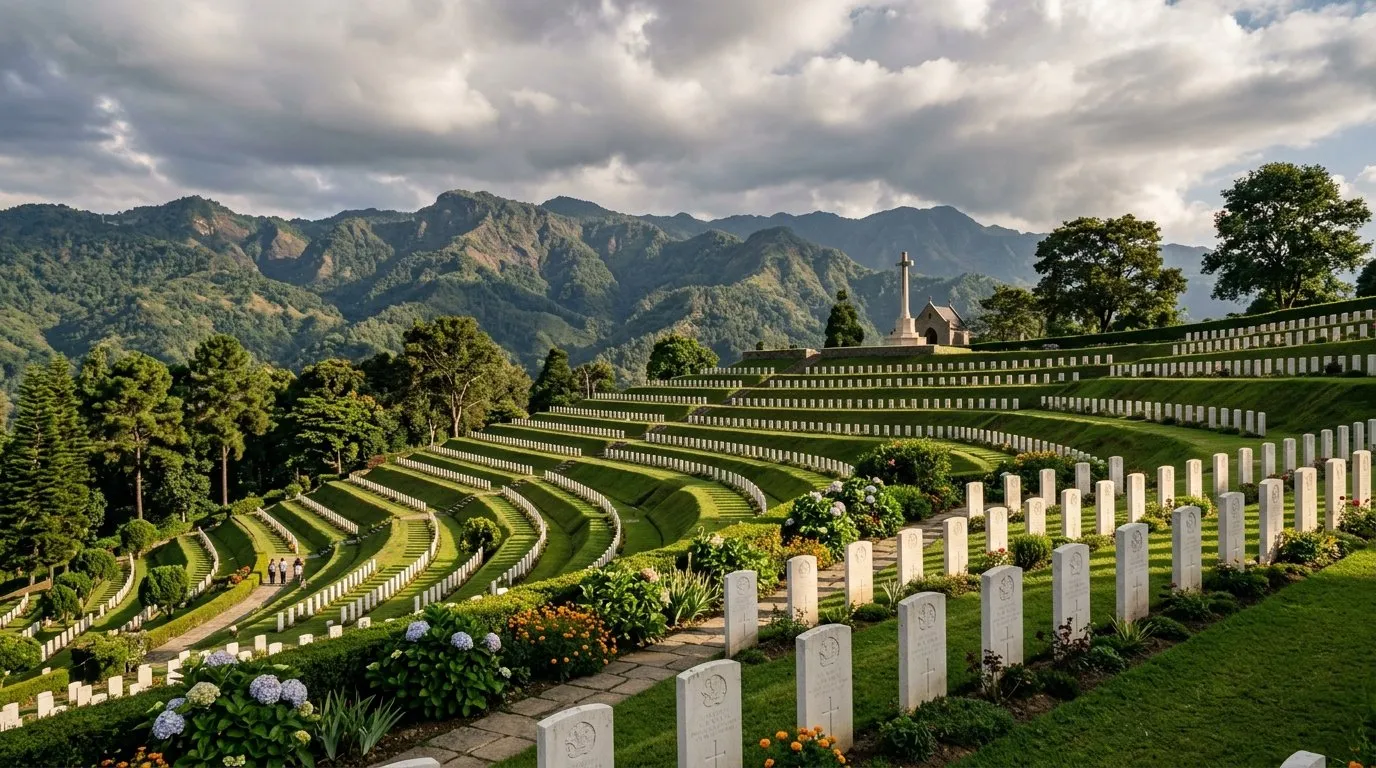
WWII cemetery — the Stalingrad of the East where 1,420 Allied soldiers' graves mark the turning point of the Burma campaign
WWII cemetery — the 'Stalingrad of the East' where 1,420 Allied soldiers' graves mark the turning point of the Burma campaign
HIDDEN GEMS · 3 NEAR KOHIMA
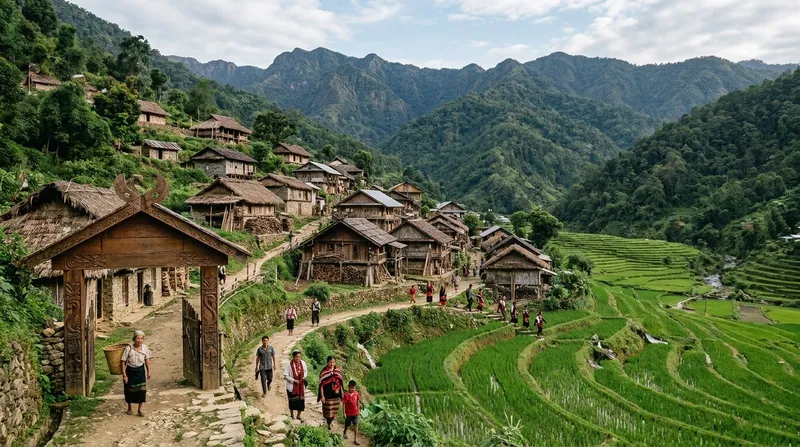
Self-declared green village — banned hunting in 1998, zero marketing budgetWHY NOBODY KNOWS
India's first green village — the Angami Naga warriors who chose conservation over conflict
Sleep in a traditional Naga morung (dormitory) — tribal hospitality without the museum-ification
Permanent open-air complex 12 km south of Kohima between Kigwema and Phesama villages, holding morungs (bachelor dormitories) of all 17 recognised Naga tribes built in their distinct timber-and-thatch styles. Outside the 1-10 December Hornbill window the site is near-empty and the morungs become a quiet anthropology walk-through, with each Angami, Ao, Konyak and Sumi house keyed by carved horns over the entry posts. Best: January-March or July-September for solitude; 1-10 December for full Hornbill activation. Reach: 12 km south of Kohima on NH-2 towards Imphal, 25 min by shared taxi from BOC junction, signed turnoff at Kisama gate. Tip: Carry the Rs 30 entry slip from the gate office and ask the caretaker to unlock the WWII Museum on the same campus — it stays shut without a request.
OR INSTEAD · NEIGHBOURING READS
How Kohima stacks against the closest alternatives.
WHAT A DAY ACTUALLY COSTS
Hornbill Festival entry ₹20 Indians, ₹500 foreigners. ILP is free online.
WHAT CROWDS LOOK LIKE
Dec 1-10 Hornbill Festival is THE time to visit. Book everything months ahead. Rest of winter is quiet and pleasant.
INFRASTRUCTURE · ON THE GROUND
Kohima taxis limited. Local sightseeing (War Cemetery + State Museum + Kohima orientation): ₹1500. Kisama + Khonoma day: ₹3000. Dimapur drop: ₹3500. Dzukou trek pickup-drop: ₹2500. Shared sumos run Kohima-Dimapur twice daily: ₹300/person. No Ola/Uber in Nagaland.
Hotels accept noon check-in. Nagaland ILP is MANDATORY for all Indian nationals — apply at dcnagaland.gov.in or at Dimapur/Khuzama/Naganimora entry points. ₹200, 30-day. Foreigners need PAP (Protected Area Permit) in groups of 4+.
UPI works in Kohima town on BSNL/Jio. Rural villages (Khonoma, Dzukou base) cash-only. Homestays accept cash + UPI mixed. Carry ₹6000+ per person for 3-day Kohima trip.
Kohima has 10+ ATMs. SBI, Nagaland Bank, HDFC reliable. Khonoma: 1 that works ~50% of time.
Kohima main bazaar 8am–7pm. Sundays: many shops closed (Christian-majority). Kisama Heritage Village 9am–5pm daily. State Museum Tue–Sun 10am–3pm.
Tenyidie (Angami) + Nagamese (creole) + English. English is state official language + universal. Hindi limited. Foreigners have no language friction.
BSNL is dominant + most reliable. Jio works in Kohima town. Hotels have BSNL broadband Wi-Fi — intermittent during bad weather. Remote work viable in Kohima town only.
HOW TO REACH
AIRPORT
Dimapur — 74km; Guwahati — 340km
RAIL
Dimapur — 74km
WHERE TO EAT · 17 VERIFIED PICKS
Signature: Naga single-origin filter coffee
Nagaland's first homegrown coffee-roasting company, founded 2016 by Lichan Humtsoe and his wife. Sources beans exclusively from four Nagaland districts — Kohima, Mokokchung, Mon and Wokha — and runs a stated 'Justice in a cup' ethics chain (no exploited growers, sustainable employment). The Billy Graham Road bar is the roastery flagship.
Tip: Ask which Nagaland district the day's pour-over is from — the Mon and Wokha lots taste very different from the Kohima beans. Billy Graham Road itself is a piece of trivia: built in 1972 for the only crusade Billy Graham held in Northeast India, this is the only road in the world named after him.
Signature: Lotha-style pork with bamboo shoot
One of the oldest tribal-cuisine kitchens in Kohima, serving Lotha dishes since 1994 from a tiny old-NST-market spot opposite Domino's. Cited by MorungExpress as the address for 'wonderful Lotha dishes' — bamboo shoot pork, smoked beef, anishi — at thali prices, before pan-Naga restaurants made the cuisine touristy.
Tip: Open Mon-Sat 10am-7pm only — closed Sundays, and the kitchen runs out by mid-afternoon. Ask for whatever's been smoked that week; if anishi (yam-leaf cake) is on, order it — most pan-Naga places skip it.
Signature: Naga thali
Government-run hotel restaurant on P.R. Hill, operating since 1988 under the Nagaland tourism department. Multi-cuisine kitchen (Indian, Chinese, Naga) — useful as a one-stop dining option for traveling families that want a Naga thali alongside familiar Indian food. Long-stayer on every Kohima foodie roundup.
Tip: Naga thali is the headline order — at government rates, this is the cheapest sit-down Naga thali in town. The hotel itself is dated, but the kitchen is dependable. Wide vegetarian options.
Signature: axone pork curry
One of Kohima's best-rated mid-range restaurants — Tripadvisor 4.5/5, ranked among Nagaland's top 10. Fuses traditional Naga (axone pork, Naga raja mirchi chutney) with Chinese and contemporary plates; ambiance reads casual-sophisticated rather than rustic. The kitchen cooks to order rather than holding pre-cooked food.
Tip: Reviews flag long ticket times (often an hour) and items going off the menu at busy hours — go before 7.30pm or after 9pm to avoid the wait. Order the axone pork curry; locals consider it the litmus-test dish for any Kohima multi-cuisine kitchen.
Signature: non-veg pizza
Razhu Point cafe with a pizza-and-momo menu and a few useful vegetarian options (sandwiches, soups) for travellers who want a break from smoked pork. Mid-tier on Tripadvisor (3.1/5, ranked #16 of 18), better-rated locally — Razhu Point itself is one of Kohima's main residential pockets.
Tip: Stick to the pizza and pork momo — the wider menu gets inconsistent reviews. Razhu Point is a useful stop if you're staying in that part of town and don't want to taxi to Jail Colony.
Signature: chicken dim sum
Kohima's most-visible pan-Asian outlet — sushi, dim sum, ramen-adjacent noodle bowls in a city where Asian usually means Chinese-Naga fusion. Open 11am-8pm daily. Justdial-rated 3.8/5 across 36 reviews; mixed signal on consistency, strong on the ambition.
Tip: Stick to the dim sum and noodle dishes; the sushi is hit-or-miss in a hill town with no daily fish supply. Closes at 8pm — earlier than most Jail Colony spots, so plan dinner before 7pm.
WHERE TO SLEEP · EDITOR'S PICKS
Resort
We recommend it for travellers seeking well-maintained rooms, on-site dining, and proximity to Kohima attractions at a mid-tier price point.
Hotel
We recommend it as Kohima's most established upscale property, with views over the city and reliable service for travellers seeking comfort in the northeast.
“Morning at Kohima War Cemetery (WWII-era Battle of Kohima site, 5-min drive) for the Commonwealth-graves walk, then drive to Khonoma (20 km) for the Angami-village visit.”
Homestay
We recommend it for direct access to Naga family life, home-cooked traditional meals, and hands-on learning of local weaving and craft traditions.
Heritage Guesthouse
We recommend it for its central position near the main bazaar and walking distance to Kohima High School and local markets.
BOOK A STAY · CURATED PROPERTIES
We sit before the booking layer, not beside it — compare prices on the platforms below.
Treks, safaris and day tours — compare on the platforms below.
We don't take payment to feature any destination, stay or operator. Book through a link here and we may earn a small commission, at no extra cost to you. It never affects our scores or recommendations. Editorial policy
LOCAL LEGENDS · WHO MAKES THIS PLACE
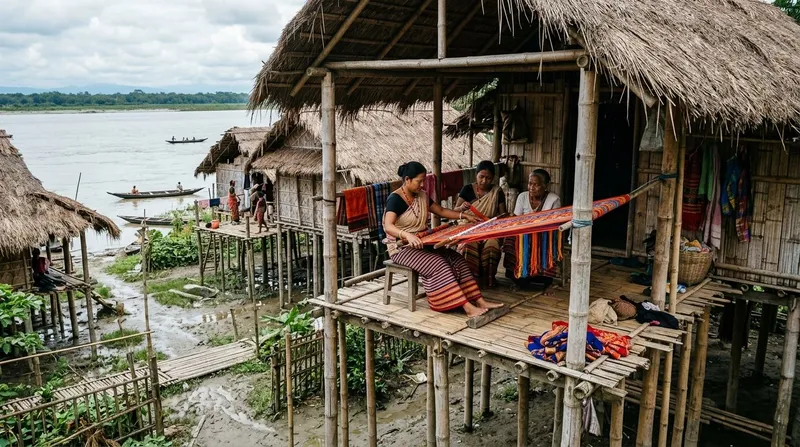
Naga tribal performers from all 16 tribes who showcase warrior dances, songs, and crafts at the annual Hornbill Festival (Dec).
FESTIVALS · BY THE MONTH
Angami Naga purification festival — ritual bathing in the village spring, community feast of rice and meat, war dances, and the symbolic cleansing of the year's sins.
All 16 Naga tribes converge at Kisama Heritage Village for warrior dances, tribal food, traditional crafts, and Naga wrestling. The largest cultural showcase in Northeast India.
Kohima War Cemetery by 8am — the 1944 WWII memorial where Britain voted the Battle of Kohima its greatest ever (2013 National Army Museum poll, beating Waterloo + D-Day). Terraced hillside with 1420 graves + the Tennis Court memorial at the top (where the actual battle's Japanese advance was halted). 90 min. Free entry. Breakfast at Hotel Vivor or Ethnic Table (Khonoma road).
Kisama Heritage Village (12km, 30 min) — the Hornbill Festival permanent venue (Dec 1–10 annually). Morungs (traditional youth dormitories) of all 17 Naga tribes are reconstructed. Museum + crafts + Naga cuisine cafes. 2 hours. Lunch at Hornbill Cafe (Naga dishes — bamboo-shoot pork, smoked pork with axone, Naga chutney with Raja Mirchi).
Khonoma (20km, 45 min) — "India's first Green Village" — Angami Naga village that led India's conservation movement (ending headhunting 1946, ending hunting entirely 1998, creating Khonoma Nature Conservation Tragopan Sanctuary). Guided village walk ₹500 (arranged via village council). Visit Khonoma Heritage Homestay for tea or lunch.
Return to Kohima. Dinner at Ethnic Table or Hotel Japfu Ashok. Kohima has quiet nights — state is largely Baptist + conservative; bars are at major hotels only.
If weather turns
Kohima monsoon (May–Sep) brings heavy rain + landslides. Winter (Dec–Feb) is the peak tourist season — dry, cool, Hornbill Festival window. Indoor fallbacks: Nagaland State Museum, State Heritage Museum, Dzulhami Ngunya Art Gallery.
Tap any traveler type below to see how this place feels for them.
Good for families with older kids (10+) for cultural depth. Dzukou trek not family-friendly. War Cemetery + Kisama + Khonoma are kid-engaging. Best season: Oct–Feb.
Best for
Battle of Kohima is considered by UK military historians to be their greatest battle. The Kohima War Cemetery + Tennis Court memorial + Garrison Hill + Aradura Spur are original battle sites. For British + Commonwealth WWII history, Kohima is sacred.
Best for
The 10-day Nagaland state festival at Kisama showcases all 17 Naga tribes with music, dance, food, crafts, Naga wrestling. It's the Northeast's largest cultural festival. Accommodation books out 3 months ahead.
Best for
Khonoma is India's first Green Village + site of the end of Naga headhunting + ongoing tragopan conservation. The Angami cultural reset — from warrior society to conservation leader — is a rare documented ethnographic case study.
Best for
Kohima is the Nagaland gateway. A 10-day extension through Mokokchung (Ao tribe) + Mon (Konyak tattooed headhunter elders, still alive 70+) offers Northeast cultural depth unreachable by shorter trips.
ALSO ON NAKSHIQ
Guides
Everything the guidebook won't tell you — written for India in 2026.
Blog
Long-form reads on regions, festivals, and the offbeat circuit.
Road trips
Driving itineraries with day-by-day stops, distance, and difficulty.
Collections
Wettest places. Sacred lakes. Solo-female-safe. Curated cuts.
NakshIQ 100
India's highest-scoring places, ranked across all 12 months.
The Window
One honest spread, every Sunday. The full back catalogue.
Skip list
Overhyped places with honest alternatives.
First trip
Safety, scams, what to wear, food survival, solo female travel.
FEATURED IN COLLECTIONS
The villages that look like they belong in a travel documentary.
Not a zoo. Not a performance. These are communities that welcome visitors on their terms — with homestays, shared meals, and genuine cultural exchange.
Two weeks. Eight states. One circuit. The logical route through India's most underexplored region — what to see, what to skip, and how to not waste time backtracking.
ROAD TRIPS THROUGH HERE
— The NakshIQ editors
TRAVELLERS' VOICE
SHARE YOUR EXPERIENCE
ASK A QUESTION