Complete Guide to Zanskar Valley
Chadar Trek, frozen rivers, and the most isolated valley in Ladakh
Destinations in this article
Why Go
Zanskar Valley is the last place in India where isolation is not a marketing pitch — it's a logistical fact. Sitting at 3,660m in the rain shadow of the Great Himalayan Range, this valley in Ladakh's southwest corner is cut off from the outside world for roughly six months every year. Between November and May, the only way in or out is to walk on a frozen river.
That river is the Zanskar, and walking on it in January or February is called the Chadar Trek — widely considered the most extreme trek in India. The river freezes into a sheet (chadar) of ice that ranges from 30cm to several metres thick, and for centuries it was the only winter trade route connecting Zanskar to Leh. Today, trekkers do it for the experience. Locals still do it because they have no choice.
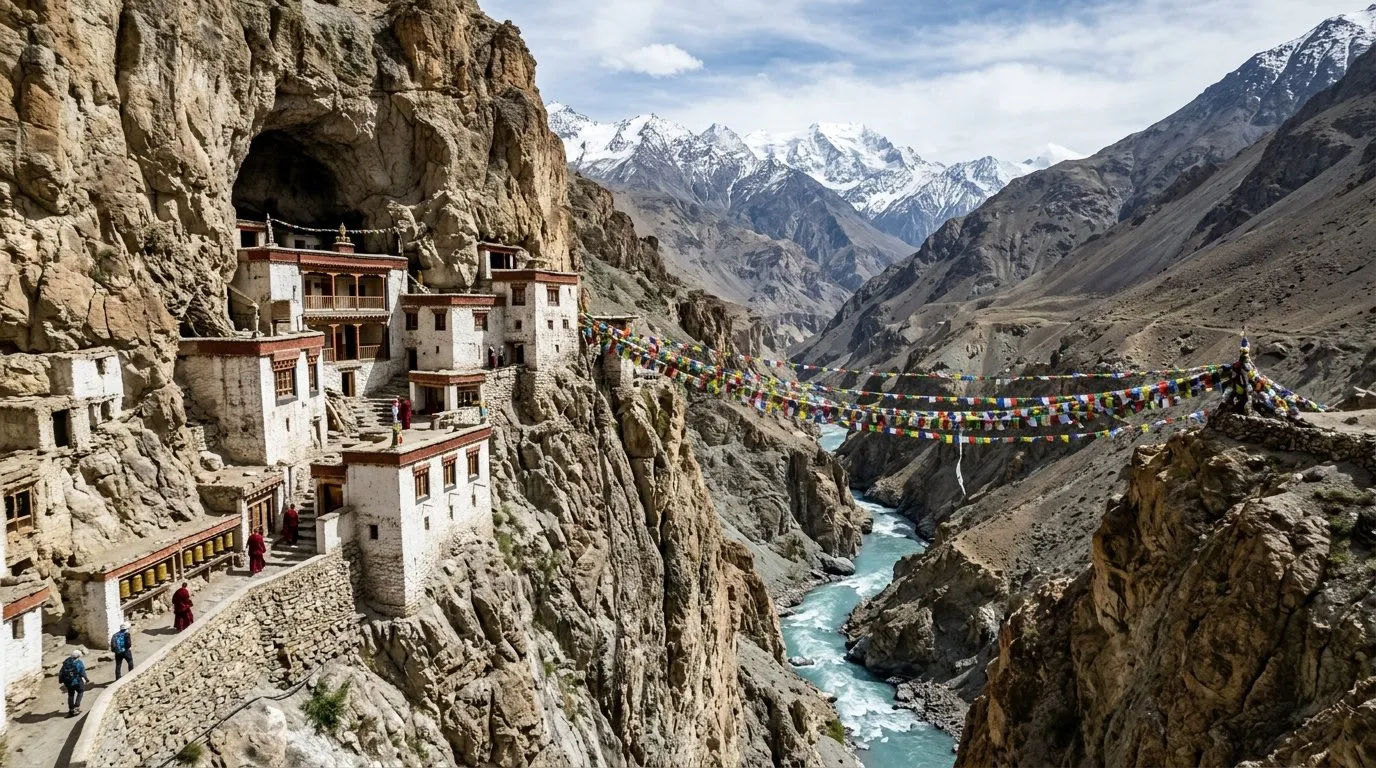
But Zanskar is not just the Chadar. In summer (June to September), the valley opens up by road, revealing a landscape that looks like it belongs on another planet — ochre mountains, turquoise rivers, ancient monasteries perched on cliff faces, and villages where 200 people share one satellite phone. If you've done Leh-Ladakh and thought it was remote, Zanskar is the next level.
The valley's capital, Padum, has a population of about 1,500. There is no train station within 500km. The nearest proper hospital is in Kargil, 12 hours away by road. The nearest ATM is also in Kargil. You are, in every meaningful sense, on your own.
The Best Month (and the Worst)
Best: July. The road from Kargil to Padum is reliably open, temperatures sit between 5°C and 25°C during the day, and the rivers are flowing (not frozen). Wildflowers cover the otherwise barren hillsides. Monasteries are active and accessible.
Runner-up: August. Similar conditions to July but with slightly higher rainfall risk. The Pensi La pass (4,400m) connecting Kargil to Zanskar can get foggy.
For Chadar Trek: Late January to mid-February. This is the only window when the frozen river is walkable. Temperatures drop to -25°C to -35°C at night. Daytime highs hover around -10°C to -15°C. The ice creaks, cracks, and occasionally breaks. This is not a metaphor — people have fallen through.
Worst: November and March-April. The road is closed, the river isn't frozen enough to walk on, and you're stuck. Literally. November is the transition month where Zanskar goes dark — no road, no ice path, no helicopter service (too windy). March and April see ice breakup, making the Chadar route lethal.
How to Get There
Summer route (June-September):
- ●Fly to Leh (1hr from Delhi, ₹4,000-12,000). Then drive Leh → Kargil (220km, 6-8hr) → Padum (240km, 10-12hr). Total driving time from Leh: 16-20 hours over two days.
- ●Alternative: Drive from Manali via Shinku La pass to Padum (roughly 380km, 2-3 days). This route opened recently and cuts out the Kargil detour, but road quality is poor.
- ●There is no public bus service that runs reliably. Shared jeeps from Kargil to Padum run occasionally (₹1,500-2,000 per seat).
Winter route (January-February, Chadar Trek only):
- ●Fly to Leh. Drive to Chilling (65km, 2hr). Then walk on the frozen Zanskar River for 5-7 days to reach Zanskar Valley (or, more commonly, turn around and walk back to Chilling).
No train, no regular flights to Padum, no helicopter service.
What to Expect
Zanskar is not Goa with altitude. There are no restaurants, no cafes, no bars, no shops selling souvenirs. Padum has a few basic guesthouses and a handful of small stores selling instant noodles, biscuits, and dal ingredients. That's it.
The landscape is relentlessly dramatic — narrow gorges, massive rock faces, rivers that shift from grey to turquoise depending on the glacial melt. Phugtal Monastery, built into a cave on a cliff face 70km south of Padum, is one of the most extraordinary structures in India. Getting there requires a 5-6 hour trek from the nearest road point.
Other monasteries worth visiting: Karsha Gompa (the largest in Zanskar, visible from Padum), Stongde Monastery, and Zangla Monastery. Most are Tibetan Buddhist and centuries old.
The people of Zanskar are ethnic Tibetans, predominantly Buddhist, and deeply hospitable. Don't expect English — Bodhi (Ladakhi dialect) is the primary language. Hindi is understood by some younger residents.
Expect to be offline for most of your trip. BSNL has patchy coverage in Padum — think one bar of signal if you stand in the right spot. Jio and Airtel do not work. There is no WiFi at guesthouses.
Infrastructure Reality
Medical: The nearest hospital with surgical capability is in Kargil (12 hours by road) or Leh (2 days by road). Padum has a basic health centre with a doctor (not always available). Carry a comprehensive first aid kit. Altitude sickness is a real risk — Diamox is advisable. Evacuation by helicopter is theoretically possible but practically unreliable due to weather and altitude.
Money: Zero ATMs in Zanskar. The nearest ATM is in Kargil. Carry all cash you'll need for the entire trip. Budget ₹1,500-3,000 per day depending on whether you're camping or using guesthouses. Credit cards are useless.
Power: Solar power is the primary source. Padum has intermittent grid electricity. Bring a power bank — a large one (20,000mAh minimum). Charging opportunities are rare and unreliable.
Fuel: Petrol is available in Padum but at a premium (₹120-150/litre vs ₹100 in Leh). Diesel is scarce. If driving, carry extra fuel.
Communication: BSNL postpaid SIM only. Prepaid SIMs do not work. Signal is weak and intermittent. No data connectivity worth mentioning. Satellite phones are used by the military and some tour operators.
Where to Stay
In Padum, there are about 8-10 guesthouses ranging from ₹500-1,500 per night. Expect basic rooms: a bed, a blanket (bring your own sleeping bag anyway), and a shared squat toilet. Hot water comes from a bucket heated on a stove.
Best options in Padum:
- ●a mid-tier Padum hotel (the closest thing to a "proper" hotel, ₹1,200-1,500/night)
- ●a Padum village guesthouse (basic but clean, ₹600-800/night)
- ●Homestays in surrounding villages (₹300-500/night including meals)
For the Chadar Trek, you sleep in caves along the frozen river. Your tour operator provides sleeping bags, mats, and a tent as backup. Cave temperature at night: around -20°C to -30°C.
For Phugtal Monastery, there's a basic monastery guesthouse where monks may let you stay for a donation (₹200-300).
Kids Verdict
Rating: 1/5 — Absolutely not.
This is not a destination for children under any circumstances. The altitude (3,660m+), the remoteness (12+ hours from a hospital), the complete lack of medical infrastructure, the extreme cold (if visiting for Chadar), and the physically demanding access make this genuinely dangerous for kids. Even fit adults get altitude sickness here. A child with a medical emergency in Zanskar could be in serious trouble — evacuation times are measured in days, not hours.
Teenagers 16+ who are fit, acclimatized, and experienced with high-altitude travel could potentially handle a summer visit to Padum. But the Chadar Trek is off-limits for anyone under 18 with most reputable operators.
What to Avoid
- ●Arriving without acclimatization. Spend at least 2-3 days in Leh (3,500m) before heading to Zanskar. Altitude sickness can be fatal.
- ●Cheap Chadar Trek operators. The frozen river is dangerous. Use operators with proper safety equipment, satellite phones, and experienced guides. Budget operators skip these. People die on the Chadar every year.
- ●Travelling alone in winter. The Chadar Trek must be done with a group and guide. Solo winter travel in Zanskar is a death sentence if something goes wrong.
- ●Relying on phone navigation. Download offline maps before you leave Leh. Google Maps has limited coverage of Zanskar roads.
- ●Ignoring permits. Indian nationals need an Inner Line Permit (ILP) for some areas. Foreign nationals face additional restrictions. Check current rules before travelling.
- ●Littering. Zanskar has zero waste management infrastructure. Whatever you carry in, carry out. The Chadar Trek route has been increasingly polluted by irresponsible trekkers.
The Bottom Line
Zanskar Valley is India at its most raw. It is not comfortable, not convenient, and not forgiving. The Chadar Trek is a once-in-a-lifetime experience that will test every limit you have — physical, mental, and thermal. Summer Zanskar is gentler but still remote in a way that most Indians have never experienced.
Come here if you want to understand what isolation actually means. Come here if you want to see a monastery built into a cave by people who chose the most inaccessible place on Earth to pray. Come here if you want to walk on a frozen river at -30°C and feel genuinely alive.
Don't come here for Instagram content. Don't come here if you need a safety net. And definitely don't come here with kids.
Monthly Scores
| Destination | Jan | Feb | Mar | Apr | May | Jun | Jul | Aug | Sep | Oct | Nov | Dec |
|---|---|---|---|---|---|---|---|---|---|---|---|---|
| Zanskar Valley | 8.0 | 8.0 | 2.0 | 2.0 | 2.0 | 6.0 | 10.0 | 10.0 | 8.0 | 4.0 | 2.0 | 4.0 |
The Window · Every Sunday
Liked this? Get one every Sunday.
Best score of the week, one honest skip, road updates. Four minutes. No spam.
More in Field guide
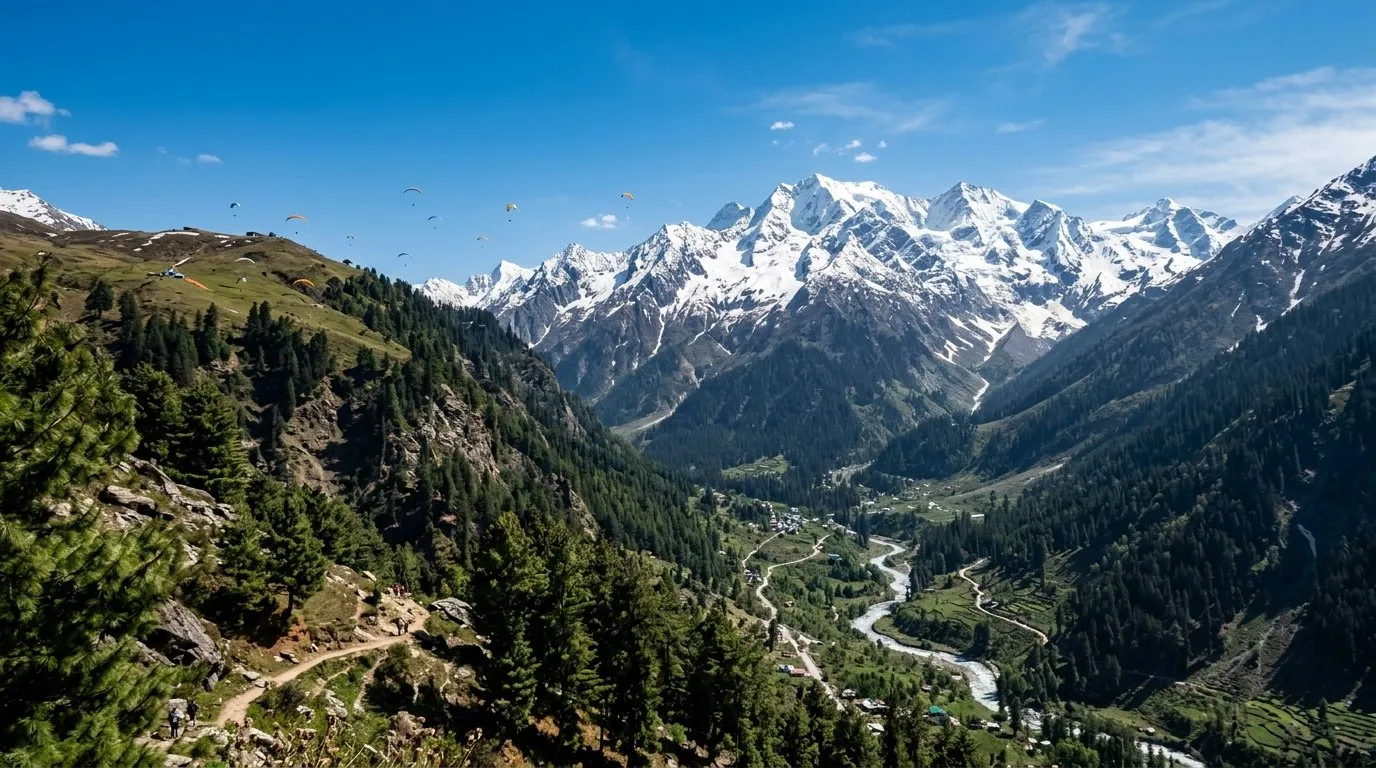
Is Manali safe for solo female travellers? Which Manali, and when
Manali is not one place. New Manali is a respectable hill town — 4/5 safe. Old Manali is the Himachal backpacker-cafe strip with party + drug scene — 2/5 after 10pm. McLeodganj 3 hours away holds 5/5 year-round. Pick deliberately.
5 min read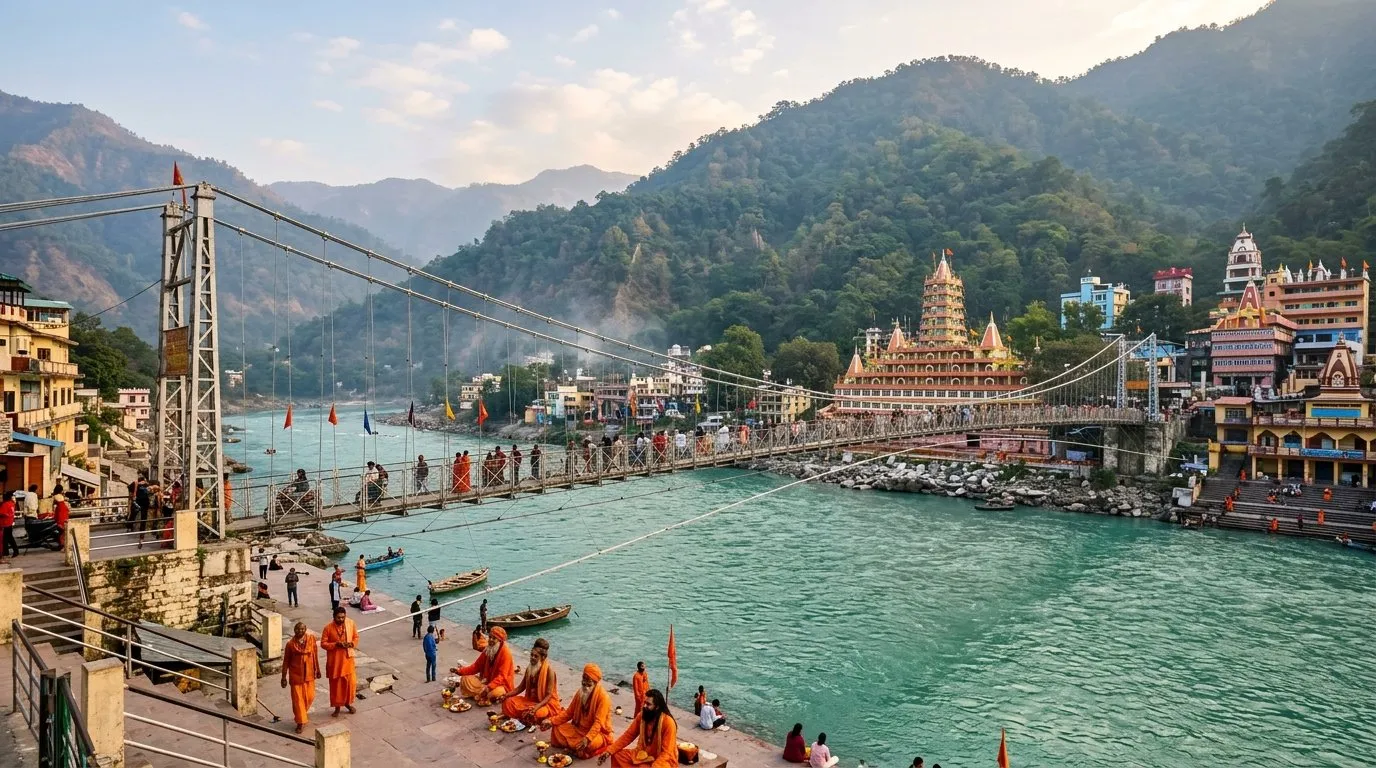
Solo-female travel in India — every destination scored, month by month
Most India travel guides tell women 'use common sense' and call it done. We rated 488 destinations on a 1-5 scale for solo-female safety, with month-specific overrides where it matters. Here's the methodology, the top 15, and the five that don't clear the bar.
10 min read
Is Kashmir safe for solo female travellers? What actually matters
Kashmir is the destination where the generic 'is India safe for women' post fails hardest. The answer depends on which month, which valley, which houseboat operator, and whether you're willing to dress differently than you would in Goa. Here's the concrete version.
6 min read- Access
- Pensi La road rough, seasonal (Jul-Sep only).
- Emergency
- None. · PHC Padum (very basic). Real hospital: Kargil 230km (2 days in winter).
- Stay
- ₹500-2000/night · 10 options
- Permit required
- See the process →
Go with confidence.