Complete Guide to Alchi
A 1000-year-old Buddhist art gallery hidden in a tiny village
Destinations in this article
Why Go
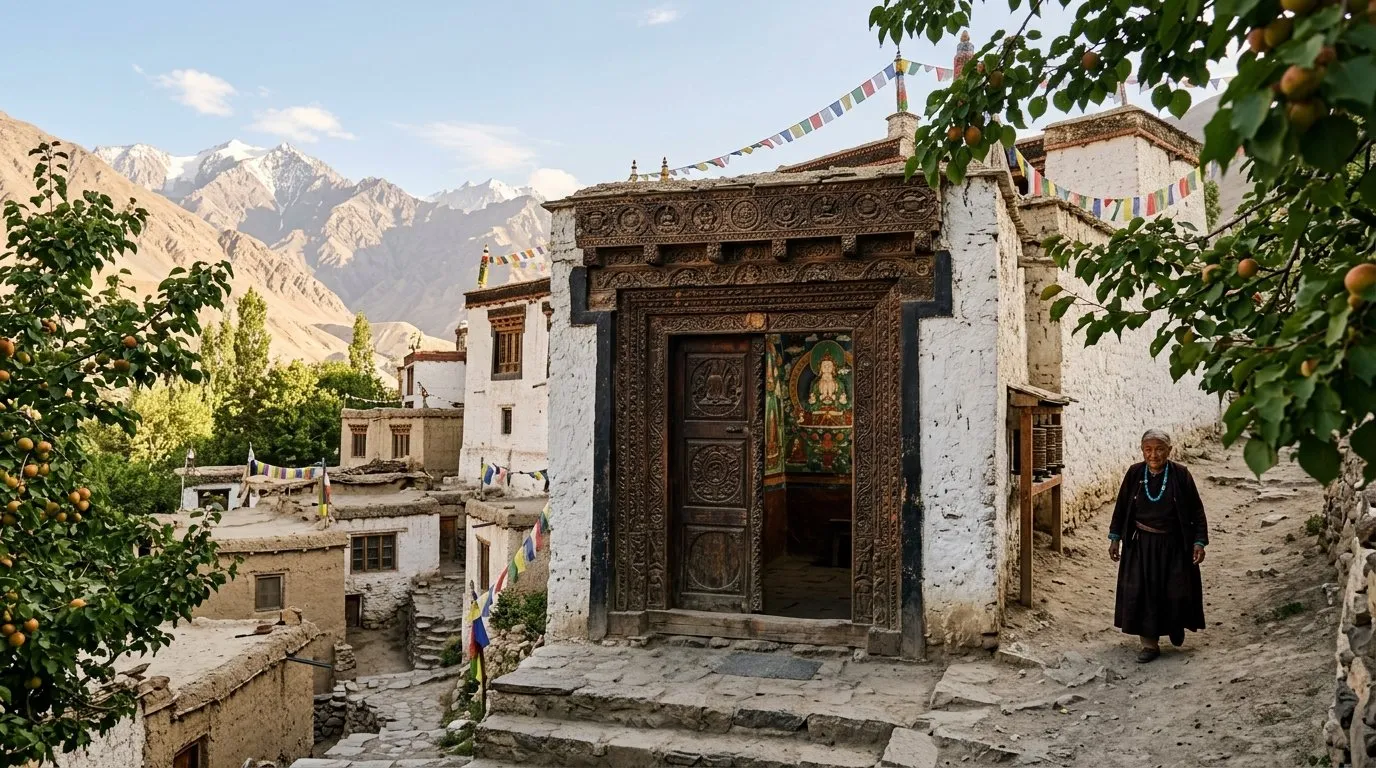
Alchi is the most important art-historical site in Ladakh, and almost nobody knows it exists. While tourists flock to Hemis, Thiksey, and Diskit for their dramatic hilltop positions and giant Buddha statues, Alchi sits quietly in a grove of apricot trees beside the Indus River, housing the oldest surviving wall paintings in Ladakh — murals that date to the 11th century and have no equivalent anywhere else in the Tibetan Buddhist world.
The Chos-khor monastery complex at Alchi was founded around 1020 CE by the great translator Rinchen Zangpo, who brought artists from Kashmir to paint the walls. This is the crucial detail: the art at Alchi is not Tibetan. It is Kashmiri Buddhist, a tradition that was completely destroyed in Kashmir itself when the region converted to Islam. Alchi preserves the only large-scale examples of this artistic tradition left on Earth. The murals show heavy Indian and Central Asian influence — the faces are rounder and more naturalistic than later Tibetan styles, the clothing reflects Kashmiri court fashion, and the iconography bridges Indian and Tibetan Buddhism in ways that disappeared everywhere else.
The main temples — the Dukhang (Assembly Hall), Sumtsek (Three-Tiered Temple), and Manjushri Temple — contain floor-to-ceiling murals of extraordinary detail and beauty. The Sumtsek in particular houses three massive clay statues of Bodhisattvas whose robes are painted with miniature scenes so detailed you need a flashlight to appreciate them. These are considered among the finest examples of medieval Buddhist art in existence.
Unlike most Ladakhi monasteries, Alchi is not built on a hilltop. It sits at ground level in the village, surrounded by orchards and fields. This gives it a completely different character — intimate, sheltered, and almost hidden. You could drive past it without knowing it was there.
Best Month to Visit
May through September. Alchi sits at a relatively low 3,100m on the Indus River, making it one of the more comfortable destinations in Ladakh altitude-wise.
May-June: Excellent. The apricot trees around the monastery are in bloom or early fruit, the weather is warm but not hot (15-28°C), and tourist numbers are manageable.
July-August: Warmer and busier. The monastery complex can get crowded midday. Visit early morning or late afternoon.
September: Beautiful autumn light. Fewer tourists. The apricot harvest is underway, and the village has a golden, unhurried quality.
The road from Leh to Alchi is open year-round (it does not cross any high passes), though winter visits (December-February) mean cold temperatures and very limited accommodation.
How to Get There
Alchi is 68 km west of Leh, just off the Srinagar-Leh highway (NH1). The turn-off is at Saspol, from where a 4 km side road leads to the village.
From Leh: 1.5-2 hours by road. An easy and scenic drive along the Indus Valley. Shared taxis are available from Leh bus stand, but hiring a private vehicle gives you flexibility to combine Alchi with Likir (30 km further) and Basgo (en route). A full-day taxi from Leh covering Alchi-Likir-Basgo costs Rs 3,000-4,500.
From Lamayuru: 40 km east, about 1 hour. Natural combination if driving the Srinagar-Leh route.
From Kargil: 150 km, 4-5 hours via NH1.
No airport or railhead nearby. Leh's Kushok Bakula Rimpochee Airport is the nearest (68 km).
What to Expect
Chos-khor Complex: This is the main event. The complex contains several temples within a walled enclosure. Entry fee is Rs 50 (approximate — check current rates). Photography is strictly prohibited inside the temples to protect the murals. This is genuinely enforced, not just a suggestion. A caretaker monk is usually present.
Dukhang (Assembly Hall): The oldest structure, with murals covering every wall surface. The main Buddha figure sits surrounded by painted mandalas of astonishing complexity. Bring a small flashlight — the interiors are dark and the murals reward close inspection.
Sumtsek (Three-Tiered Temple): The masterpiece. Three storeys high, containing three giant Bodhisattva statues (Avalokiteshvara, Maitreya, and Manjushri) whose robes are painted with minute scenes — tiny figures, landscapes, and narratives that art historians have spent decades cataloguing. The level of detail is genuinely staggering. You need good light (a flashlight) and time to appreciate what you are seeing.
Manjushri Temple: Smaller but equally rich in murals. The four-faced Manjushri figure is surrounded by thousands of tiny painted Buddhas covering the walls.
Lotsawa Lhakhang: A later addition with paintings in a more recognisably Tibetan style. The contrast with the older temples highlights how dramatically Alchi's art differs from standard Ladakhi Buddhist art.
The Village: Alchi village is a pleasant place to walk. Apricot orchards, mud-brick houses, and small cafes serving fresh apricot juice and Ladakhi food. The Indus River is a short walk away — the sandy bank makes for a good rest spot.
Infrastructure Reality
Mobile: Jio and BSNL work in Alchi. Airtel coverage is inconsistent. 4G is available on Jio but speeds vary.
Internet: Basic WiFi available at some guesthouses. Do not rely on it for anything bandwidth-intensive.
Medical: Nothing beyond a tiny village health post. Leh (68 km, 1.5-2 hours) is the nearest hospital. At 3,100m, altitude issues are less severe here than at higher Ladakhi destinations, but still possible for visitors coming directly from low elevations.
ATMs: No ATMs in Alchi. Carry cash from Leh. Most guesthouses and restaurants are cash-only.
Fuel: No fuel station. Fill up in Leh or at Khalatse/Saspol junction.
Water: Bottled water available in village shops. Do not drink tap water.
Where to Stay
Alchi has a surprisingly good selection of small guesthouses and homestays for its size.
Best options: Alchi Kitchen and Ule Heritage House are well-regarded. Both offer clean rooms with attached bathrooms, home-cooked meals, and garden seating. Rates: Rs 1,500-3,000 per night.
Homestays (Rs 800-1,500): Several families offer rooms. The food is often the highlight — fresh apricot dishes, Ladakhi bread, butter tea. Ask at the monastery entrance or the village's small tourism office.
Budget (Rs 500-1,000): Very basic rooms available near the monastery. Clean enough but minimal amenities.
Day trip from Leh: Very doable and the most common approach. But staying overnight lets you visit the monastery in early morning when it is empty and the light through the doorways illuminates the murals beautifully. Worth it if you have any interest in art or history.
There are no luxury hotels. Alchi is a village.
Kids Verdict: 3 out of 5
Alchi is better for kids than most Ladakhi monastery destinations because the complex is at ground level (no steep climbs), the village is pleasant to walk through, and the apricot orchards give children something to explore. The monastery itself requires quiet and no-touch discipline, which limits how long young kids will last.
Ages 0-4: Manageable but you will spend more time outside than inside the temples.
Ages 5-10: The colourful murals can interest kids for 20-30 minutes, especially if you make a game of spotting animals and figures in the paintings. The village and river provide good outdoor time.
Ages 11+: Old enough to appreciate the historical significance. The painted robes on the Sumtsek statues are genuinely fascinating for anyone with visual curiosity.
What to Avoid
Photography inside the temples. This is strictly prohibited and actively enforced. Your phone or camera will be noticed. Respect the rule — these murals are irreplaceable and flash damage is cumulative.
Rushing through. Many day-trippers spend thirty minutes and leave. The temples reward slow, careful looking. Budget at least 1.5-2 hours inside the complex. The details on the Sumtsek robes alone could occupy an hour.
Touching the murals. These are 1,000 years old. The oils from human skin cause damage. Keep hands off all painted surfaces and statues.
Visiting only the main complex. Walk to the river, explore the village, eat at a local cafe. The setting is part of the experience.
Skipping Alchi on the Leh-Lamayuru route. Many travellers drive straight past the Saspol turn-off. The 4 km detour to Alchi is arguably the most important cultural stop in all of Ladakh.
The Bottom Line
If you visit one monastery complex in Ladakh, make it Alchi. Not because it is the most dramatic or photogenic — it is not — but because what it contains is genuinely irreplaceable. The 11th-century Kashmiri Buddhist murals here survive nowhere else on Earth. They represent a lost artistic tradition preserved by accident of geography in a tiny village on the Indus. The Sumtsek temple's painted Bodhisattva robes are among the finest examples of medieval Buddhist art in existence. And the village setting — ground-level, surrounded by apricot trees and fields, beside a great river — offers a gentleness that balances the high-pass intensity of most Ladakh travel. Alchi does not compete with Thiksey for Instagram drama. It operates on a different level entirely.
Monthly Scores
| Destination | Jan | Feb | Mar | Apr | May | Jun | Jul | Aug | Sep | Oct | Nov | Dec |
|---|---|---|---|---|---|---|---|---|---|---|---|---|
| Alchi | 2.0 | 2.0 | 2.0 | 4.0 | 6.0 | 10.0 | 10.0 | 8.0 | 10.0 | 6.0 | 2.0 | 2.0 |
The Window · Every Sunday
Liked this? Get one every Sunday.
Best score of the week, one honest skip, road updates. Four minutes. No spam.
More in Field guide
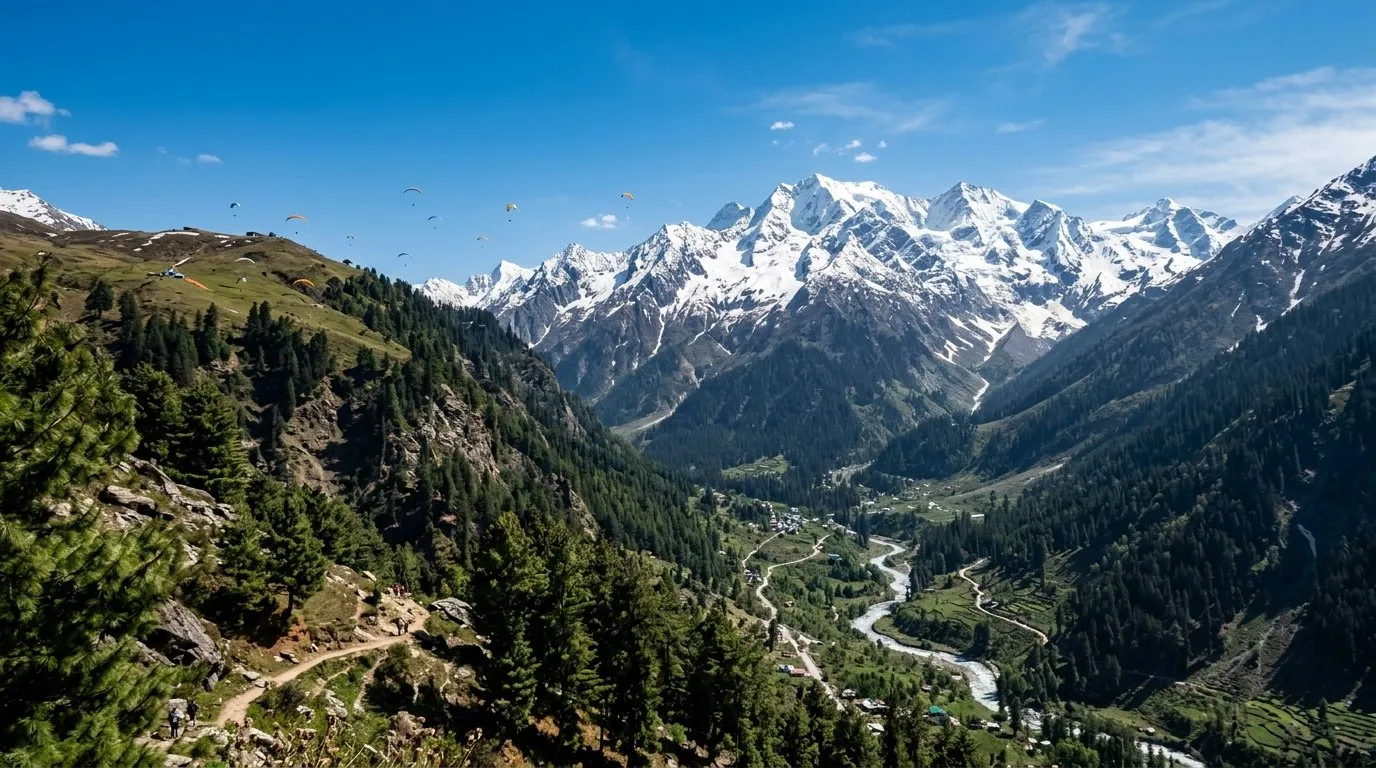
Is Manali safe for solo female travellers? Which Manali, and when
Manali is not one place. New Manali is a respectable hill town — 4/5 safe. Old Manali is the Himachal backpacker-cafe strip with party + drug scene — 2/5 after 10pm. McLeodganj 3 hours away holds 5/5 year-round. Pick deliberately.
5 min read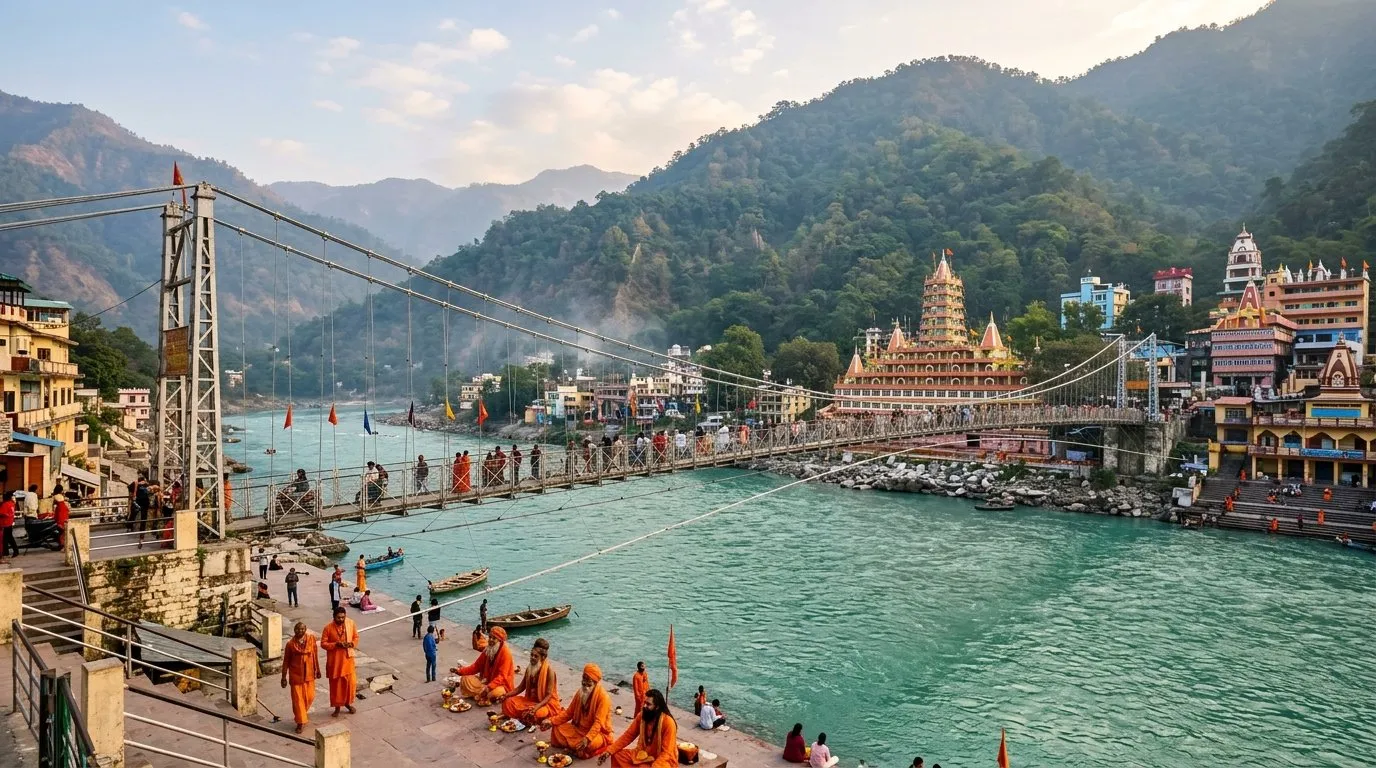
Solo-female travel in India — every destination scored, month by month
Most India travel guides tell women 'use common sense' and call it done. We rated 488 destinations on a 1-5 scale for solo-female safety, with month-specific overrides where it matters. Here's the methodology, the top 15, and the five that don't clear the bar.
10 min read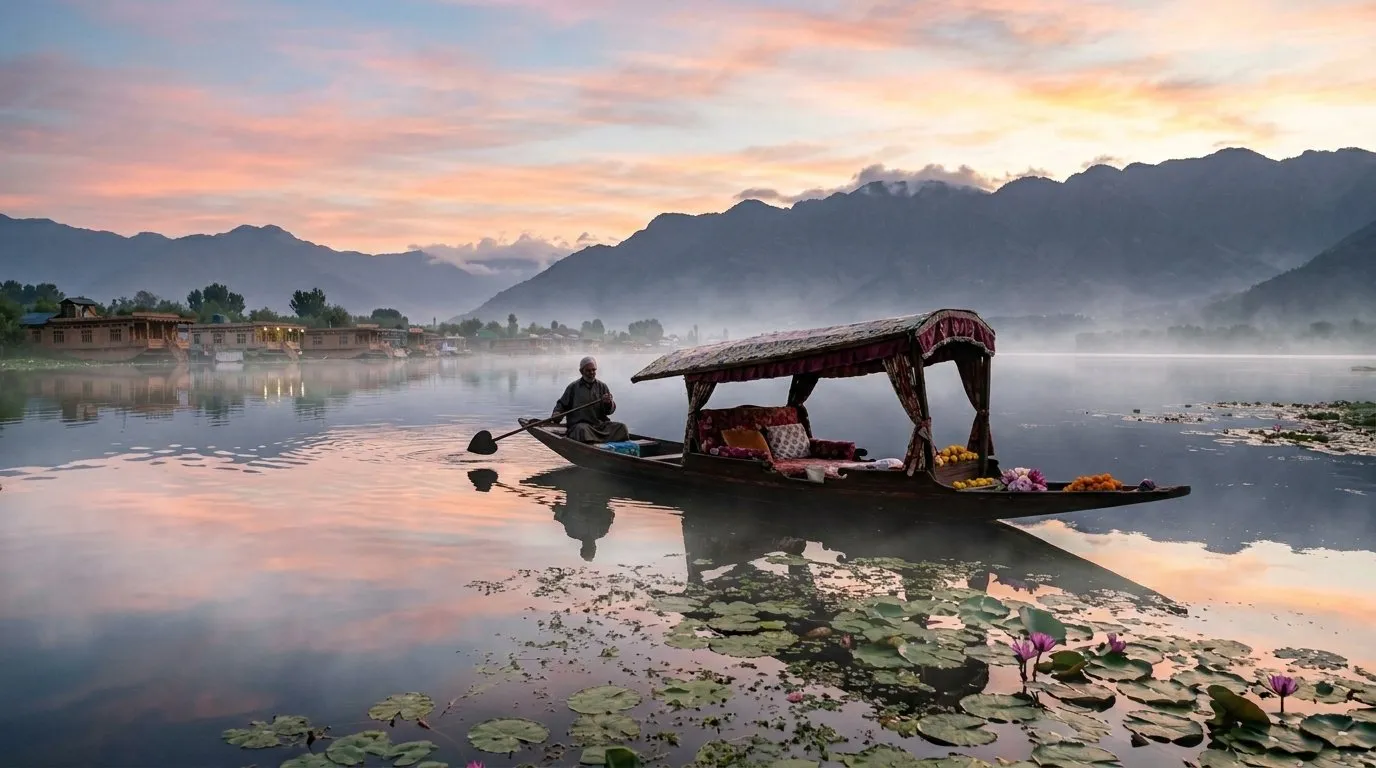
Is Kashmir safe for solo female travellers? What actually matters
Kashmir is the destination where the generic 'is India safe for women' post fails hardest. The answer depends on which month, which valley, which houseboat operator, and whether you're willing to dress differently than you would in Goa. Here's the concrete version.
6 min read- Emergency
- 108 (limited) · PHC Khalsi (20km), SNM Hospital Leh (68km)
- Stay
- ₹800–4,000/night · 15 options
- Permit required
- See the process →
Go with confidence.