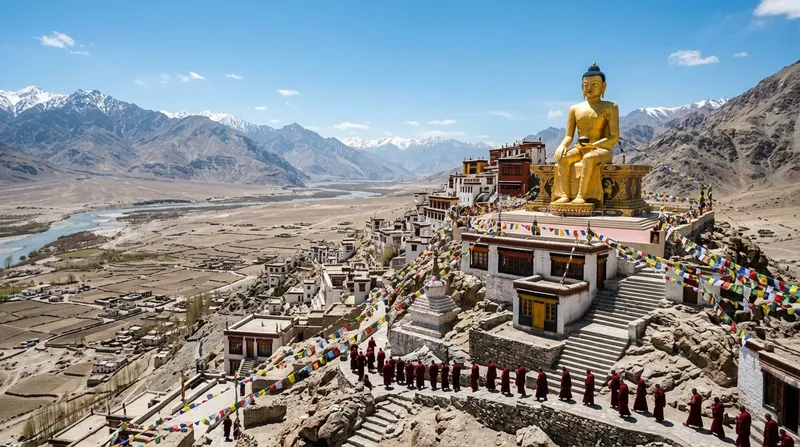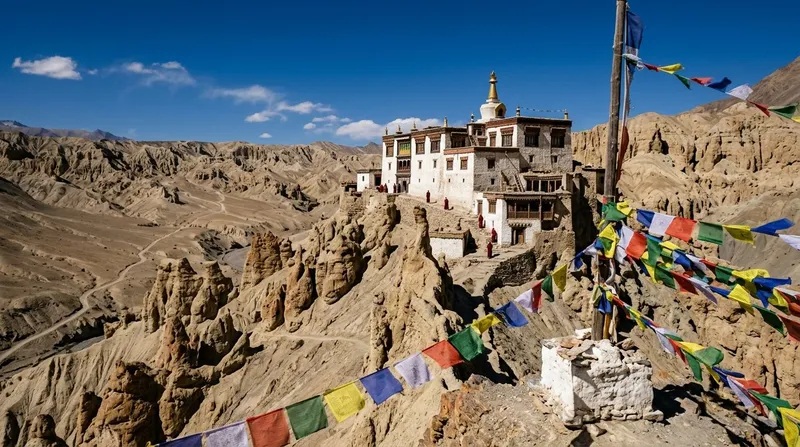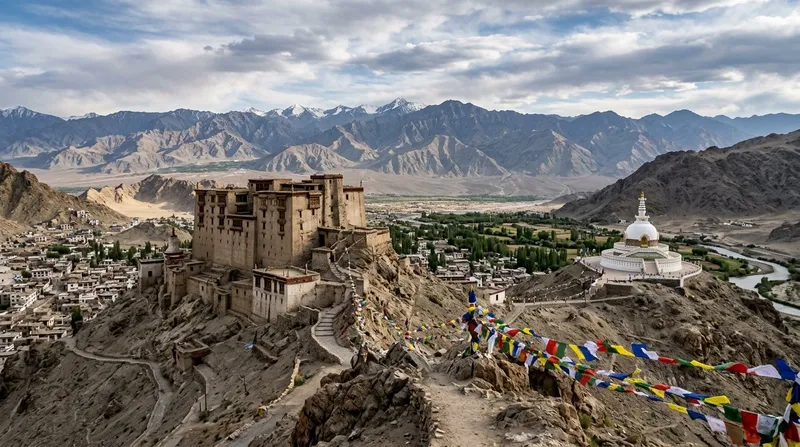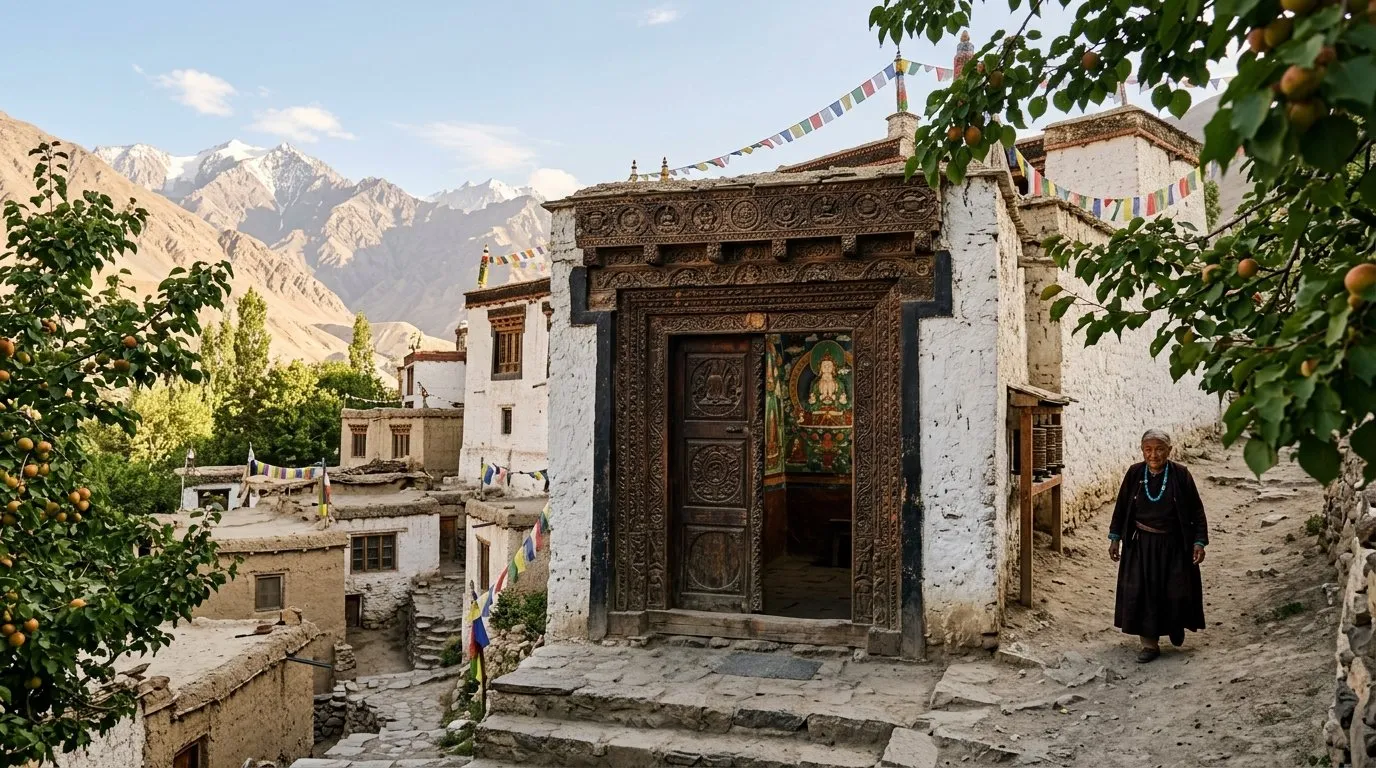
Sumtsek temple — the 12th-c. murals that survived because everyone forgot Alchi.
Lamayuru and Hemis get the festival crowds; Alchi's Sumtsek temple holds India's oldest surviving Buddhist murals (c. 1200 CE Kashmiri-Tibetan school) but most travellers spend 30 minutes here and leave.WHY NOBODY KNOWS
When the Tibetan Renaissance translator-monk Rinchen Zangpo (958-1055 CE) founded his cluster of temple complexes — Tabo (HP), Lalung (HP), Alchi (Ladakh) — the Kashmiri-Tibetan painters he brought west produced the most refined Vajrayana murals of the era. Alchi survived intact because the Indus shifted course after c. 1300 CE and the village stopped being on the Silk Road branch — leaving the murals undisturbed (no whitewashing, no re-painting, no Mughal-era damage). Sumtsek is the 3-storey "celestial mandala" temple with three 6-m wooden bodhisattva statues (Manjushri / Avalokiteshvara / Maitreya) whose painted dhotis depict trade-route scenes — Persian textiles, Central Asian horse traders, palace life. ASI-protected since 1947. No photography inside; carry a torch — the interior is intentionally dim to preserve pigments.