Complete Guide to Shekhawati
The open-air fresco gallery — 400 painted havelis across a dozen villages that nobody photographs
Destinations in this article
Why Go
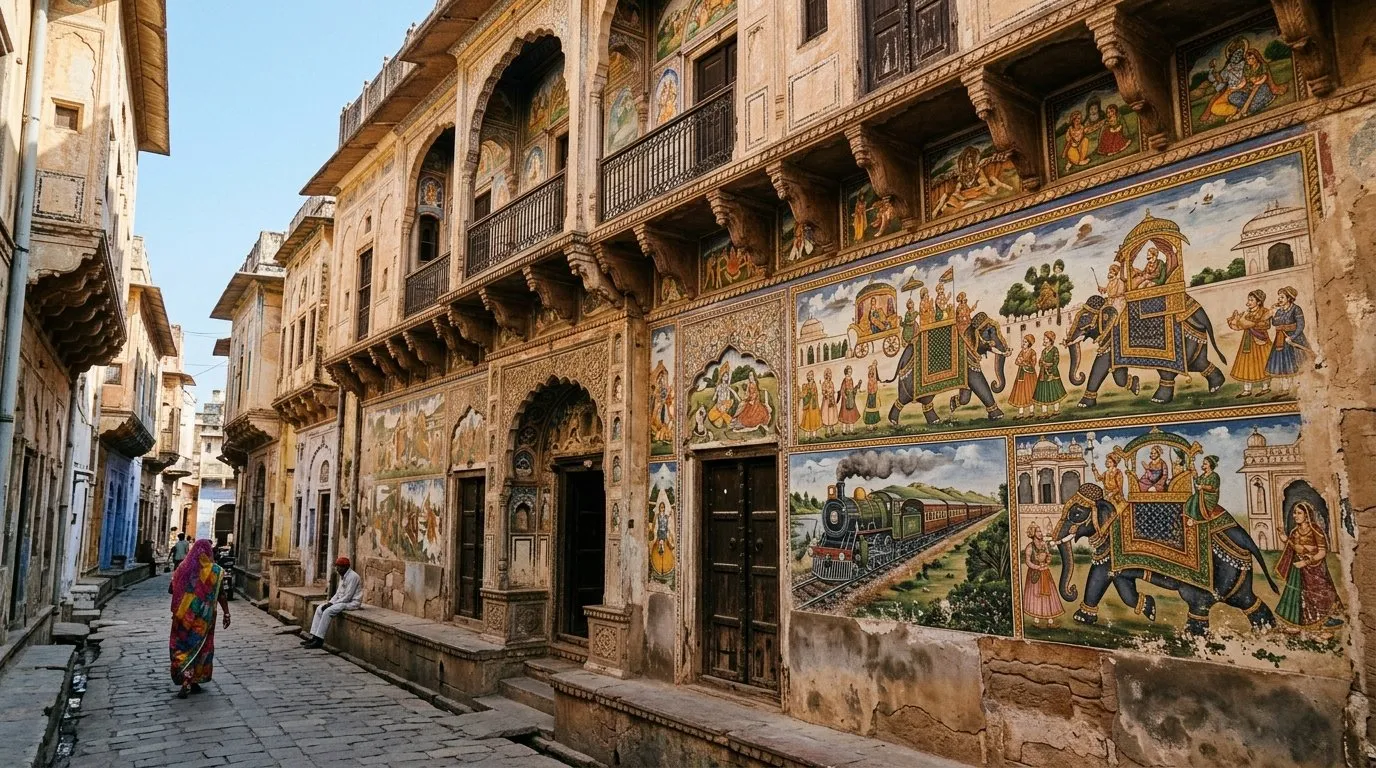
Shekhawati is a region, not a single town — a triangle of desert land in northeastern Rajasthan, roughly between Jaipur and Bikaner, covering about a dozen small towns and villages. What makes it extraordinary is concentrated in these towns: over 400 havelis (merchant mansions) covered in frescoes that constitute the largest open-air art gallery in the world.
That is not a tourist board exaggeration. The Shekhawati merchants — Marwaris who became some of India's wealthiest businessmen in the 18th and 19th centuries — built lavish mansions in their home villages and hired painters to cover every surface with art. The subjects are remarkable: alongside traditional Hindu mythology, the painters depicted trains, cars, telephones, gramophones, European women, and hot air balloons — things they had heard about but never seen, interpreted through an Indian artistic lens.
The result is a folk art record of India encountering modernity. A fresco might show Krishna on one wall and a Wright Brothers-style airplane on the next. A merchant's portrait might sit beside a painting of Queen Victoria. The anachronisms are not errors — they are the whole point. These painters were documenting a world they were hearing about from their merchant patrons, filtering it through imagination and traditional technique.
The key towns are Nawalgarh (the most concentrated collection of quality havelis), Mandawa (the most touristy, with a heritage hotel in a converted fort), Fatehpur (excellent havelis with fewer visitors), Dundlod, Ramgarh, and Jhunjhunu. Each town has dozens of painted havelis, most in various states of preservation — from immaculate to crumbling.
Shekhawati sits at about 430 metres elevation in flat, semi-arid terrain. The landscape is not dramatic — this is dusty, dry Rajasthan with camels, scrubland, and wide skies. The drama is entirely in the art.
Best Month to Visit
October through March, without exception. Shekhawati is desert Rajasthan and summer temperatures regularly exceed 45°C. Walking between havelis in that heat is not tourism — it is endurance testing.
November through February is the sweet spot: daytime temperatures of 18-25°C, cool nights (sometimes near 5°C), and clear, bright light that makes the frescoes pop. The low-angle winter sun is perfect for photography — it catches the painted surfaces with warm light and creates contrast that brings out faded details.
October and March are shoulder months — warmer but manageable with early morning and late afternoon exploration.
Rajasthan's monsoon (July-September) brings some rain to Shekhawati but not enough to cool it significantly. The humidity makes the heat worse. Avoid.
Shekhawati does not have a "peak season" in the way Jaipur or Udaipur does. Even in winter, visitor numbers are low. You will rarely feel crowded at any time.
How to Get There
Shekhawati is 200-280 km from Delhi and 150-200 km from Jaipur, depending on which town you are heading to. From Delhi, the drive to Mandawa or Nawalgarh takes 5-6 hours via the NH48 and then state highways. From Jaipur, it is 3-4 hours.
The nearest railway junction is Jhunjhunu, which has trains from Delhi and Jaipur. From Jhunjhunu, local buses and taxis connect to all major Shekhawati towns. Nawalgarh also has a small railway station with some direct services.
There is no airport in Shekhawati. Jaipur airport is the closest, followed by Delhi.
Within the region, a hired car is essential. The towns are spread across a 50-60 km area, and moving between them on public transport is slow and unreliable. A car with a local driver who knows the haveli locations is the most efficient way to explore.
Shekhawati works as a two-day stopover between Delhi and Jaipur, or as a day trip from Jaipur (long but feasible for Nawalgarh or Mandawa). Ideally, base yourself in one town and explore from there.
Infrastructure Reality
Infrastructure varies by town. Mandawa has the best tourist facilities — the Castle Mandawa heritage hotel is the flagship, and several smaller guesthouses and hotels operate. Nawalgarh has a few good heritage properties (Roop Niwas Kothi is well-known) and budget options. Other towns have minimal accommodation.
Don't expect luxury unless you are at one of the established heritage hotels. Budget options are basic — clean rooms with fans, Indian toilets, and bucket hot water. The heritage hotels offer air conditioning, Western bathrooms, and dining rooms, but at heritage hotel prices.
Food is Rajasthani: dal-baati-churma, sabzi, roti. The heritage hotels serve multi-course thalis. In smaller towns, dhabas are your main option. The food is honest and good.
ATMs exist in the larger towns (Nawalgarh, Mandawa, Jhunjhunu) but carry cash regardless. Mobile coverage is reliable in towns but spotty between them. The nearest serious hospital is in Jhunjhunu; Jaipur is the fallback for anything major.
The havelis themselves have no formal entry system. Some are locked and you need to find the caretaker (often a neighbour with the key). Some are private residences where the family may or may not let you in. Some are open and unguarded. A local guide is invaluable — they know which havelis are accessible, who has the keys, and which frescoes are most significant. Budget Rs 500-1,000 for a half-day guide.
Kids Verdict: 3 out of 5
Shekhawati's appeal is primarily artistic and historical, which limits its natural attraction for children. That said, the frescoes have a quirky quality that can engage kids: paintings of trains with too many wheels, Europeans in strange hats, elephants with telephones — the folk art interpretation of modernity is genuinely funny and kids can spot the anachronisms like a game.
The heritage hotels that offer camel rides and folk performances give families with children anchor activities between haveli visits. Mandawa's fort-hotel has enough exploring space to keep children interested.
But the core activity — walking through dusty towns looking at paintings on old buildings — requires a tolerance for heat, dust, and standing still that most children under 10 do not possess in sufficient quantity for a full day. If you are visiting Shekhawati with young children, plan for short haveli sessions (maximum 2-3 per outing) interspersed with breaks at your hotel.
The practical environment is also challenging: dusty streets, limited food options, basic bathrooms, and significant distances between towns. Families with very young children will find the logistics tiring.
For older children (12+) with an interest in art or history, Shekhawati can be genuinely fascinating. For everyone else, keep the visit to one night and focus on the best 4-5 havelis rather than trying to see everything.
The Bottom Line
Shekhawati is one of India's most underappreciated cultural treasures. Four hundred painted mansions documenting two centuries of merchant ambition, folk art, and cultural collision — and almost nobody visits. The frescoes are degrading year by year from weather, neglect, and time. Some of the finest paintings visible today will be gone in a decade.
This is not a place for people who need beaches, mountains, or adventure sports. It is a place for people who find beauty in painted walls, who enjoy the quiet satisfaction of tracking down a locked haveli and convincing the caretaker to open it, and who appreciate art that was made not for museums but for the walls of homes.
Two nights based in Nawalgarh or Mandawa is ideal. Visit 8-10 havelis across two or three towns. Hire a local guide. Go in winter. And go soon — Shekhawati's art is not being preserved fast enough to outpace its decay.
Monthly Scores
| Destination | Jan | Feb | Mar | Apr | May | Jun | Jul | Aug | Sep | Oct | Nov | Dec |
|---|---|---|---|---|---|---|---|---|---|---|---|---|
| Shekhawati | 10.0 | 10.0 | 8.0 | 4.0 | 2.0 | 2.0 | 4.0 | 4.0 | 6.0 | 10.0 | 10.0 | 10.0 |
The Window · Every Sunday
Liked this? Get one every Sunday.
Best score of the week, one honest skip, road updates. Four minutes. No spam.
More in Field guide
Is Manali safe for solo female travellers? Which Manali, and when
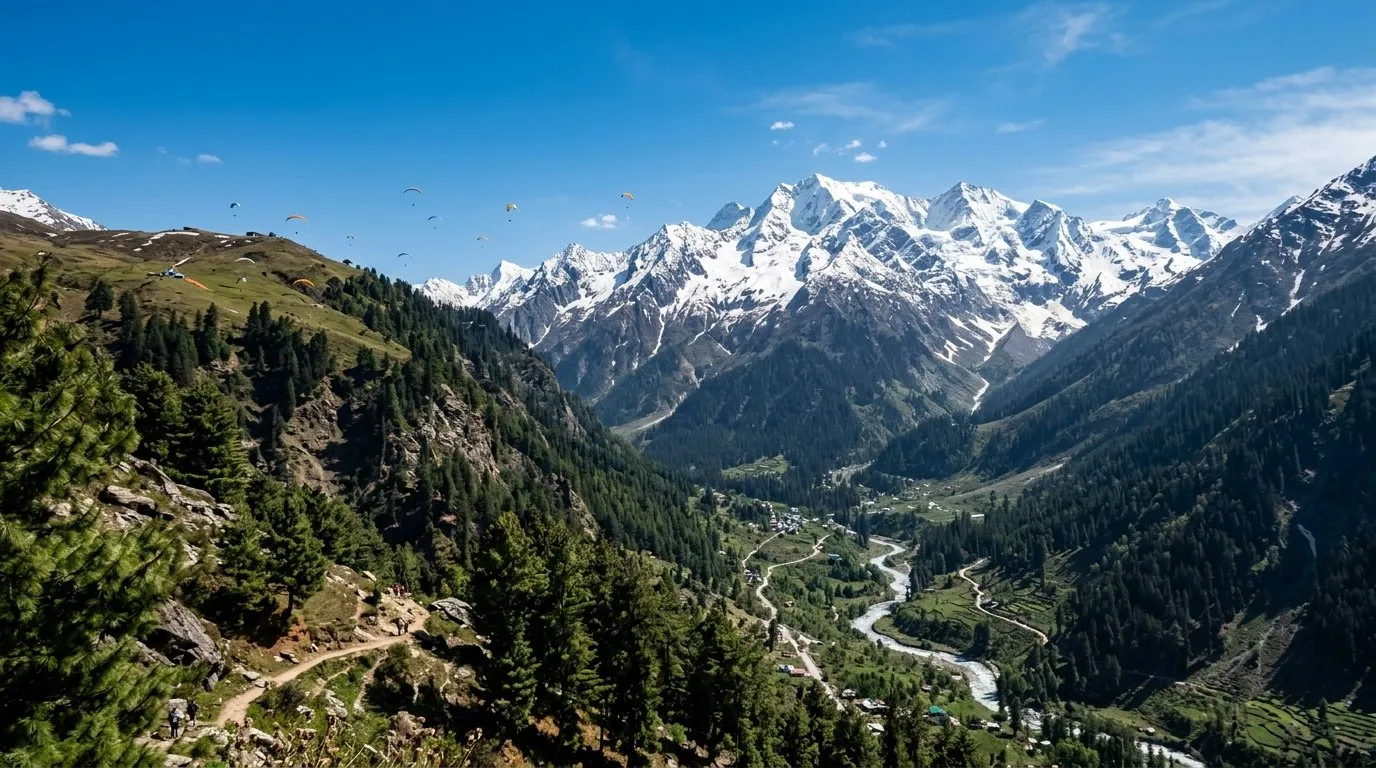
Manali is not one place. New Manali is a respectable hill town — 4/5 safe. Old Manali is the Himachal backpacker-cafe strip with party + drug scene — 2/5 after 10pm. McLeodganj 3 hours away holds 5/5 year-round. Pick deliberately.
5 min read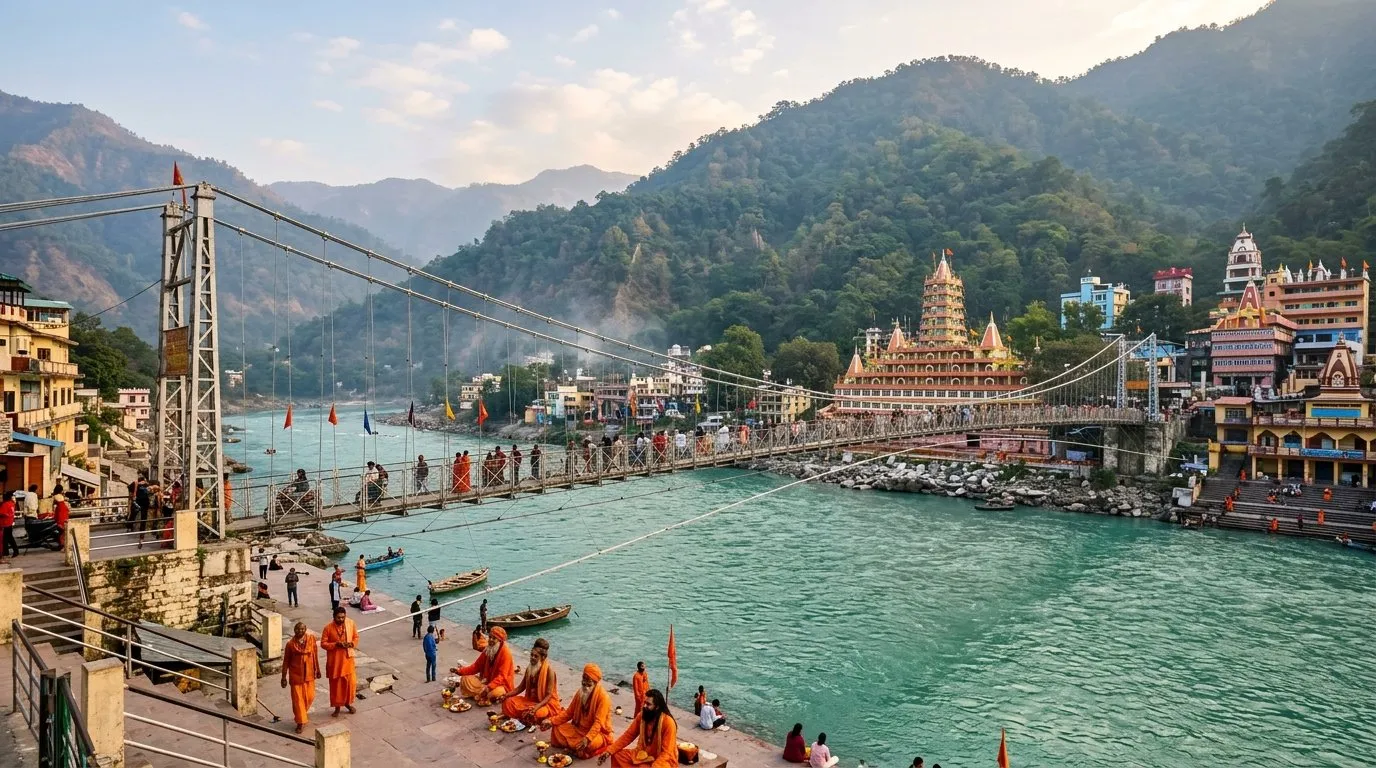
Solo-female travel in India — every destination scored, month by month
Most India travel guides tell women 'use common sense' and call it done. We rated 488 destinations on a 1-5 scale for solo-female safety, with month-specific overrides where it matters. Here's the methodology, the top 15, and the five that don't clear the bar.
10 min read
Is Kashmir safe for solo female travellers? What actually matters
Kashmir is the destination where the generic 'is India safe for women' post fails hardest. The answer depends on which month, which valley, which houseboat operator, and whether you're willing to dress differently than you would in Goa. Here's the concrete version.
6 min read- Access
- NH52 and state roads good.
- Emergency
- 108 · District hospitals in Jhunjhunu and Sikar
- Stay
- ₹500-8000/night · 40 options
Go with confidence.