Complete Guide to Barmer
The desert beyond Jaisalmer — Kiradu temples, sand dune villages, and the Rajasthan that tourism forgot
Destinations in this article
Why Go
Barmer is what Jaisalmer was before the tourists found it. At 227 metres in the far western reaches of Rajasthan, closer to the Pakistan border than to Jodhpur, this desert district town is surrounded by everything that makes the Thar Desert compelling — sand dunes, arid scrubland, villages of impossible colour, and centuries-old craft traditions — without any of the infrastructure or attention that tourism brings.
The headline attraction is the Kiradu temple complex, about 35 km from Barmer town. Built in the 11th-12th century, these five temples feature carvings so intricate and sensuous that they have been called "Rajasthan's Khajuraho." The comparison is earned — the sculptural quality is exceptional. The temples are also cursed, according to local legend: a sage cursed the town of Kiradu so that anyone who remains after sunset turns to stone. The curse is a colourful way to explain why nobody lives there — the temples stand alone in the desert, attended by a single caretaker.
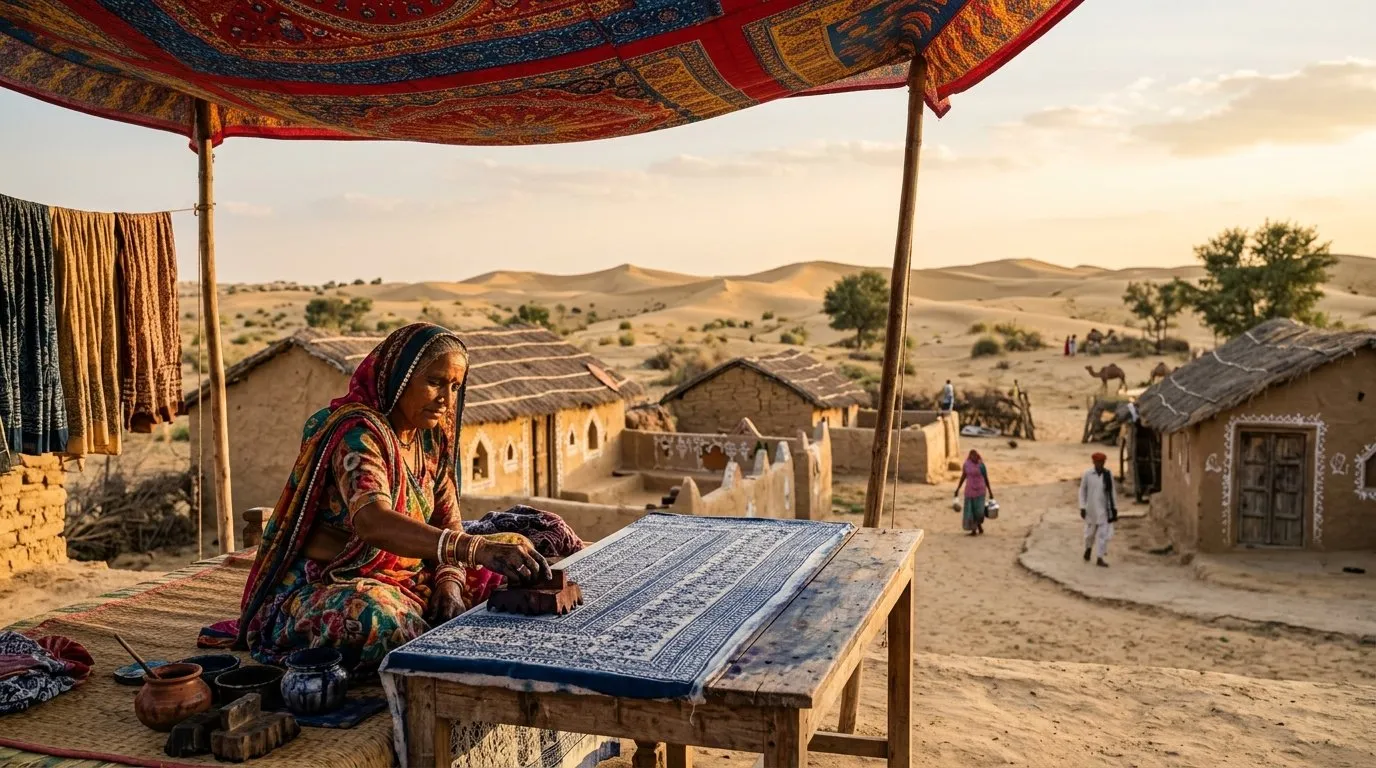
Beyond Kiradu, Barmer is a centre of hand-block printing. The villages around Barmer have produced block-printed textiles for centuries — the Barmer ajrakh print is a distinct tradition with its own geometric patterns and natural dyes. You can visit workshops where artisans still carve wooden blocks by hand and print fabric on the ground using techniques unchanged for generations. This is not a tourism demonstration — this is working craft.
Gadra Road, south of Barmer, leads to sand dune areas that are virtually untouched by tourism. No camel safari operators, no tent camps with "desert dinner under the stars" packages. Just dunes, scrub, and silence. If you want to experience the Thar Desert without commercial mediation, this is it.
The town of Barmer itself is a dusty, functional desert town. It is not pretty. It is not quaint. It is real. The weekly market, the fabric shops, the chai stalls — everything operates on local rhythms, indifferent to outsiders.
Best Month to Visit
October through February is the only sensible window. Barmer sits in the Thar Desert and summer temperatures routinely exceed 48°C. This is not mild discomfort — it is dangerous heat. Even locals limit outdoor activity to early morning and evening during summer.
November through January is ideal: daytime temperatures of 20-28°C, cool nights (can drop to 5-8°C in December-January), and clear desert skies. The light in the desert during winter is extraordinary — golden, low-angle, and perfect for the Kiradu carvings.
October and February are shoulder months — warmer but manageable. March starts getting hot, and by April you should be elsewhere.
The monsoon (July-September) brings brief but intense rain to the Thar — the desert blooms briefly and the landscape transforms. It is fascinating but impractical: roads flood, transport is disrupted, and the heat between rains is intense.
Barmer's annual Thar Festival (usually March) features folk music, dance, and camel races — but March heat can be aggressive. Check the dates and your heat tolerance before committing.
How to Get There
Barmer is connected by rail to Jodhpur (about 200 km, 4-5 hours by train) and has direct trains from Delhi, Jaipur, and other Rajasthan cities. The railway connection is the most practical approach — Barmer is on the Jodhpur-Munabao line that runs toward the Pakistan border.
By road, Barmer is 220 km from Jodhpur (4 hours), 450 km from Jaipur (7-8 hours), and 640 km from Delhi (10-12 hours). The Jodhpur-Barmer highway is well-maintained and straight — desert driving at its most monotonous and meditative.
The nearest airport is Jodhpur. From Jodhpur, a hired car to Barmer is straightforward. Combining Barmer with Jaisalmer (about 150 km away) makes geographic sense for a western Rajasthan desert circuit.
Within Barmer district, you will need a hired vehicle. Kiradu is 35 km from town with no public transport. The block printing villages are scattered. Gadra Road dunes require a car. Public transport within the district is limited to irregular local buses.
Infrastructure Reality
Barmer has basic infrastructure — it is a district headquarters, so the essentials exist, but nothing is geared toward tourists. There are a few simple hotels in town, a government rest house, and limited options beyond that. Rooms are basic, clean enough, and inexpensive. Air conditioning is essential in anything warmer than November-January.
Restaurants are local dhabas serving Rajasthani and North Indian food — dal-baati-churma, ker sangri, and standard sabzi-roti. The food is good and cheap. International cuisine, cafes, and bakeries do not exist.
ATMs are available in Barmer town. Mobile coverage is reliable in town but can be patchy in rural areas and near the border. The district hospital handles basics; for anything serious, Jodhpur is the destination.
At Kiradu, there is nothing — no food stalls, no water, no toilets. Bring everything you need. The caretaker may offer chai but do not count on it.
The block printing villages are working villages, not tourism setups. Be respectful, ask before photographing people, and expect authentic craft environments rather than vetted experiences.
Kids Verdict: 3 out of 5
Barmer is a challenging destination for families with young children. The distances are long, the infrastructure is basic, the food options are limited, and the heat window is narrow. The attractions are primarily cultural and historical — Kiradu temples and block printing workshops — which require interest and patience from children.
That said, older children (10+) with curiosity about history and craft can find Barmer genuinely fascinating. Watching a block printer work — the rhythm of stamp and press, the patterns emerging on fabric — is mesmerising at any age. The Kiradu temples are dramatic: ruined, isolated, and accompanied by a curse story that children love.
The desert itself is exciting for children who have never experienced it. The vastness, the silence, the sand, the camels — the sensory experience of the Thar is powerful. If you can get to the Gadra Road dunes without the kids being carsick and exhausted, the experience of standing on untouched sand dunes is memorable.
Practically, keep Barmer visits short with children — one night maximum. Ensure your accommodation has reliable air conditioning. Carry water and snacks obsessively. And time your visit for December-January when the temperature is most forgiving.
The Bottom Line
Barmer is for travellers who have done Rajasthan and want to go deeper. Not deeper in terms of luxury or ease — deeper in terms of authenticity. The Kiradu temples are genuinely world-class sculpture in a setting of total isolation. The block printing tradition is living heritage that predates and will outlast the tourist economy. The dunes near Gadra Road are what the Jaisalmer sand dunes looked like before the tent camps arrived.
This is not a comfortable trip. It is a real one. The reward for accepting Barmer's roughness is seeing a Rajasthan that exists for itself, not for visitors. The artisans print because their families have always printed. The temples stand because nobody has found a reason to tear them down. The desert stretches to Pakistan because that is what deserts do.
One night in Barmer, combined with Jaisalmer or Jodhpur, adds a dimension to a Rajasthan trip that no palace hotel can provide. Come for the Kiradu temples. Stay for the block printing. Leave understanding that the best of Rajasthan was never behind a velvet rope.
Monthly Scores
| Destination | Jan | Feb | Mar | Apr | May | Jun | Jul | Aug | Sep | Oct | Nov | Dec |
|---|---|---|---|---|---|---|---|---|---|---|---|---|
| Barmer | 10.0 | 10.0 | 8.0 | 4.0 | 2.0 | 2.0 | 4.0 | 4.0 | 6.0 | 10.0 | 10.0 | 10.0 |
The Window · Every Sunday
Liked this? Get one every Sunday.
Best score of the week, one honest skip, road updates. Four minutes. No spam.
More in Field guide
Is Manali safe for solo female travellers? Which Manali, and when
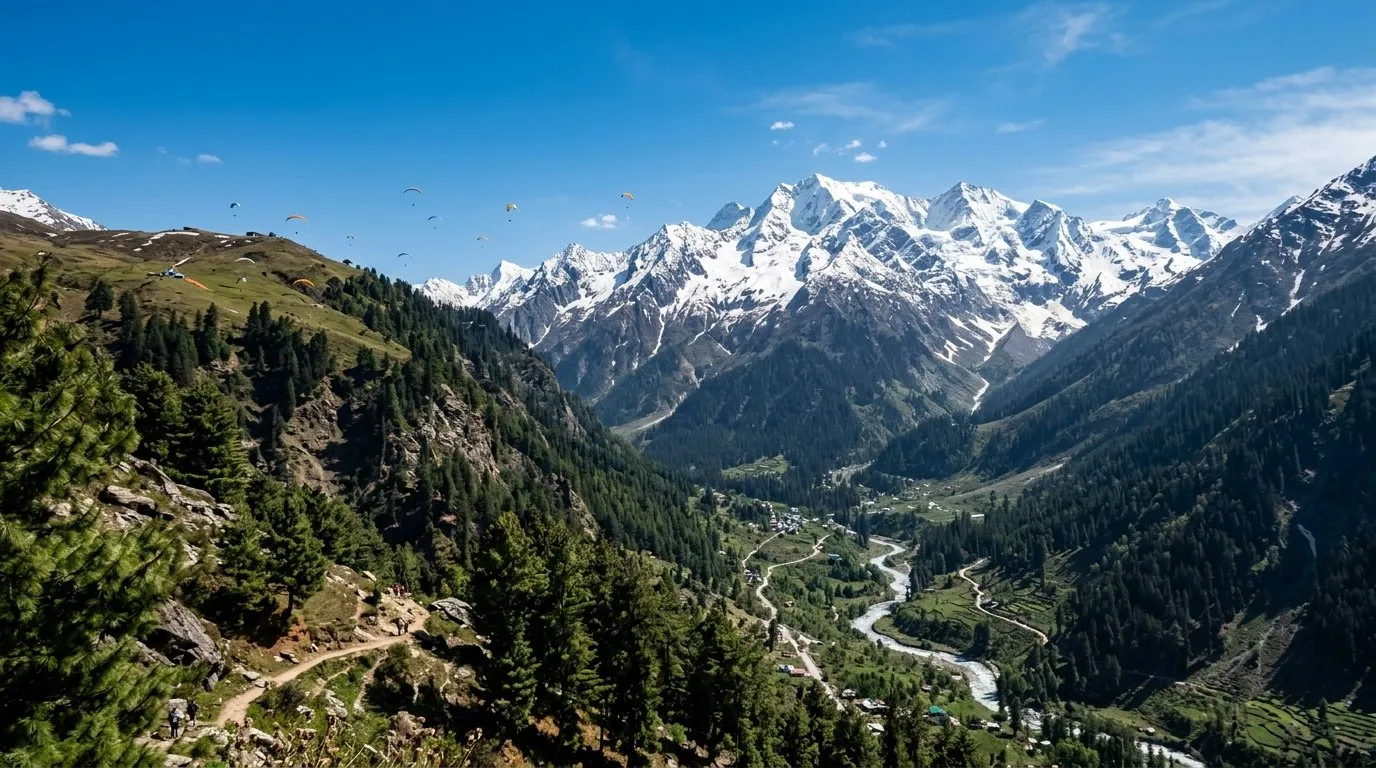
Manali is not one place. New Manali is a respectable hill town — 4/5 safe. Old Manali is the Himachal backpacker-cafe strip with party + drug scene — 2/5 after 10pm. McLeodganj 3 hours away holds 5/5 year-round. Pick deliberately.
5 min read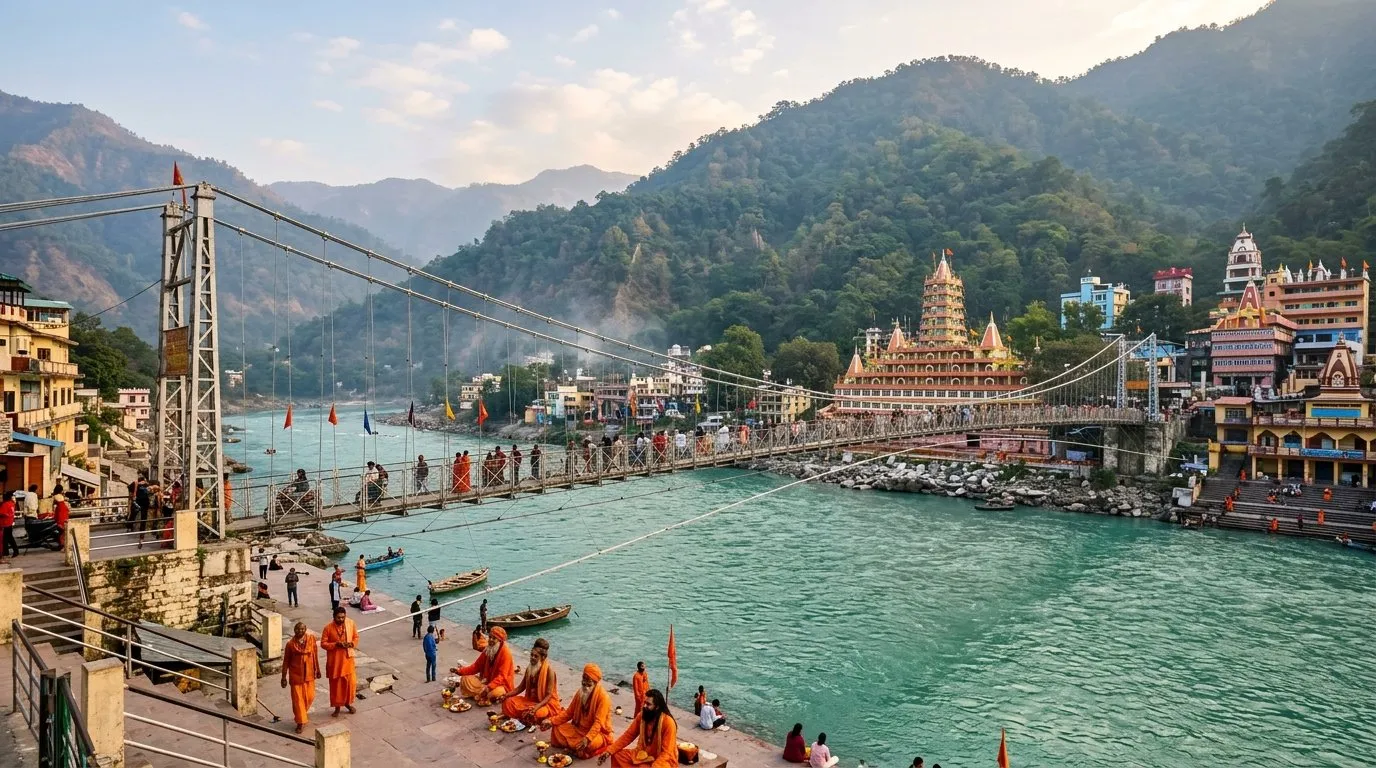
Solo-female travel in India — every destination scored, month by month
Most India travel guides tell women 'use common sense' and call it done. We rated 488 destinations on a 1-5 scale for solo-female safety, with month-specific overrides where it matters. Here's the methodology, the top 15, and the five that don't clear the bar.
10 min read
Is Kashmir safe for solo female travellers? What actually matters
Kashmir is the destination where the generic 'is India safe for women' post fails hardest. The answer depends on which month, which valley, which houseboat operator, and whether you're willing to dress differently than you would in Goa. Here's the concrete version.
6 min read- Access
- NH15 good. State roads fair.
- Emergency
- 108 · District Hospital Barmer
- Stay
- ₹400-3000/night · 25 options
Go with confidence.