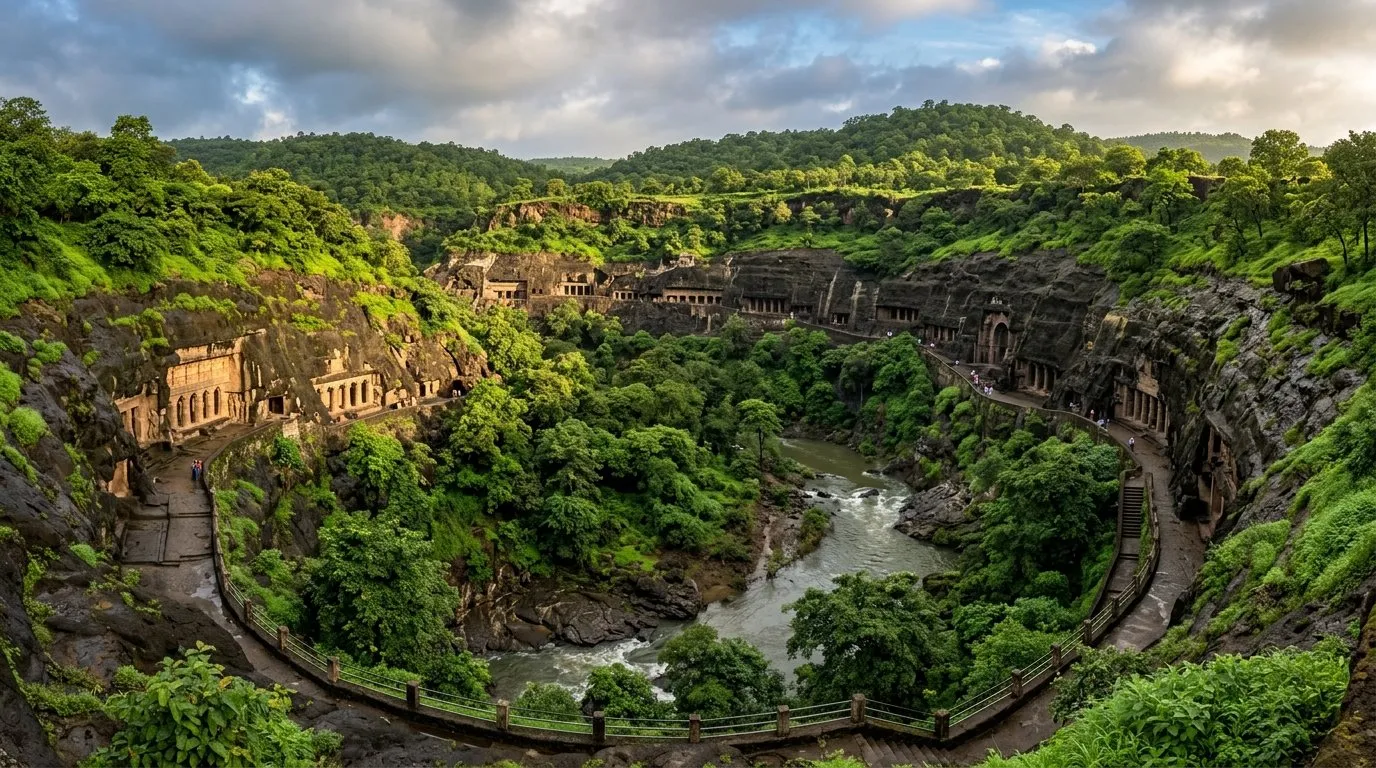
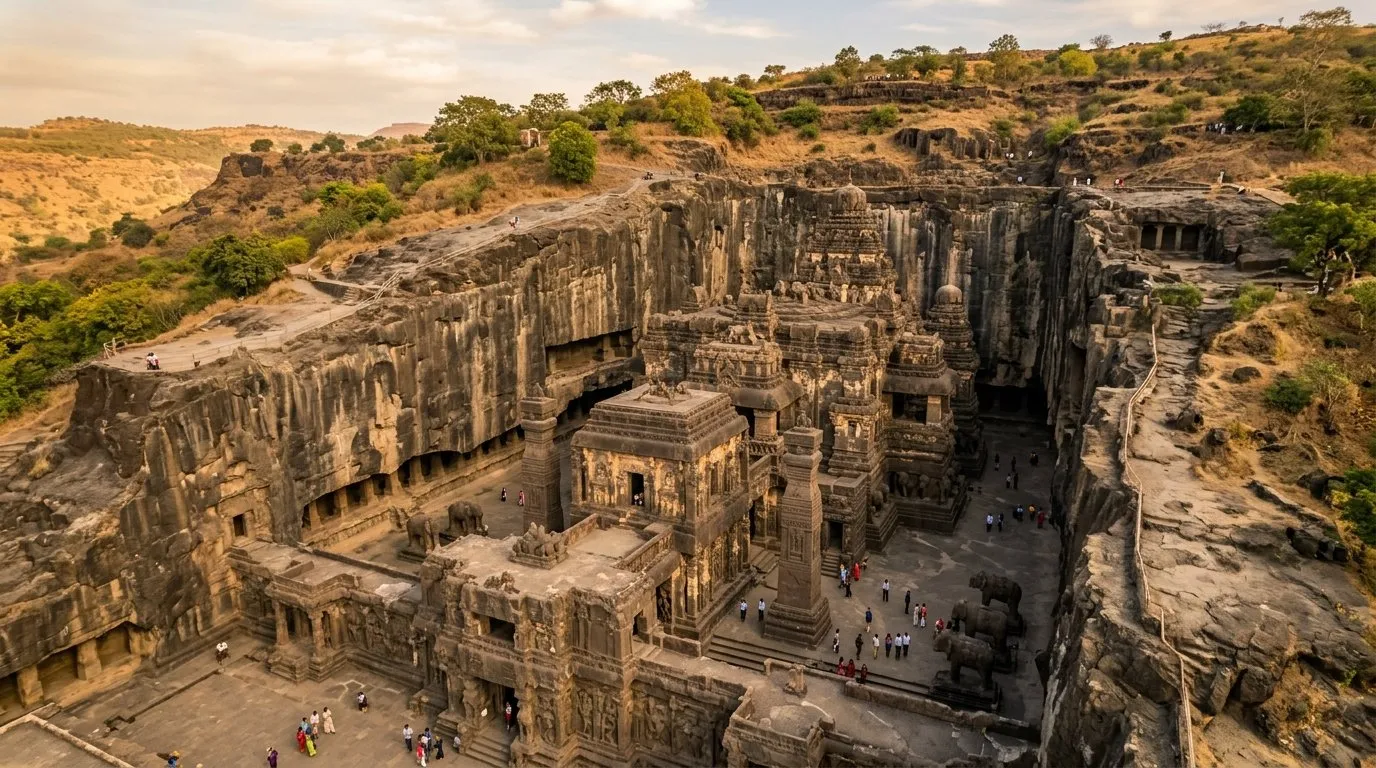
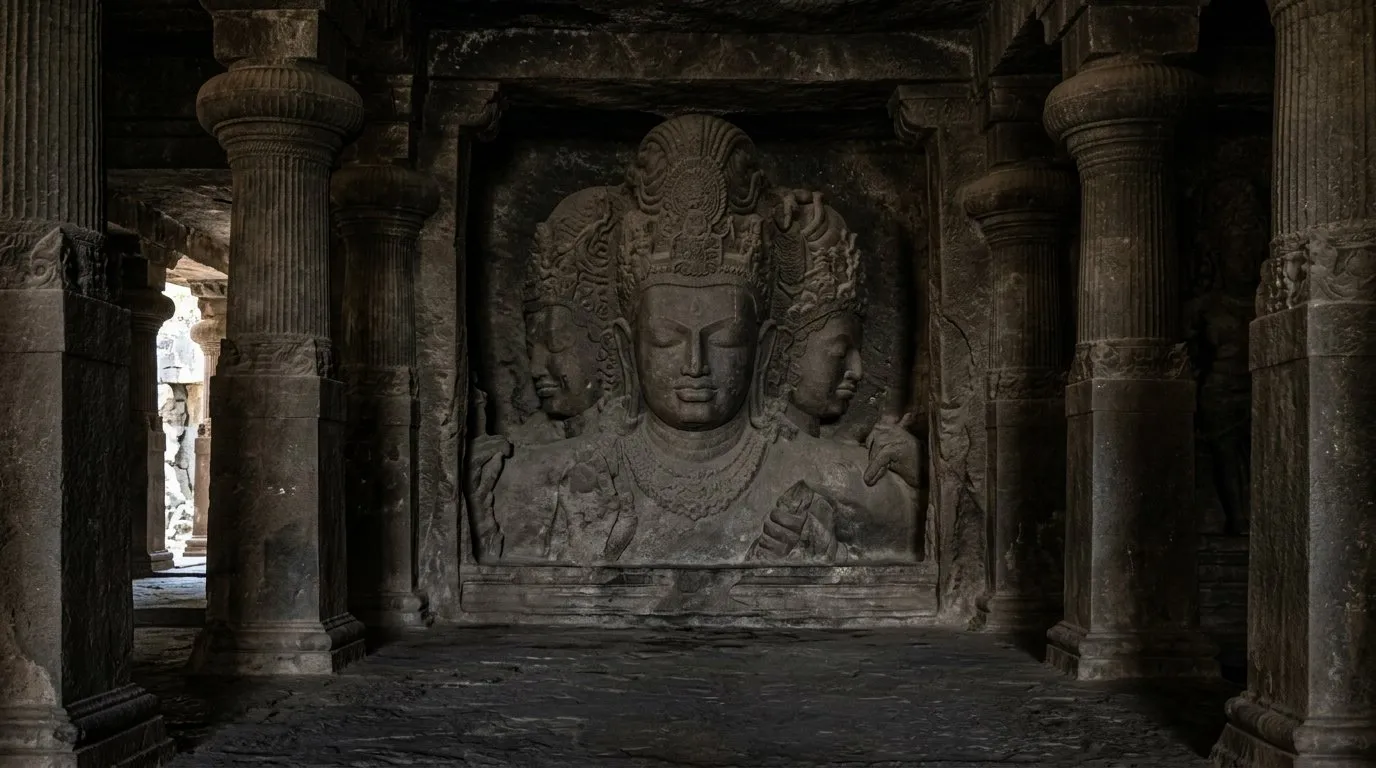
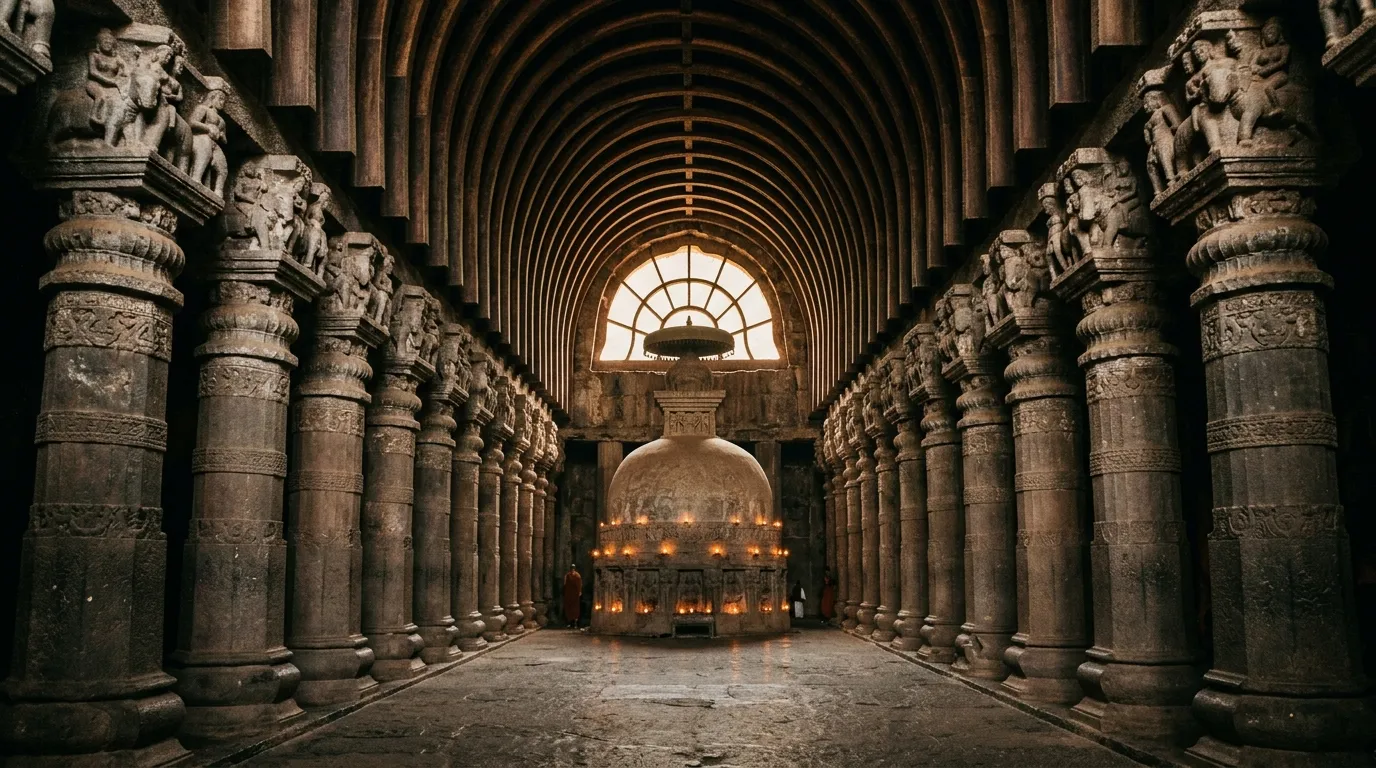
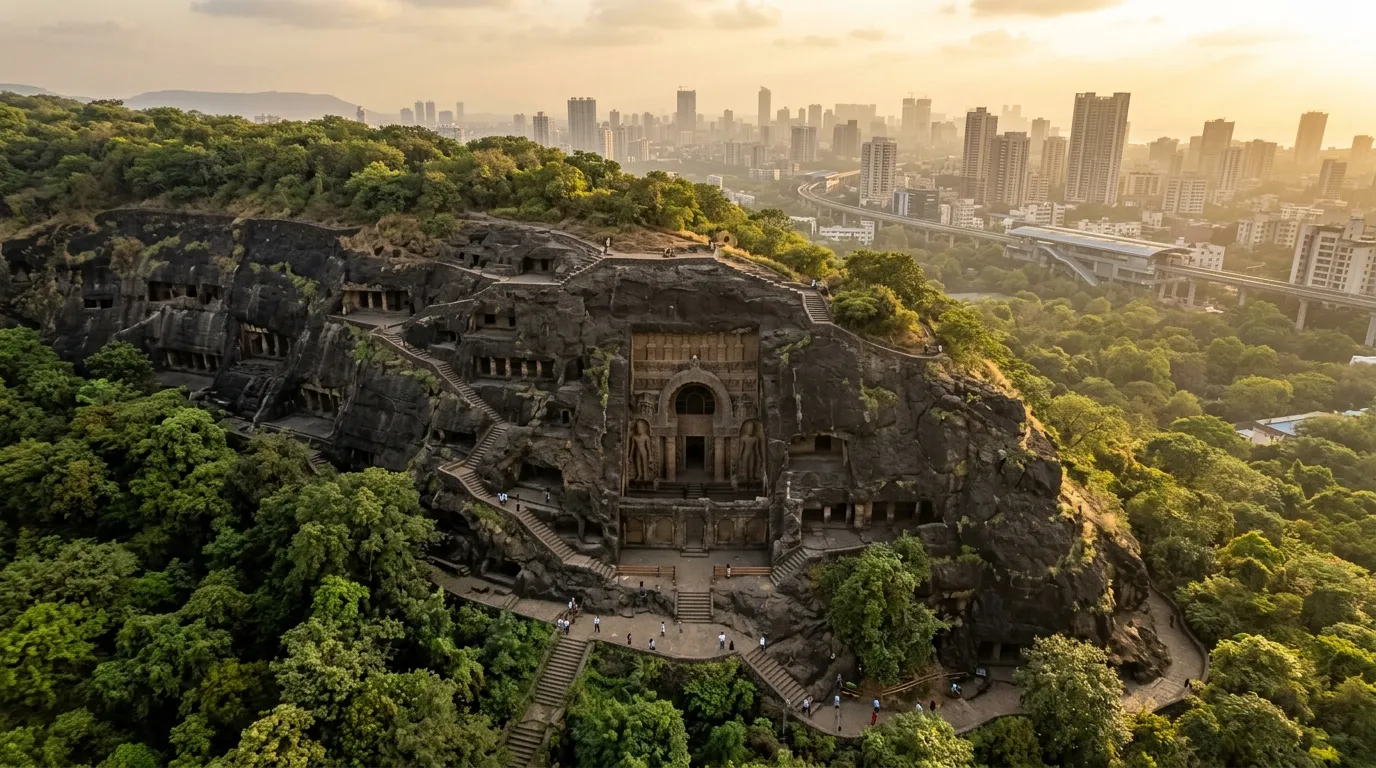
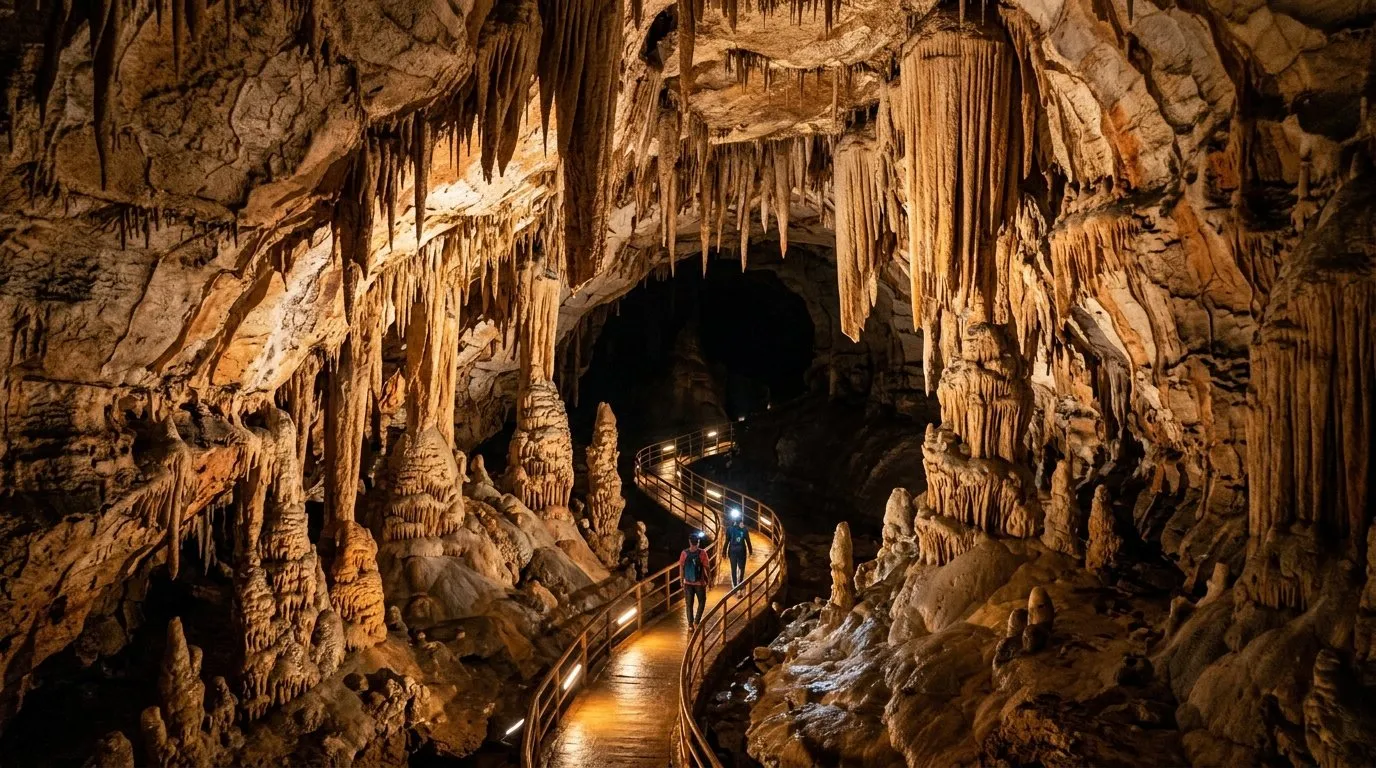
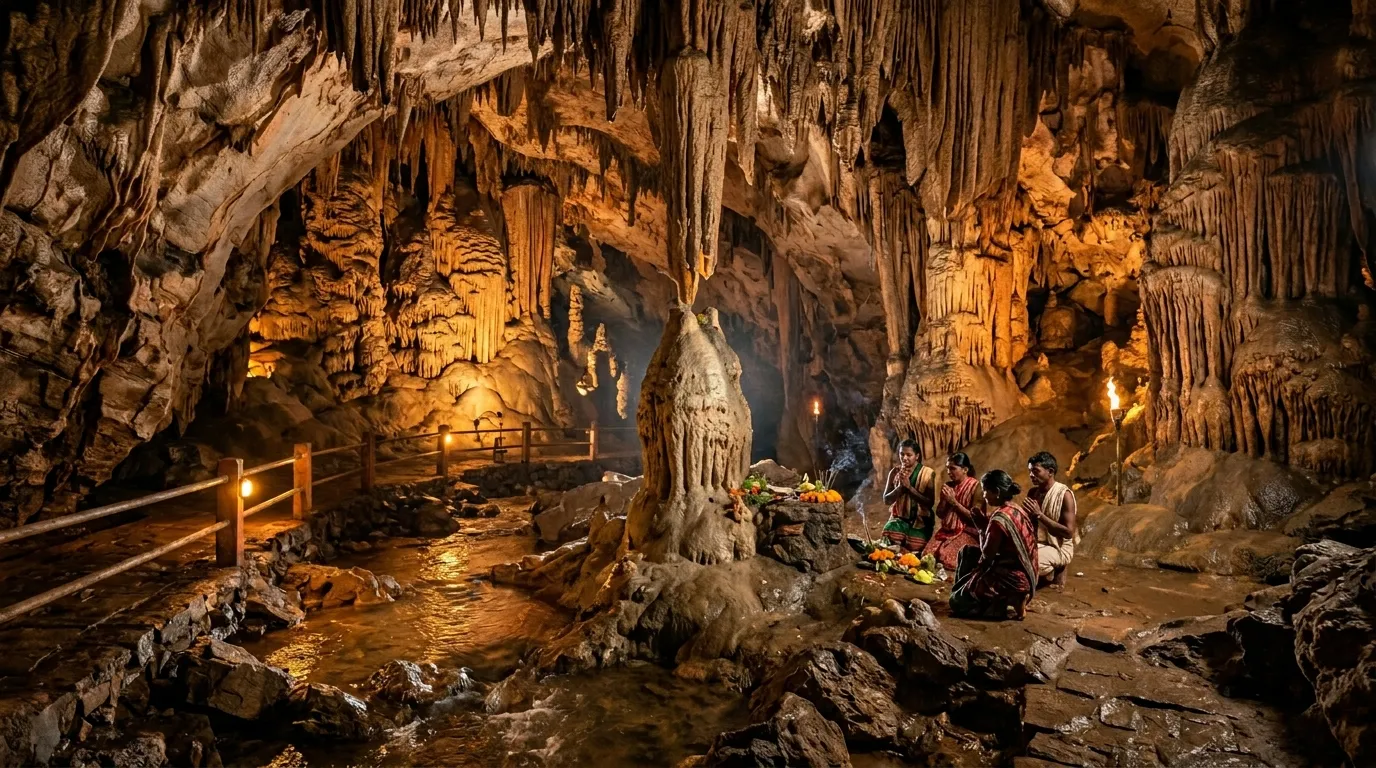
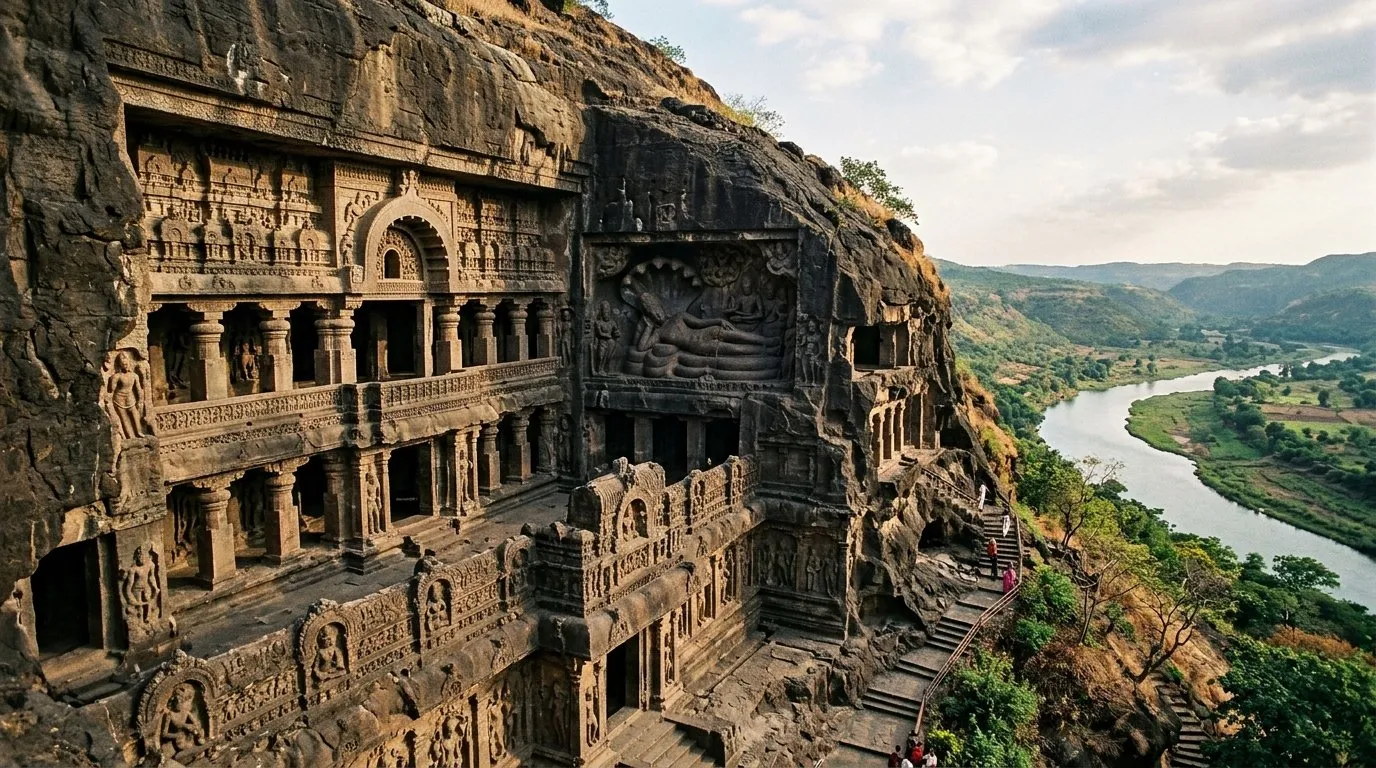
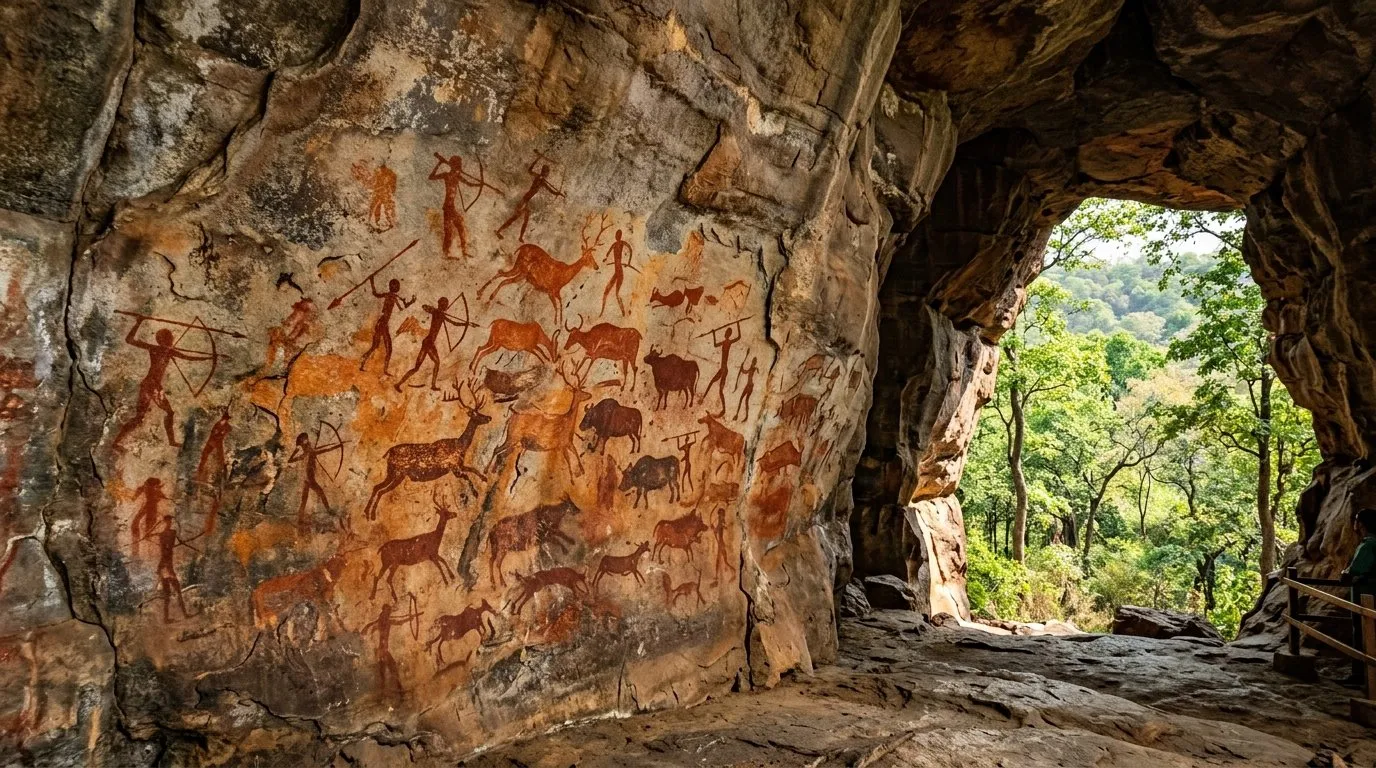
India's cave heritage breaks into three families: the Buddhist-Hindu-Jain rock-cut sanctuaries of the Sahyadri-Western Ghats (Ajanta, Ellora, Elephanta, Karla-Bhaja, Kanheri), the limestone karst formations of the Deccan and Eastern Ghats (Belum, Borra), and the prehistoric rock shelters of central India (Bhimbetka). This collection covers nine sites spanning all three categories. Together they cover roughly 32,000 years of human visual history — from prehistoric ochre handprints to baroque Pallava sculpture.
Maharashtra cluster (Ajanta + Ellora + Elephanta) is the natural starting point — 4-5 days based out of Aurangabad and Mumbai. Bhimbetka pairs with a Bhopal-Sanchi heritage trip (3 days). Belum and Undavalli sit on an AP rail loop (2 days from Vijayawada). All sites are accessible without trekking; Ajanta has a steep stair descent into the gorge.
ALSO ON NAKSHIQ
Eight more rooms in the magazine.
Guides
Visa, scams, food, packing.
Everything the guidebook won't tell you — written for India in 2026.
Blog
Field notes from the road.
Long-form reads on regions, festivals, and the offbeat circuit.
Road trips
Curated multi-day routes.
Driving itineraries with day-by-day stops, distance, and difficulty.
Collections
Themed reading lists.
Wettest places. Sacred lakes. Solo-female-safe. Curated cuts.
NakshIQ 100
The 100 best destination-months.
India's highest-scoring places, ranked across all 12 months.
The Window
Our weekly newsletter, archived.
One honest spread, every Sunday. The full back catalogue.
Skip list
What we'd skip — and what we'd do instead.
Overhyped places with honest alternatives.
First trip
Planning your first time in India.
Safety, scams, what to wear, food survival, solo female travel.