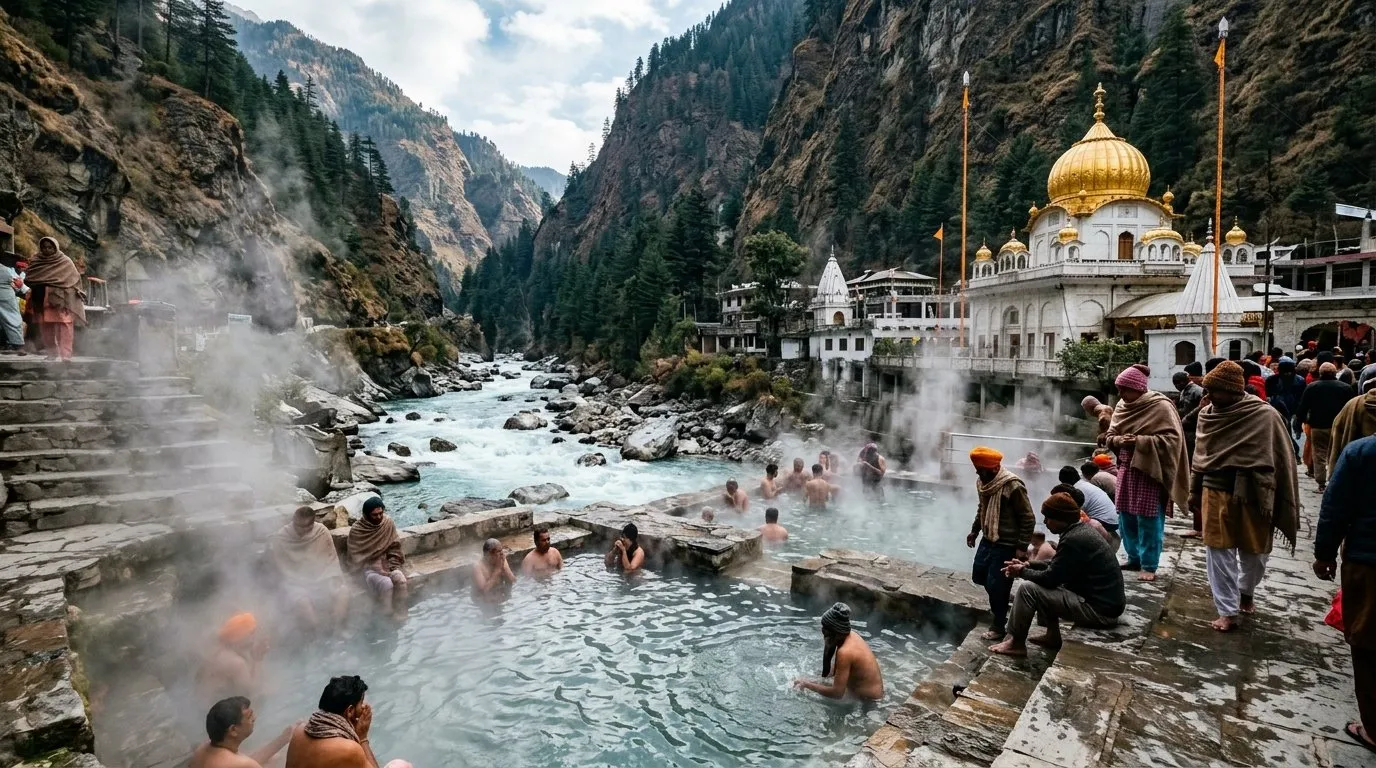
Manikaran hot springs — 64-95°C non-volcanic geothermal anomaly.
Tourists queue for the langar-cooked-in-springs novelty and miss the geological context — these are among the hottest non-volcanic geothermal springs documented on the Indian subcontinent, formed in a deep tectonic fracture along the Parvati-Beas suture zone.WHY NOBODY KNOWS
Multiple discharge points emerge along a 200m stretch of the Parvati riverbank, with temperatures recorded between 64°C and 95°C (Geological Survey of India + Punjab Engineering College surveys). The high heat is not volcanic in origin — Manikaran sits on a deep fracture along the Main Central Thrust of the Himalayan tectonic zone, and groundwater circulating ~3km deep is heated by lithostatic compression before rising up the fracture. Both the Gurudwara Manikaran Sahib (1620, Sikh) and the Lord Ramchandra Temple (older, Hindu) use spring water to steam-cook rice (8-10 min, no fuel) for langar/prasad — visible if you walk past the kitchens between 11am and 2pm. The "mani" (jewel) name comes from a Hindu legend (Parvati lost her earring in the spring; Shiva's anger summoned the heat) and a separate Sikh Janamsakhi version (Bhai Mardana lost his food vessel; Guru Nanak retrieved it).