The Naropa cave under the monastery — the 11th-c. Mahasiddha origin of Drikung Kagyu in Ladakh.
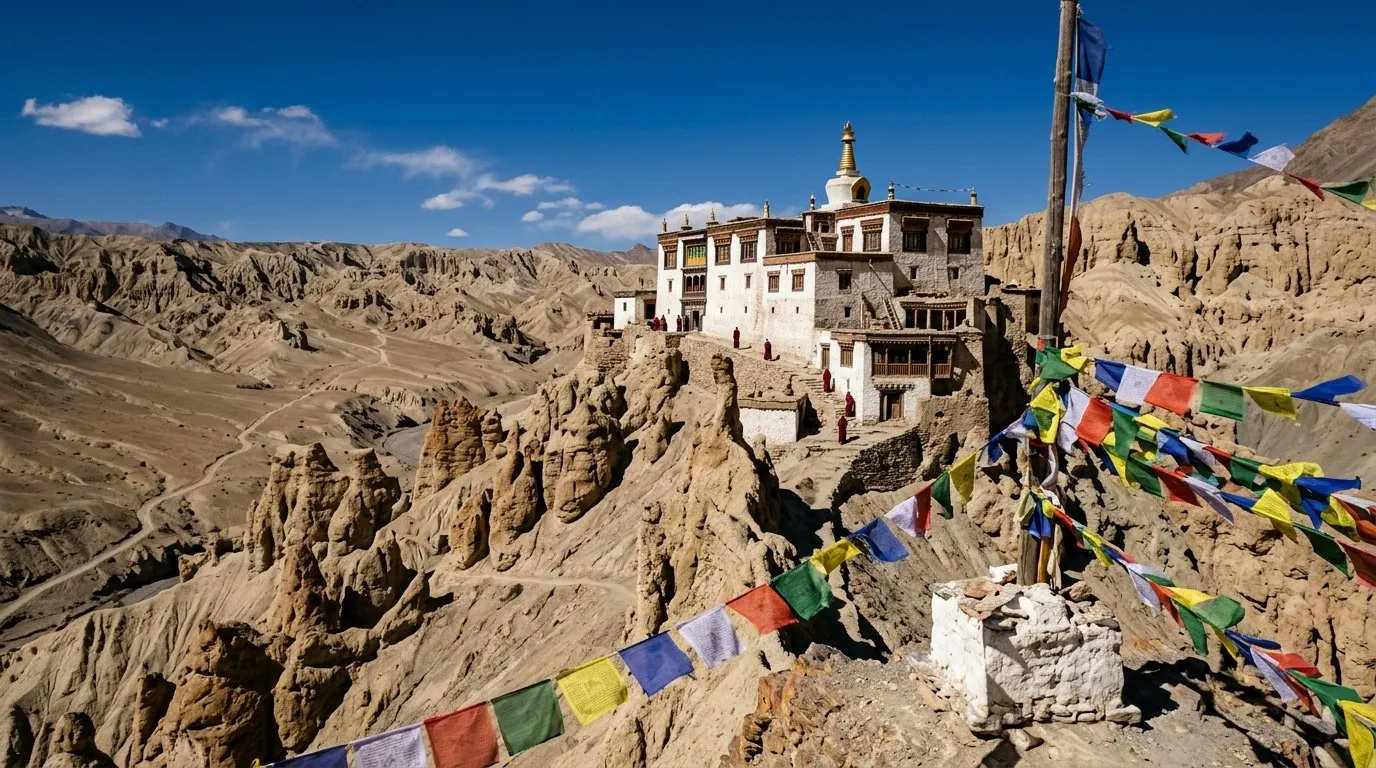
Tour groups visit Lamayuru's main assembly hall and the Yuru Kabgyat festival ground; they almost never descend to the small meditation cave under the rock outcrop where the entire monastic lineage claims its origin.WHY NOBODY KNOWS
Local tradition holds that the 11th-c. Indian Mahasiddha Naropa (956-1041 CE) — Tilopa's disciple and the source-master of the Kagyu lineage transmitted to Marpa and Milarepa — meditated in a cave on the rock outcrop that Lamayuru monastery was later built on. The cave is preserved as a low-ceiling shrine room directly beneath the main Dukhang; a short staircase leads down to it. Lamayuru is sometimes called the oldest monastery in Ladakh on this basis (10th-11th c. founding by Rinchen Zangpo on the Naropa-cave site, with earlier 6th-c. Bon pre-Buddhist origins per Drikung Kagyu records). Ask the on-duty monk to unlock the cave — it's usually open on request, not on a fixed schedule. Bring a small butter-lamp offering. Sit for ten minutes. The monastery's entire spiritual authority traces back to this 3×4 metre room.