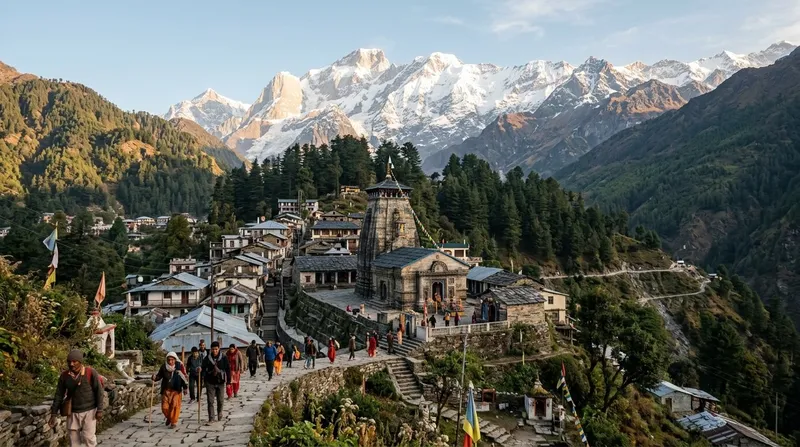
Ukhimath Winter Kedarnath.
Nobody knows deity moves here in winter.WHY NOBODY KNOWS
Same deity without 16km trek. Zero crowds.
DISPATCH · ISSUE Nº 47
One of the 12 Jyotirlingas, sitting at 3583m beneath a glacier — open only 6 months a year.
VERIFIED APR 2026 · ISSUE Nº 47
5 MIN READ·Or skip to the verdict ↓
“One of the 12 Jyotirlingas, sitting at 3583m beneath a glacier — open only 6 months a year.”
WHY SPECIAL
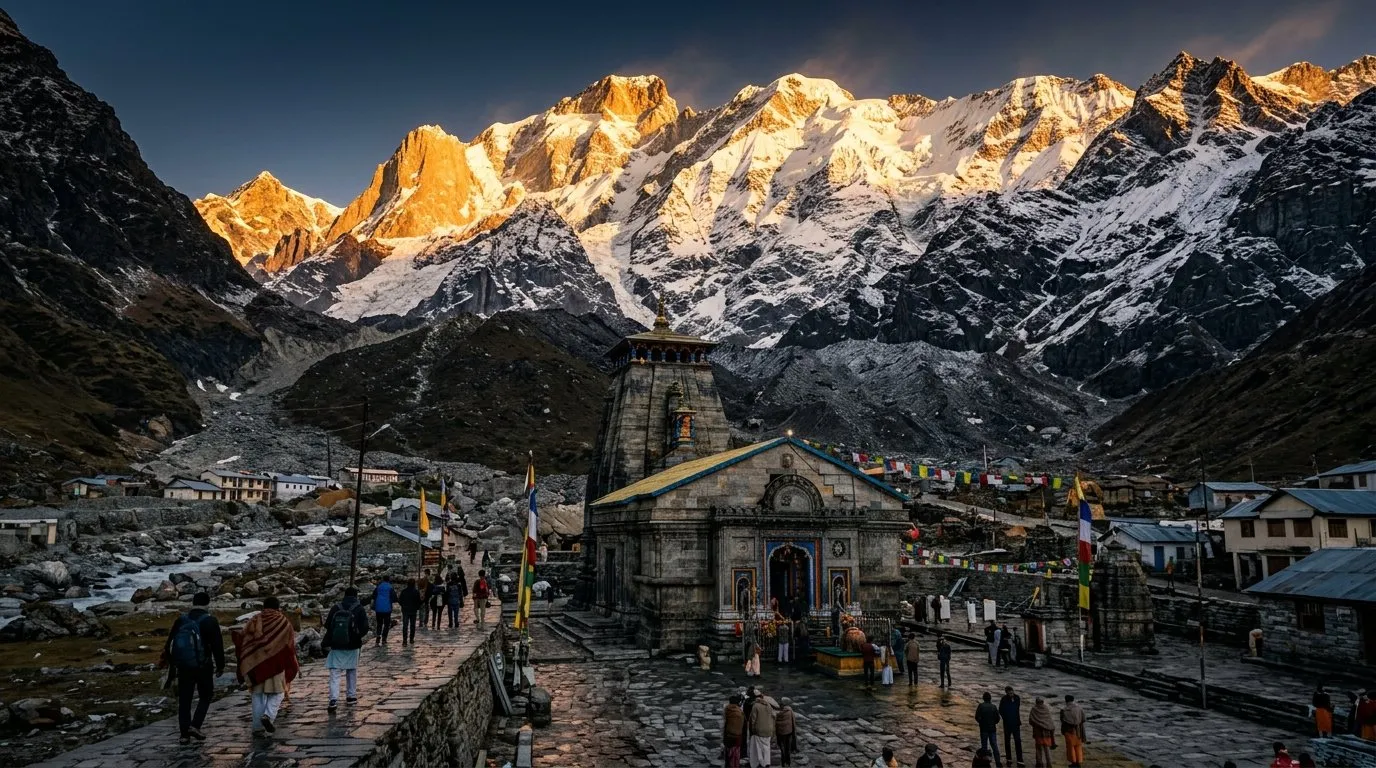
The temple is over 1200 years old. It survived the catastrophic 2013 floods that destroyed everything around it. Setting is extraordinary — Mandakini valley, Kedarnath peak directly behind, glaciers above.
Know before you go
Every month rated on the 0–10 editorial scale. Click any cell to read the month-specific verdict — what to do, what to skip, what crowds you'll meet.
↑ Tap any month for the full read · colours match verdict bands
Read our scoring methodology →
DEEP-DIVE READS
ELEVATION
The temple is over 1200 years old. It survived the catastrophic 2013 floods that destroyed everything around it. Setting is extraordinary — Mandakini valley, Kedarnath peak directly behind, glaciers above.
Before you decide
Here's what they miss.
At least now you know what's out there.
If
You develop a mild headache, nausea, dizziness or loss of appetite above roughly 2,500m within 6–24 hours of arrival.
Then
Stop ascending. Rest at the current altitude for 24–48 hours. Hydrate aggressively. If symptoms worsen or fail to improve, descend 500m and seek medical help. Never ascend further while symptomatic — HAPE and HACE kill quietly.
Full protocol →
If
Your UPI apps return Server Error or Bank Unavailable repeatedly, and no card reader is in sight.
Then
This is the default state in most border valleys, not an emergency. Carry at least ₹10,000 cash in mixed denominations for any trip above 2,500m or off a state highway. Withdraw at the LAST reliable ATM — usually the district HQ — because village ATMs are ornamental.
Full protocol →
Every destination carries trade-offs. The cards below score the practical ones: confidence in the data, kids-suitability, solo-female read, and the emergency floor.
Rishikesh 220km to Gaurikund. Then 16km trek.
Road: Char Dham highway. Monsoon landslides.
Public transport: Bus to Guptkashi. Shuttle to Gaurikund. Trek or helicopter.
Self-drive: Drive to Sonprayag. No cars beyond.
15 options (guest house, tent, dharamshala)
₹500-3000/night
GMVN online. Most walk-in.
Emergency: Temple premises always have space.
Nearest: Guptkashi 30km from Gaurikund
EV charging: Not available
Cold every night even May-Jun. At 3583m carry thermals.
Hospital: Medical camp at Kedarnath (seasonal, basic). District Hospital Rudraprayag 80km.
Police: Kedarnath outpost (seasonal)
Rescue: SDRF, NDRF during yatra
Ambulance: 108 (to Gaurikund only)
Helpline: Char Dham Yatra: 1364
WiFi: None at Kedarnath
BSNL intermittent at Kedarnath. All networks at Guptkashi. No signal on 16km trek.
KIDS · FAMILY READ
REASONS
CONCERNS
16km high-altitude trek with no bailout option. Altitude 3583m causes AMS in children. Massive crowds, basic facilities, geologically unstable area.
Helicopter or trek — both heavily supervised. Yatra season (Apr-Nov) has 24/7 police + women's SHG food stalls. Winter is closed.
Kedarnath is the most revered of the twelve Jyotirlingas (sacred Shiva shrines) and one of the four Char Dham pilgrimage sites. The temple at 3,583m is believed to be over 1,000 years old, built by Adi Shankaracharya. In 2013, catastrophic floods devastated the town but the temple survived, reinforcing its sacred status. Reaching Kedarnath requires a 16 km uphill trek, making it a physically demanding pilgrimage.
Conservative dress mandatory. Full coverage of arms and legs. Women should carry a head covering. No leather items in the temple. Remove shoes. The trek is physically demanding — wear sturdy shoes but carry temple-appropriate footwear.
Strictly vegetarian. Very basic food at dhabas along the trek route and near the temple — rice, dal, Maggi noodles, tea. Safe but extremely limited. Carry energy bars and snacks. Only bottled water — carry enough as prices increase dramatically near the temple.
Cash only everywhere on the trek and at Kedarnath. No ATMs. Carry all cash from Guptkashi or earlier. Note: prices for food and supplies are 3-5x higher at Kedarnath than in the plains.
low — almost entirely Hindi. Trek route dhaba operators and pony operators speak only Hindi. Temple priests know Sanskrit.
No mobile coverage at Kedarnath or on most of the trek route. BSNL may work intermittently near Gaurikund (trek start). You will be completely offline at the temple.
Delhi — approximately 460 km by road (plus 16 km trek)
Standard Indian e-Visa covers Kedarnath. Open only May to November (Diwali). Registration required at Sonprayag before starting the trek.
EMERGENCY · SOURCE-VERIFIED
Glacial lake at 12,900 ft, 3 km from Kedarnath. Named after Mahatma Gandhi, whose ashes were immersed here.
One of the 12 Jyotirlingas, at 11,755 ft. Built by Adi Shankaracharya in 8th century. Survived 2013 floods.
Guardian deity temple above Kedarnath. Trek to this spot offers spectacular views of the temple and valley.
NEIGHBOURHOODS · WITHIN KEDARNATH
Where the 16km trek to Kedarnath begins — and where you decide if you are taking a pony or your pride
Road head for Kedarnath. Hot springs (Gauri Kund). The trailhead where porters, ponies, and helicopters compete for your business. Stock up on water and snacks here.
Where Shiva and Parvati got married — with a fire that has been burning since the wedding
Legend says this is where Shiva married Parvati, witnessed by Vishnu. An eternal flame (akhand dhuni) has burned in front of the temple since the wedding (i.e., since the beginning of time). Near Sonprayag.
HIDDEN GEMS · 3 NEAR KEDARNATH
Nobody knows deity moves here in winter.WHY NOBODY KNOWS
Same deity without 16km trek. Zero crowds.
Sacred fire for thousands of years. Hot water pools.
The Adi Shankaracharya Samadhi sits directly behind the main Kedarnath shrine. Adi Shankaracharya (788-820 CE), who is said to have established the Char Dham circuit and re-consecrated the Kedarnath temple, is traditionally believed to have entered mahasamadhi (final yogic exit from the body) at Kedarnath aged 32. The original samadhi structure stood for over a millennium until the June 2013 Mandakini-Saraswati flood washed it away along with most of Kedarnath town. The new samadhi was rebuilt by JSW Group under the Kedarnath Reconstruction Project, with a 12-ft 35-tonne Adi Shankaracharya statue sculpted by Mysore sculptor Arun Yogiraj installed inside. PM Modi inaugurated it on 5 November 2021, with simultaneous programmes at all 11 Jyotirlingas, 4 Jyotishpeeths and Char Dhams. It is now central to the post-flood Kedarnath rebuild narrative.
OR INSTEAD · NEIGHBOURING READS
How Kedarnath stacks against the closest alternatives.
WHAT A DAY ACTUALLY COSTS
No road access — 22km trek or helicopter (₹2500-7000); dharamshala stays only; food is basic and pricey at top
WHAT CROWDS LOOK LIKE
Char Dham yatra shrine. 20K+ daily pilgrims in peak season. Trek queue can be 3-4 hours. Helicopter slots book out weeks ahead. Closed Nov-Apr.
INFRASTRUCTURE · ON THE GROUND
Rishikesh-Sonprayag ₹6000-7000 one-way. Sonprayag-Gaurikund local jeep only (no private vehicles allowed). Helicopter from Phata/Sersi/Guptkashi.
Yatra registration mandatory (online IRCTC or offline Rishikesh). Biometric at gates. Age 60+ recommended against trek.
UPI at Guptkashi + Gaurikund. Kedarnath village mostly cash. Helicopter + pony tickets online possible.
Guptkashi SBI + PNB. Kedarnath village has none.
Temple 4am-3pm, 5pm-9pm (summer). Kedarnath village 6am-9pm.
Hindi + Garhwali. Priests Sanskrit + Hindi. English limited.
BSNL + Jio OK at Guptkashi. Kedarnath village patchy.
HOW TO REACH
AIRPORT
Dehradun (Jolly Grant)
RAIL
Rishikesh / Haridwar
WHERE TO EAT · 5 VERIFIED PICKS
Signature: Bengali khichuri + labra (free langar)
Bharat Sewashram Sangha is the Bengali pilgrim-service trust founded by Acharya Pranavananda in 1917 — they operate free-langar bhojnalays at every major Hindu pilgrimage including Gangasagar, Tarapeeth, Puri, Kashi, Haridwar and the Char Dham. The Kedarnath kitchen reopened post-2013 flood (was destroyed and re-rebuilt by 2017) and serves Bengali-style khichuri (mustard-tempered, rare in pahadi territory) plus labra-style mixed-veg twice daily. Voluntary donation only — most pilgrims drop ₹50-100. Open only May-Oct yatra window.
Tip: Lunch service 12-2pm, dinner 7-9pm. Bring your own steel thali if you have one (saves cleaning rush). The Bengali mustard-tempered khichuri is genuinely different from the Punjabi-Banarasi langar food at most Char Dham trusts — worth seeking out even if you're not Bengali.
Signature: Langar — dal, sabzi, roti, sweet rice
Gaurikund is the road-head where the 16km Kedarnath trek begins. A consortium of Punjabi Sikh and Hindu trusts (rotational each year) runs a 24-hour bhandara during the May-Oct yatra window — free langar for all trekkers pre- and post-Kedarnath ascent. The post-2013 reconstruction added permanent stainless-steel kitchen infrastructure here. Most pilgrims eat one full meal before starting the trek (4am-6am rush) and another on return. Voluntary donation drop-box at the gate, ₹100 is the customary minimum.
Tip: Eat a full carb meal at 5am before starting the trek — the 16km ascent gains 1500m. On return, the dinner langar runs late (sometimes to 11pm) to catch descending trekkers. Wash your hands with soap pre-meal — trust volunteers serve barefoot in the Sikh langar tradition.
Signature: pilgrim mess thali
GMVN's tent-colony kitchen on the trekking route side of Kedarnath — feeds the 10-bed tent guests and is the closest institutional meal to the helipad arrival. Cooks are GMVN-employed, food is the same fixed-thali model as the main rest house.
Tip: If you arrive by helicopter and have a 90-minute darshan window, eat here on the way back — it's a five-minute walk from the helipad and faster than the main GMVN canteen at peak hours.
Signature: yatri thali (khichri, rajma, rice, poori, sabji)
The state-run Garhwal Mandal Vikas Nigam canteen at the GMVN Tourist Rest House — the only institutional kitchen at 3,586m feeding both rest-house guests and walk-in pilgrims. Coupon-based system, fixed thali, Annapurna canteen branding.
Tip: Buy your food coupon at the counter before queueing — there's no à la carte at peak yatra times. Outsiders queue at night with rest-house guests, so eat by 8pm to avoid 30+ minute waits.
Signature: rajma chawal
The in-house canteen of the one Kedarnath hotel that survived the 2013 floods largely intact — Punjab Sindh Awas, Main Market near the post office. Pure-veg only (Kedarnath bylaw), Punjabi-leaning home-style cooking, mostly serving the hotel's own pilgrim guests.
Tip: Walk-ins are welcome but the canteen prioritises in-house guests at lunch and dinner peaks. The rajma chawal is the dish locals point you to — slow-cooked, served with raw onion and pickle.
WHERE TO SLEEP · EDITOR'S PICKS
glamping_camp
GMVN-run prefab tent colony adjacent to the Kedarnath helipad — the only stay literally within 100m of where the Phata heli drops you. Beds, blankets, shared baths; ~₹500/pp dorm or ~₹1,500 private. Open mid-May to early November only.
“Walk the 800m to the temple in pitch dark for the 4am abhishek — Swargarohini's caretaker hands out borrowed torches and points at the heli-pad path that bypasses the main queue.”
Government-run Lodge
We recommend this because it sits 500 metres from the Kedarnath Temple—you can reach the shrine on foot in under 10 minutes, making early morning darshan genuinely hassle-free.
government-run high-altitude tent camp
GMVN (Garhwal Mandal Vikas Nigam) operates the Sumeru Tent Colony at Kedarnath base — pre-fab Swiss-style tents installed each May after winter teardown, taken down by Diwali. Heated bedding, shared bath blocks, mess hall. The largest authorised govt-run pilgrim accommodation in Kedarnath proper post the 2013 flood rebuild — booking only via uttarakhandtourism.gov.in or GMVN online portal, 30-60 days in advance for peak May-June and Sep-Oct windows.
“You sleep at 3583m within a 10-min walk of the Kedarnath shrine — early-morning darshan window 4-6am (before the helicopter pilgrims arrive at 8am) is the most uncrowded period of the entire pilgrim day, accessible only if you stay overnight in Kedarnath. The dawn light on the temple's grey-stone walls is the photograph everyone wants but few get.”
BOOK A STAY · CURATED PROPERTIES
We sit before the booking layer, not beside it — compare prices on the platforms below.
Treks, safaris and day tours — compare on the platforms below.
We don't take payment to feature any destination, stay or operator. Book through a link here and we may earn a small commission, at no extra cost to you. It never affects our scores or recommendations. Editorial policy
LOCAL LEGENDS · WHO MAKES THIS PLACE
His ponies are the healthiest and best-maintained on the Kedarnath trek. Never overloads, never rushes on dangerous sections. Knows the weather patterns — if he says don't go today, listen. Has done the trek over 500 times.
Her chai stop at the halfway mark of the Kedarnath trek has revived thousands of exhausted pilgrims. Hot chai and maggi at 3,000m elevation never tasted so good. She hauls supplies on mules every morning. Open rain or shine during season.
Shares real, on-ground travel updates and trek conditions for Kedarnath yatra. Trusted source for latest trail status, weather, and practical tips for pilgrims.
FESTIVALS · BY THE MONTH
Temple doors open after 6 months of winter. First darshan of the season. Deity carried back from Ukhimath.
Real experiences by traveler type — not generic star ratings
The 18km trek from Gaurikund nearly broke me. I thought I was fit but altitude and steep stairs are different. Started at 5am, reached by 2pm. The temple at the top surrounded by snow peaks made every painful step worth it. Book a room at the top — do not try to return same day.
💡 Tip: Hire a pony or take a helicopter if fitness is a concern. No shame in it — the altitude is real. Book helicopter at kedarnathhelicopterservices.com weeks ahead.
I am 62 and did Kedarnath by helicopter. Rs 7500 return from Phata. The 10-minute flight over the valley is extraordinary. At the temple, you still walk 500m from the helipad but it is manageable. The darshan took 90 minutes in line. The energy at the temple is unlike anything.
💡 Tip: Book the first helicopter slot at 7am. Weather deteriorates by noon and flights get cancelled. Phata helipad has better availability than Guptkashi.
The temple with Chorabari Glacier behind it at first light — sacred and savage in one frame. The trek itself offers incredible shots of the Mandakini valley. At the top, the sadhus meditating near the temple in the cold are powerful portraits. Ask permission first.
💡 Tip: Camp near Kedarnath for the blue hour shots. The temple lit by oil lamps with stars above is a once-in-a-lifetime frame.
The trek is free — no entry fee, no guide needed, the path is obvious. Chai stalls every 2km on the way up. Rs 200-300 for a basic room at the top, or Rs 100 for a spot in a dharamshala. Food is overpriced at the top — carry your own snacks. The experience is raw and spiritual.
💡 Tip: Start the trek at 4am with a headlamp. You beat the pony traffic and the mule dung on the trail. Plus you arrive before the afternoon clouds roll in.
Gaurikund start 4am. 16km trek one-way or pony/palanquin (₹3500-7000) or helicopter (₹7000-9000 one way).
Reach Kedarnath 10-12pm (on foot). Darshan queue 1-3hr.
Kedarnath Temple (11th-c reconstruction; 2013 flood survivor).
Return Gaurikund or stay overnight.
If weather turns
Monsoon (Jul-Aug) has historic flash flood risk — 2013 Kedarnath disaster reference. Authorities close yatra at any risk; follow orders strictly.
Tap any traveler type below to see how this place feels for them.
CAUTION — 16km trek + altitude 3580m + weather. Helicopter + kids under 8 only with pediatric clearance.
Best for
One of 12 Jyotirlinga shrines of Shiva — most remote and high-altitude of all 12
Best for
First of 5 Kedar temples (Kedarnath, Tungnath, Rudranath, Madhyamaheshwar, Kalpeshwar) — full circuit is advanced pilgrimage
Best for
Phata/Sersi/Guptkashi helipads offer same-day return darshan — avoids 16km trek
Best for
Temple survived 2013 floods due to boulder deflection ('Bhim Shila'); reconstruction of surroundings 2015-2022
ALSO ON NAKSHIQ
Guides
Everything the guidebook won't tell you — written for India in 2026.
Blog
Long-form reads on regions, festivals, and the offbeat circuit.
Road trips
Driving itineraries with day-by-day stops, distance, and difficulty.
Collections
Wettest places. Sacred lakes. Solo-female-safe. Curated cuts.
NakshIQ 100
India's highest-scoring places, ranked across all 12 months.
The Window
One honest spread, every Sunday. The full back catalogue.
Skip list
Overhyped places with honest alternatives.
First trip
Safety, scams, what to wear, food survival, solo female travel.
FEATURED IN COLLECTIONS
The four most sacred Hindu shrines in the Himalayas, connected by a 1,500km mountain circuit. Yamunotri → Gangotri → Kedarnath → Badrinath. This is not a weekend trip — it is a 10-14 day journey through some of India's most dramatic terrain. We score each shrine for every month and tell you which season makes the road dangerous.
The 12 self-manifested 'Pillar of Light' Shiva temples spread across nine states, from Somnath on the Arabian Sea to Rameshwaram at the southern tip — a cross-India spiritual circuit at the heart of Hindu pilgrimage.
Temples, monasteries, ashrams, and sacred confluences — a journey across faiths and centuries.
Five ancient Shiva temples in the Garhwal Himalayas, each believed to house a body part of Shiva. Kedarnath is the most famous — but the other four are the trek that separates pilgrims from tourists. Total circuit: 170km of mountain trails over 12-16 days.
ROAD TRIPS THROUGH HERE
— The NakshIQ editors
TRAVELLERS' VOICE
SHARE YOUR EXPERIENCE
ASK A QUESTION