The Infrastructure Reality of Remote India
Network, medical, and ATM data for 124 places — what travel blogs won't tell you
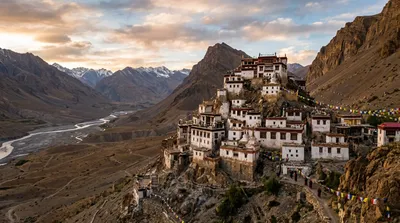
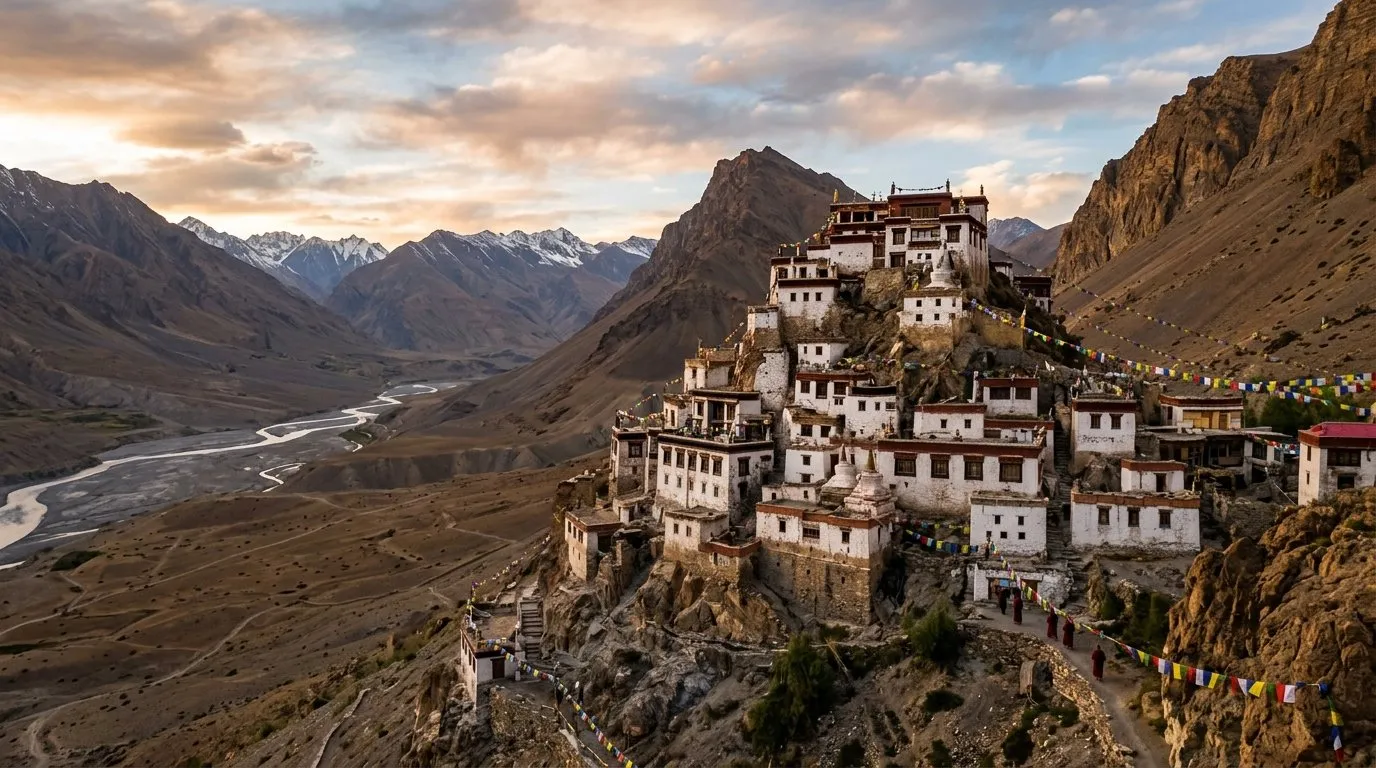
The Gap Between the Photo and the Signal Bar
Every travel blog shows you the photo. The turquoise lake, the mountain pass, the monastery at dawn. What they do not show you is the network icon in the corner of the phone that took it. Was there signal? Was there a hospital within reach when the altitude headache turned into something worse? Was there an ATM within a day's drive?
We tracked this data for every destination in our database — 229 destinations across India — because we believe travelers deserve infrastructure data alongside pretty photos. What we found is that "offbeat" is frequently a euphemism for "no safety net." And the correlation between a place's difficulty rating and its infrastructure score is not a gentle slope. It is a cliff.
The Dataset
For each of the 229 destinations, we recorded:
- ●Network coverage: Which carriers work (Jio, Airtel, BSNL, Vi), signal strength, and data reliability
- ●Nearest hospital: Distance in kilometres and drive time to the closest facility with emergency capability
- ●ATM availability: Presence, reliability, and which banks
- ●Road quality: Surface type, accessibility by vehicle class, and seasonal closures
- ●Power reliability: Grid stability and backup availability
We sourced this through direct observation, local contacts, carrier coverage maps (cross-verified on the ground), and government health infrastructure databases. The data reflects conditions as of early 2026.
The Headlines
23 destinations have no Jio coverage. Jio is India's largest mobile network with over 450 million subscribers. When domestic travelers leave their coverage zone, most lose their primary communication tool — maps, messaging, payments, emergency calls. The 23 Jio-dead destinations include Spiti Valley, much of Ladakh above Leh, Zanskar, Turtuk, Gurez Valley, parts of Arunachal Pradesh, and several Northeast hill stations.
15 destinations have no reliable ATM. "No reliable" means either no ATM exists within 30 km, or the nearest ATM is documented as frequently empty or non-functional. Cash-dependent travel is stressful at best, dangerous at worst — when you cannot pay for fuel, food, or emergency transport. The ATM deserts include Zanskar, Gurez, most of Spiti (except Kaza's single SBI ATM), interior Meghalaya, and parts of Uttarakhand's Niti Valley.
18 destinations are 3+ hours from a hospital. Not a dispensary — a hospital with emergency surgical capability, blood bank, and ICU. Three hours is the threshold beyond which survivability of major trauma drops sharply. Pangong Lake is 5 hours from Leh's SNM Hospital. Chandratal is 8+ hours from Manali. Zanskar's Padum is 10 hours from Kargil.
The correlation is stark. Destinations we rate as "Difficult" or "Extreme" in our difficulty scoring have an average infrastructure score of 1.8 out of 5. "Easy" destinations average 4.2. The drop is not linear — it falls off a cliff at "Moderate-Difficult," where infrastructure scores plummet from 3.5 to 2.1. This is the zone where travelers feel adventurous but may not realize they have crossed a safety threshold.
Case Studies: The Infrastructure Spectrum
Pangong Lake — The Beautiful Zero
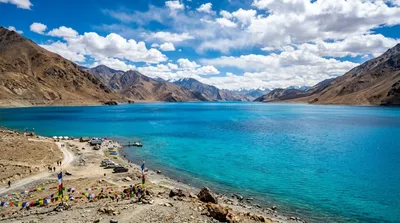
Pangong Tso, made famous by a Bollywood film, draws thousands of visitors annually to its 134 km shoreline at 4,350 metres. It is spectacularly beautiful and spectacularly unequipped.
Network: Zero. No Jio. No Airtel. No BSNL at the lake itself. The nearest signal is at Tangtse, 34 km away, where BSNL works intermittently. This means no emergency calls, no maps, no messaging from the lakeshore.
Medical: The nearest medical facility at Tangtse is a basic health post — it can handle a headache, not a heart attack. The nearest hospital is in Leh, 160 km and 5 hours away on a road that crosses Chang La (5,360m) — one of the highest motorable passes on Earth. In winter, this road closes.
ATM: None. The nearest ATM is in Leh. Carry all cash you will need for the round trip.
Power: Solar and generator only at campsites. No grid power.
Road: Good highway to Karu, then deteriorating through Chang La. The descent to Pangong is rough. High-clearance vehicle strongly recommended.
Pangong scores 1/5 on our infrastructure index. It is not a place to have a medical emergency.
Spiti Valley — The BSNL Lifeline
Spiti occupies an unusual position: it is one of India's most popular "adventure" destinations while simultaneously being one of the most infrastructure-poor.
Network: BSNL is the only carrier with meaningful coverage, and even that is limited to Kaza and Tabo with intermittent signal along the main road. Jio and Airtel are effectively non-existent. This creates a dangerous information asymmetry — travelers arrive assuming their phone will work (it won't) and have not prepared alternatives.
Medical: One community health centre in Kaza with basic capability. No surgical facilities. No blood bank. A broken leg in Kibber means a 45-minute drive to Kaza, where the health centre can stabilize but not operate, followed by a 6–8 hour drive to Reckong Peo or 10–14 hours to Manali for actual surgical care.
ATM: One SBI ATM in Kaza. It frequently runs out of cash or goes offline. In peak season (July–August), the ATM can be empty for days. Homestays and many guesthouses are cash-only.
Road: Both access routes involve world-class bad roads. The Manali–Kaza route is among the worst maintained highways in India. Landslides can strand travelers for 1–3 days with no warning.
Spiti scores 1.5/5 on infrastructure. The BSNL coverage in Kaza is the thin thread connecting the valley to the outside world.
Kasol — The Illusion of Accessibility
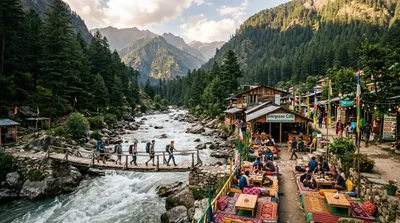
Kasol sits in the Parvati Valley at just 1,640 metres — a fraction of Spiti's altitude. It has cafes, hostels, Israeli restaurants, and a backpacker vibe that suggests comfort. The infrastructure data tells a different story.
Network: Patchy. Jio works in Kasol town but drops within 500 metres in either direction up the valley. Airtel is inconsistent. BSNL is unreliable. The popular treks to Kheerganga and Rasol have zero coverage.
Medical: One primary health centre in Kasol with extremely limited capability. The nearest district hospital is in Kullu, 42 km and 2 hours away on a winding mountain road. The Parvati Valley has claimed dozens of trekkers over the years — most to river drownings and trail falls — and the medical response time is a factor.
ATM: Two ATMs in Kasol (SBI and PNB). They work most of the time but can run dry on weekends during peak season. The next reliable ATM is in Bhuntar (30 km).
Road: The single road into the Parvati Valley follows a narrow gorge. Landslides close it multiple times each monsoon season, occasionally trapping visitors for days.
Kasol scores 2.5/5 on infrastructure — higher than Spiti or Pangong, but deceptively low for a place that feels "easy" to visit. The gap between Kasol's vibe (chill backpacker haven) and its infrastructure reality (limited medical, patchy network) is exactly the kind of mismatch that gets travelers into trouble.
Leh — The Baseline for Remote
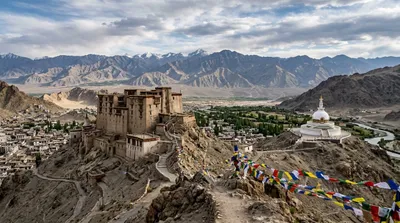
Leh, at 3,500 metres, is the infrastructure hub for all of Ladakh. By remote India standards, it is well-equipped. By absolute standards, it has clear limitations.
Network: Jio and Airtel both work in Leh town with 4G. Coverage extends along the main highways (Leh–Manali, Leh–Srinagar) with gaps. Beyond the highways — toward Pangong, Nubra, Hanle — coverage vanishes.
Medical: SNM Hospital in Leh is a 100+ bed facility with emergency, surgical, and intensive care capability. It handles altitude sickness cases daily in season. This is the referral hospital for all of Ladakh — the only real hospital between Srinagar and... well, Srinagar.
ATM: Multiple ATMs in Leh (SBI, J&K Bank, PNB). They work. Card acceptance is growing but still limited to larger hotels and restaurants.
Leh scores 3.5/5 on infrastructure — the highest score for any destination above 3,000 metres in our database.
The Kids Correlation
When we cross-referenced infrastructure scores with our kids-friendliness ratings, the pattern was almost perfectly aligned. Of the 18 destinations scoring 3+ hours from a hospital, exactly zero received a kids rating above 2/5. Of the 15 with no reliable ATM, only 2 scored above 2/5 for kids (both in Northeast India where the cultural experience compensated).
This is not coincidence. Infrastructure is the invisible foundation of family travel. Parents intuitively sense what our data confirms: a place without reliable communication, medical access, and basic financial services is not a place to bring children. Our kids ratings now formally incorporate infrastructure as a weighted factor — not just "is there a playground" but "is there a hospital."
The Network Map: Carrier by Carrier
Jio: India's widest 4G network covers 101 of our 229 destinations. The 23 gaps are almost exclusively in high-altitude or border areas — Ladakh beyond Leh, Spiti, Zanskar, Gurez, parts of Arunachal Pradesh, and Sikkim's north district.
Airtel: Covers 97 of 229 destinations. Gaps overlap significantly with Jio but extend to a few additional Northeast and Himachal locations.
BSNL: The government carrier that covers places others don't. BSNL reaches 110 of our 229 destinations, including Spiti, parts of Ladakh, and remote Northeast areas. The trade-off: BSNL's data speeds are slow (often 2G), and reliability is inconsistent. But for voice calls and basic messaging in emergency situations, BSNL is the last network standing in remote India.
The recommendation: If you are traveling to any destination we rate "Difficult" or higher, carry a BSNL SIM as backup. The ₹200 investment is trivial compared to the value of being able to make one phone call when it matters.
What "Offbeat" Actually Means
Travel marketing has made "offbeat" aspirational. Instagram rewards the untouched, the uncommon, the roads less traveled. We are not arguing against exploration — we are arguing for honesty about what exploration requires.
When we label a destination "offbeat," we are saying: this place has been chosen by fewer travelers because the infrastructure makes it harder to reach, harder to stay in, and harder to leave in an emergency. That is the trade-off. The reward is genuine — places with low infrastructure scores are often the most beautiful, the most culturally intact, the most memorable. Pangong's empty shoreline would not exist if it had a Jio tower and a hospital.
But the risk is real. Every year, travelers are stranded by road closures in Spiti, evacuated by helicopter from Ladakh, or left without communication in the Parvati Valley during medical emergencies. These are not freak events. They are statistical near-certainties given the traffic volume and infrastructure limitations.
The Argument: Infrastructure Data Is Travel Data
Travel publications have historically reported on hotels, flights, restaurants, and sightseeing. Infrastructure — network, medical, financial — was assumed or ignored. This made sense when most travel was to cities or established resort areas where infrastructure is a given.
It does not make sense for the way Indians and international visitors now travel in India. The Instagram-driven push toward remote destinations has created a new traveler profile: someone with the ambition of an explorer but the preparation of a city tourist. They arrive at Chandratal with a Jio SIM and no cash, expecting to Instagram the lake. They arrive at Pangong with no emergency plan beyond "call someone."
Our position is that infrastructure data belongs alongside the sunset photo. Not to discourage travel — but to enable informed travel. Know what network works before you leave coverage. Know how far the nearest hospital is before you twist an ankle. Know whether there is an ATM before you run out of cash on a road where fuel costs ₹200 per litre from a jerry can.
This is not fear-mongering. This is respect for the places — and the data confirms what experienced travelers already know: the most beautiful places in India are often the least forgiving.
The Full Infrastructure Tier List
Tier 1 — Full Infrastructure (Score 4–5/5, 47 destinations): Major cities, established hill stations, Goa beaches, Kerala backwaters, Rajasthan circuit. Jio+Airtel, hospital within 30 min, multiple ATMs, good roads. Examples: Jaipur, Udaipur, Manali town, Shimla, Munnar, Ooty.
Tier 2 — Adequate (Score 3–3.9/5, 34 destinations): Secondary destinations with some gaps. Network present but spotty in places. Hospital within 1–2 hours. ATMs available but not abundant. Examples: Leh, Tawang, Coorg, Hampi, Dhanaulti.
Tier 3 — Limited (Score 2–2.9/5, 25 destinations): Network unreliable, hospital 2–3 hours away, ATMs scarce. Requires preparation. Examples: Kasol, Valley of Flowers, Chopta, Sandakphu, Dawki.
Tier 4 — Minimal (Score 1–1.9/5, 18 destinations): Network absent or single-carrier, hospital 3+ hours, no ATM. Carry everything. Examples: Spiti, Pangong, Zanskar, Gurez, interior Arunachal, Chandratal.
We publish the infrastructure score for every destination on its detail page. Use it.
Monthly Scores
| Destination | Jan | Feb | Mar | Apr | May | Jun | Jul | Aug | Sep | Oct | Nov | Dec |
|---|---|---|---|---|---|---|---|---|---|---|---|---|
| Kasol | 4.0 | 4.0 | 8.0 | 10.0 | 10.0 | 6.0 | 4.0 | 4.0 | 10.0 | 10.0 | 6.0 | 4.0 |
| Leh | 2.0 | 2.0 | 2.0 | 4.0 | 6.0 | 10.0 | 10.0 | 8.0 | 10.0 | 6.0 | 2.0 | 2.0 |
| Pangong Tso | 2.0 | 2.0 | 2.0 | 2.0 | 4.0 | 10.0 | 10.0 | 8.0 | 10.0 | 4.0 | 2.0 | 2.0 |
| Spiti Valley | 2.0 | 2.0 | 2.0 | 4.0 | 8.0 | 10.0 | 8.0 | 8.0 | 10.0 | 10.0 | 4.0 | 2.0 |
The Window · Every Sunday
Liked this? Get one every Sunday.
Best score of the week, one honest skip, road updates. Four minutes. No spam.
More in Data Story
7 offbeat himachal pradesh destinations scored 5/5 for May 2026
May is the month Himachal Pradesh stops being a gamble. Snow has cleared, passes are open, and the weather window is wide enough to actually plan around. A 5/5 score means the destination is firing on all four cylinders this month — weather, trail access, infrastructure, and crow
6 min read
The State of Indian Travel: Q1 2026
NakshIQ's Q1 2026 quarterly data report — 215 destinations, 2,580 monthly scores, and the data-driven truth about where India actually traveled in January through March 2026.
15 min readThe Monsoon Intelligence Report
A data-driven analysis of 124 Indian destinations during monsoon season, revealing where rain helps, where it's dangerous, and the 26.7% of destinations that peak during July-September.
11 min read- Access
- Good.
- Emergency
- 108 · PHC Jari (8km), Regional Hospital Kullu (42km)
- Stay
- ₹300–4,000/night · 100 options
Go with confidence.