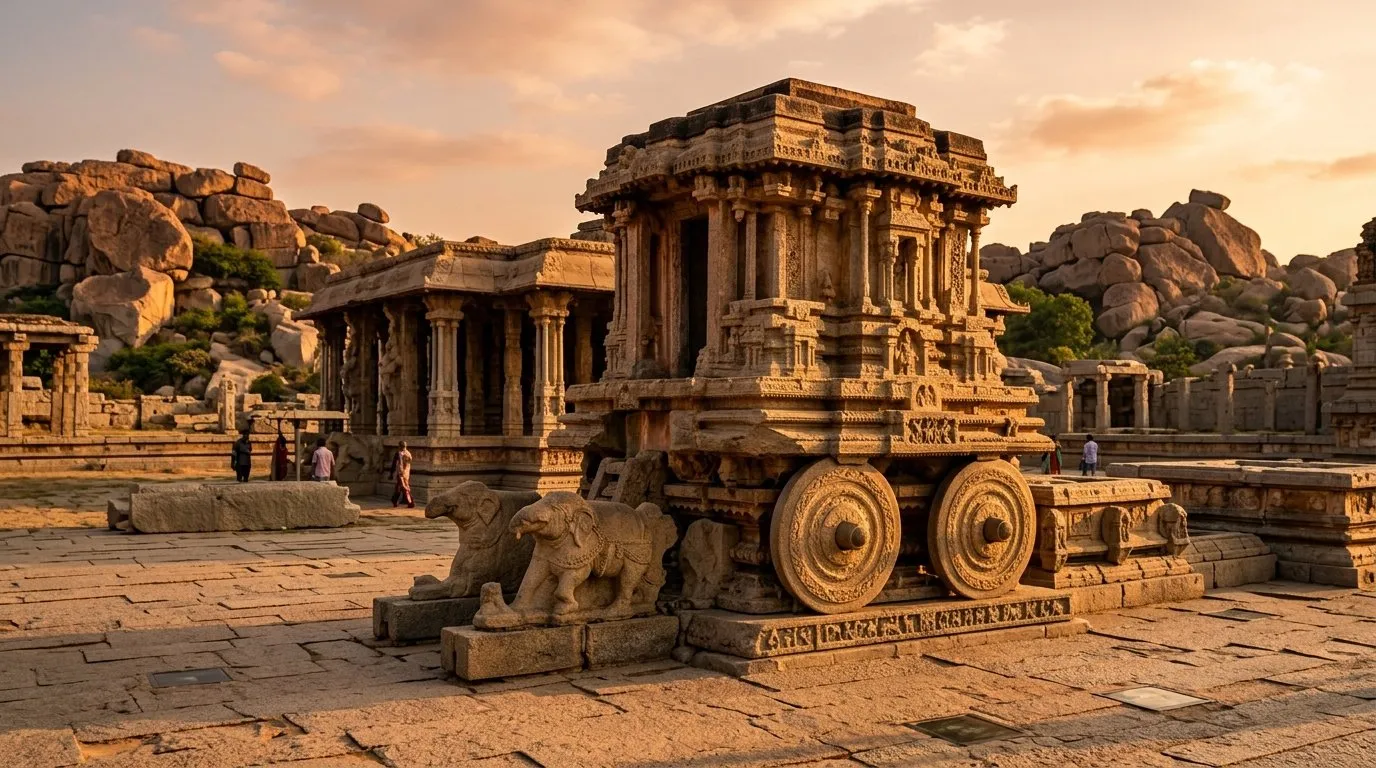
Hampi: when the heat is kind
January + February score 5/5. April onward the ruins turn oven. October is the underrated twin.
Destinations in this article
# Hampi: when the heat is kind
Hampi is the classic case of a destination whose reputation outran its calendar. The NakshIQ score says 5/5 in January and February, 4/5 in March, and falls off a cliff from April onward. There is exactly one four-month window where the ruins are not hostile. The rest of the year, the 4,100 hectares of exposed Vijayanagara stone turn oven.
Verdict: Go — in February. Or the last week of January through the first week of March. Outside that arc, the score drops and the math stops working.
The three-line summary
- ●January + February score 5/5. 18–28°C, cool Matanga sunrise, dry boulders, the ghats at Virupaksha before 9 am are the photographs you have seen.
- ●April hits 38°C in the shade. The ruins have no shade. May and June push past 42°C. The score drops to 2 and then 1.
- ●October and November recover. 5/5 again. Post-monsoon Tungabhadra is high, Matanga Hill sunsets are hazy but clearing, and the crowds are lighter than February.
Why the score peaks when it does
The Vijayanagara ruins cover ~4,100 hectares of granite boulder field, exposed temple complexes, and raised causeways. There is no tree cover on the climb to Matanga Hill. The bouldering around Tungabhadra is directly on granite that stores heat for hours after sundown. Anything above 32°C is not sightseeing — it is endurance.
February delivers 10–24°C. Mornings are cool enough for the Matanga Hill sunrise climb (3 km return, starts from Virupaksha). Afternoons on the Royal Enclosure side are warm but walkable. Evenings at the Tungabhadra bouldering area are soft.
Where the February score earns its 5
- ●Matanga Hill sunrise. Gate opens at 5:30 am. The viewpoint tops out at 250m. In February the haze lifts by 6:45, which is when the first light hits Virupaksha's gopuram. 20 minutes later, the Achyutaraya temple emerges.
- ●Bouldering on the south side. Dry granite, 22–28°C midday, grip holds. The northern Badami style routes at Hemakuta are also dry.
- ●Pattabhirama to Vitthala walk. 4.2 km flat. The iconic stone chariot is best between 8 and 10 am — soft light on sandstone red.
- ●Tungabhadra coracle ride. ₹400–600 per person, 30 minutes. Water levels are mid-drop but the river is still wide enough for the boulders on the far bank to show.
- ●Night at Hampi Bazaar. Cool enough to sit on the ghat steps after 7 pm. In April that is impossible.
Why April through June is Skip
- ●April. Score 2. The ruins surface at 38°C midday — ground temperature on the granite paths hits 46°C. There is no shade between Hemakuta and Vitthala.
- ●May. Score 1. Score drops because heat is structurally dangerous, not just uncomfortable. Dehydration cases are reported annually. Do not go.
- ●June. Score 2. Monsoon brings some relief but the Tungabhadra rises and the far-side routes (Anegundi across the river) become inaccessible by coracle. The ruins themselves are walkable in shorter morning windows.
The "Hampi is hot but manageable" framing is wrong. Below 5/5 in April–June is a data signal, not a caveat.
The October–November recovery
Post-monsoon October scores 5/5 again. The Tungabhadra is at annual peak volume. Post-monsoon air is cleaner than February's (dust from dry lakebeds starts by late January). November holds the score through the first week before the weekend tour buses come back.
If February and March are booked out, October is the underrated twin. Fewer foreign backpackers, lower hut prices at Hampi Bazaar (₹400–800 vs ₹800–1,500 in February), and the same 5/5 on the NakshIQ ledger.
Getting there
- ●Hospet railhead is 13 km from Hampi. Hampi Express from Bangalore (KSR Bengaluru) arrives 7:10 am, ₹310 sleeper / ₹1,400 2A. Autos at Hospet charge ₹300–400 for the 25-minute drive.
- ●Hubballi airport (HBX) is 160 km, 3 hours by cab. ₹2,500 one-way, ₹3,500 return.
- ●Stay on the south bank (Hampi Bazaar) for ruins access, north bank (Anegundi / Sanapur) for the bouldering + rural stay experience.
What to carry
Cotton layers, a wide-brim hat, at least 2 litres of water per person for the mid-day stretches. Good trail shoes for Matanga Hill. Cash — most Hampi Bazaar huts are cash-preferred.
The one-line answer. February is the window the ruins were built to be seen in. October is the alternative. The rest of the year, the data tells you not to bother.
Monthly Scores
| Destination | Jan | Feb | Mar | Apr | May | Jun | Jul | Aug | Sep | Oct | Nov | Dec |
|---|---|---|---|---|---|---|---|---|---|---|---|---|
| Hampi | 10.0 | 10.0 | 8.0 | 2.0 | 2.0 | 4.0 | 4.0 | 6.0 | 6.0 | 8.0 | 10.0 | 10.0 |
The Window · Every Sunday
Liked this? Get one every Sunday.
Best score of the week, one honest skip, road updates. Four minutes. No spam.
More in Best Time to Visit
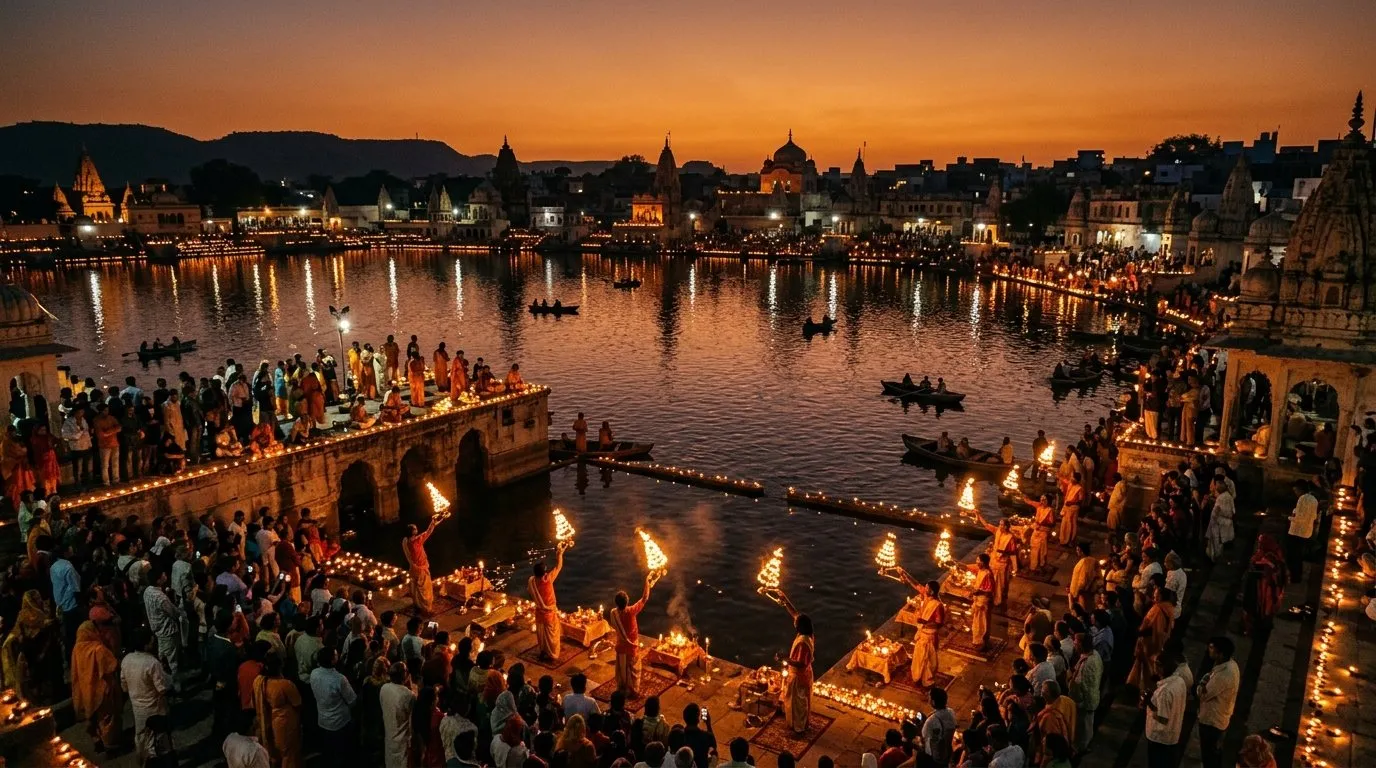
Despite the camel-fair reputation, Pushkar in October is better than November
Pushkar is sold as a November destination — the Camel Fair, 50,000 camels. The NakshIQ score says October earns an identical 5/5 and gives you the version of Pushkar that existed before the fair. Same weather, fuller lake, a fraction of the crowd.
5 min read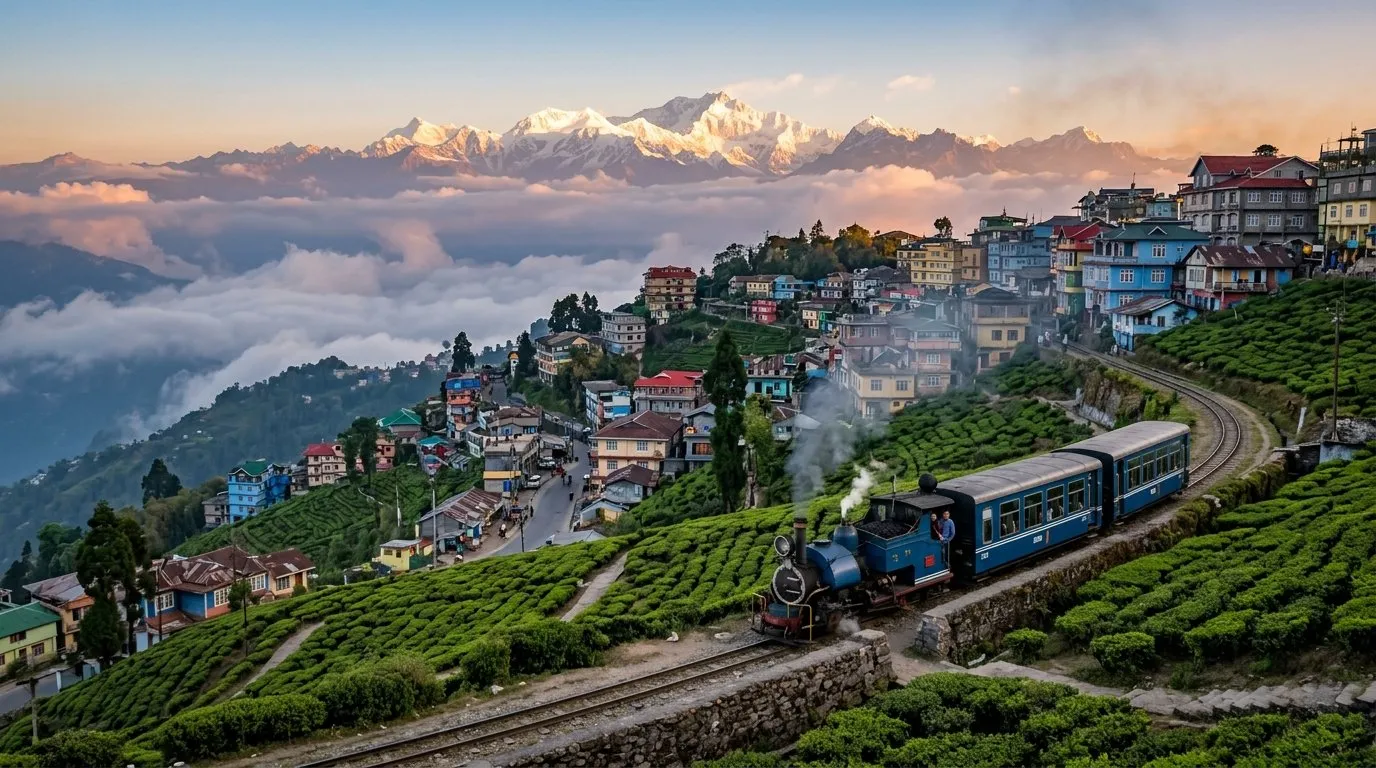
Best Time to Visit Meghalaya: Month-by-Month Intelligence
Meghalaya gets 11,000mm of rain a year. Here's when each season actually delivers — and why monsoon might be exactly when you should go.
3 min read
Best Time to Visit Varanasi: Month-by-Month Intelligence
Varanasi scored by season — Dev Deepawali in November is the highlight, May-June is genuinely dangerous heat, and monsoon floods the ghats.
3 min read- Access
- Good highway to Hospet, then local road.
- Emergency
- 108 · Hospet (13km) has hospitals. Basic clinic in Hampi.
- Stay
- ₹300–8,000/night · 50 options
Go with confidence.