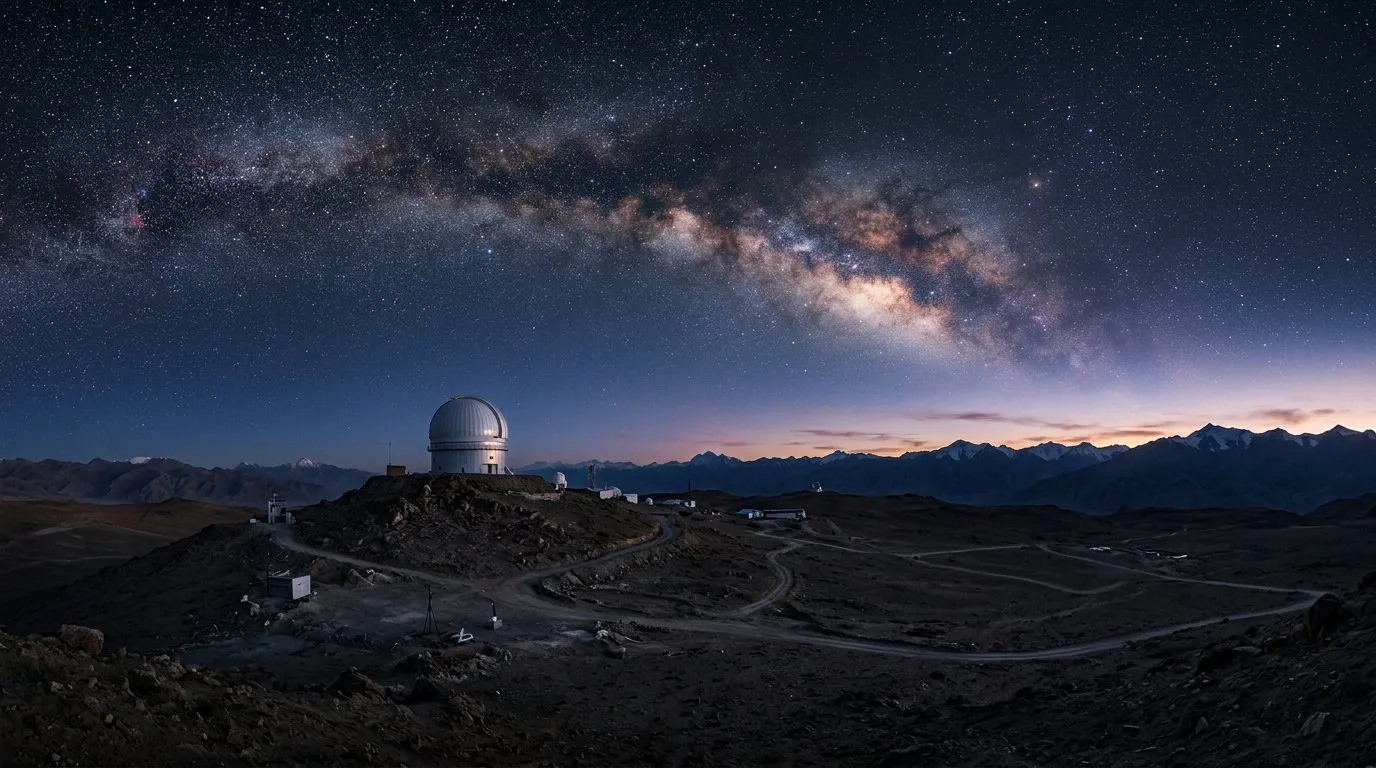
Complete Guide to Hanle
The darkest skies in India — where astronomers and stargazers come to see the Milky Way naked
Destinations in this article
Why Go
Hanle exists for one reason: the sky. At 4,500m in the Changthang plateau of eastern Ladakh, this tiny settlement has some of the darkest skies on the planet. The Indian Astronomical Observatory (IAO) sits here — one of the highest optical telescopes in the world at 4,500m — because the air is so dry, so thin, and so free of light pollution that astronomers can see things here that are invisible from almost anywhere else in Asia.
For non-astronomers, the practical translation is this: you can see the Milky Way with your naked eyes. Not a faint smudge, not a vague brightening — the full, detailed band of our galaxy stretched across the sky, dense with stars, with the dark dust lanes visible. On a clear night in Hanle (which is most nights between June and September), the sky contains more stars than you thought existed.
But Hanle is not just dark skies. It sits in a landscape so barren and vast that it's been compared to Mars — the Indian Space Research Organisation (ISRO) has actually studied the terrain here as an analogue for Martian conditions. The Hanle Monastery, perched on a hill overlooking the village, predates the current Hemis Monastery structure (rebuilt 1672) and is a quiet, uncrowded example of 17th-century Tibetan Buddhist architecture.
The village itself has a population of about 200. There is one guesthouse (run by the Himalayan Institute of Alternatives, Ladakh — HIAL). There is no network coverage. No ATMs. No medical facility. No restaurant. This is not a tourist destination that has been "discovered" — it is a place that most of India doesn't know exists.
The Best Month (and the Worst)
Best: September. The monsoon (which barely touches Ladakh anyway) is completely over, skies are clear almost every night, temperatures are cold but manageable (0°C to 15°C during the day, -10°C to -5°C at night), and the road from Leh is in good condition.
Runner-up: June-July. Slightly warmer days (5°C to 20°C) but occasional cloud cover from distant monsoon systems. Still excellent for stargazing most nights.
For astrophotography: August-September. The Milky Way core is optimally positioned, moonless nights align well, and atmospheric transparency is at its peak.
Worst: November through May. The road closes (Chumur route becomes impassable due to snow), temperatures plummet to -30°C to -40°C, and the settlement essentially shuts down. The observatory staff remain, but tourists cannot access the area.
How to Get There
There is exactly one route for tourists: Leh → Upshi → Chumur → Hanle. The distance is approximately 250km. The drive takes 9-11 hours.
Breakdown:
- ●Leh to Upshi: 47km, 1.5hr (good tarmac road along the Indus)
- ●Upshi to Loma via Chumur route: ~150km, 5-6hr (a mix of decent road and rough patches, crossing the Namshang La pass at 4,800m)
- ●Loma to Hanle: ~50km, 2-3hr (poor road, river crossings possible)
What you need:
- ●An Inner Line Permit (ILP) — standard for Ladakh, obtainable in Leh in 1-2 hours
- ●A specific Hanle permit — this is separate from the standard ILP and must be requested explicitly. Apply at the DC office in Leh. Processing time: same day to 2 days.
- ●A vehicle with high ground clearance (sedan will not survive the road). Renting an SUV from Leh costs ₹3,500-5,000/day with driver.
- ●Fuel for the entire round trip (no fuel stations between Upshi and Hanle — roughly 500km round trip)
No public transport, no shared jeeps, no flights, no train. You need a private vehicle or a tour operator.
What to Expect
The drive itself is the first experience. After Upshi, you leave behind the relatively lush Indus valley and enter the Changthang — a high-altitude desert that stretches into Tibet. The landscape is brown, grey, and enormous. Mountains that would be the tallest thing you've ever seen anywhere else are just the background here. You'll cross Namshang La at 4,800m without even realizing it because the surrounding terrain is already at 4,200m.
Wildlife is sparse but notable: you may spot Tibetan wild ass (kiang), marmots, and if you're extraordinarily lucky, a Tibetan wolf. The area is also home to snow leopards, though sightings are rare.
Hanle village sits in a wide valley with the monastery hill on one side and the observatory on a ridge opposite. The observatory is a white dome that looks profoundly out of place — like a science fiction set dropped into medieval Tibet.
The observatory is not open to the general public. You cannot enter the telescope dome. However, there is a visitors' gallery and interpretation centre that opened recently. Check current access status before traveling — the Indian Institute of Astrophysics (IIA) manages access and rules change periodically.
The monastery is always accessible and rarely has other visitors. The caretaker monk will likely show you around. It houses murals dating to the 1600s.
At night, go outside. Look up. That's it. That's the experience.
Infrastructure Reality
Medical: Zero. There is no clinic, no nurse, no pharmacy in Hanle. The nearest military hospital (basic) is in Nyoma, roughly 80km away (2-3 hours by road). The nearest civilian hospital with any capability is back in Leh — 250km, 10 hours. If you have a medical emergency in Hanle, you are in serious trouble. Carry prescription medications, altitude sickness medication (Diamox), and a comprehensive first aid kit.
Money: No ATMs anywhere between Leh and Hanle. No card machines. No UPI (no network). Carry every rupee you'll need in cash. Budget ₹2,000-3,000 per day (accommodation, food, vehicle fuel allocation).
Power: The HIAL guesthouse has solar panels and a generator. Power is limited. Bring a power bank (20,000mAh+). Charging may be rationed.
Communication: Absolutely none. No BSNL. No Jio. No Airtel. No satellite internet for public use. The observatory has its own communication link but it's not for tourists. You are completely offline from the moment you leave Upshi until you return. Inform someone of your itinerary and expected return date before you leave Leh.
Water: Bottled water is not available. The guesthouse provides boiled water. Carry water purification tablets as backup.
Where to Stay
There is essentially one option: a HIAL-run guesthouse (see [Hanle stays](/en/destination/hanle)) (Himalayan Institute of Alternatives, Ladakh). It offers basic rooms and meals. Expect ₹1,500-2,500/night including meals. Rooms are simple — a bed, blankets, and a solar-heated common area. Toilet facilities are basic.
Advance booking is recommended (contact HIAL's Leh office, as there's obviously no way to reach Hanle directly). The guesthouse has roughly 6-8 rooms.
Camping is possible but you need to be entirely self-sufficient — tent, sleeping bag rated to -15°C minimum, cooking equipment, food, and water. The altitude and cold make camping here a serious undertaking, not a casual option.
Some travelers sleep in their vehicles if they have a suitable SUV. Not ideal at 4,500m where overnight temperatures drop to -10°C even in summer.
Kids Verdict
Rating: 1/5 — No.
At 4,500m, Hanle is well above the altitude threshold (3,000m) where children face increased risk of severe altitude sickness. The complete absence of medical facilities — not reduced, not basic, but zero — makes this unacceptable for children. A child developing high-altitude pulmonary edema (HAPE) in Hanle would need to be driven 10 hours to reach proper medical care. The math doesn't work.
Adults should also think carefully. If you have any cardiovascular conditions, respiratory issues, or haven't acclimatized properly in Leh for at least 3 days, Hanle's altitude can be dangerous.
What to Avoid
- ●Driving from Leh to Hanle in one day without acclimatization. You're going from 3,500m to 4,500m with a 4,800m pass. Spend 2-3 days in Leh first. Even then, take it slow.
- ●Going without permits. Military checkpoints on the Chumur route will turn you back. No exceptions, no bribes, no excuses.
- ●Planning a single-night visit. The 10-hour drive each way means one night gives you essentially zero time in Hanle. Minimum two nights recommended — one for acclimatizing, one for proper stargazing.
- ●Full moon visits. If you're coming for the sky, check the lunar calendar. A full moon at 4,500m is bright enough to read by and will wash out the Milky Way. Plan for new moon ± 5 days.
- ●Assuming you'll get phone signal somewhere. You will not. Download all maps, save all contacts, inform all relevant people before you leave Leh. Your phone is a camera and a torch for the duration of this trip.
- ●Littering. There is no waste management. Everything you bring in leaves with you. This landscape takes centuries to recover from human impact.
The Bottom Line
Hanle is not a destination in the conventional sense. There is nothing to "do" here — no activities, no attractions (the observatory is mostly off-limits), no entertainment. What there is: the darkest sky you will ever see, a 400-year-old monastery with nobody in it, and a landscape that makes you feel like the last person on Earth.
It is the quietest place most Indians will ever visit. The silence at night — no vehicles, no generators (they shut off), no music, no voices, no animals — is so complete it feels physical. And then you look up, and the sky is so full of stars that you understand, viscerally, why humans invented astronomy.
Come to Hanle if you want to see what the sky actually looks like. Don't come if you need a reason beyond that.
Monthly Scores
| Destination | Jan | Feb | Mar | Apr | May | Jun | Jul | Aug | Sep | Oct | Nov | Dec |
|---|---|---|---|---|---|---|---|---|---|---|---|---|
| Hanle | 2.0 | 2.0 | 2.0 | 2.0 | 2.0 | 8.0 | 10.0 | 10.0 | 10.0 | 4.0 | 2.0 | 2.0 |
The Window · Every Sunday
Liked this? Get one every Sunday.
Best score of the week, one honest skip, road updates. Four minutes. No spam.
More in Field guide
Is Manali safe for solo female travellers? Which Manali, and when
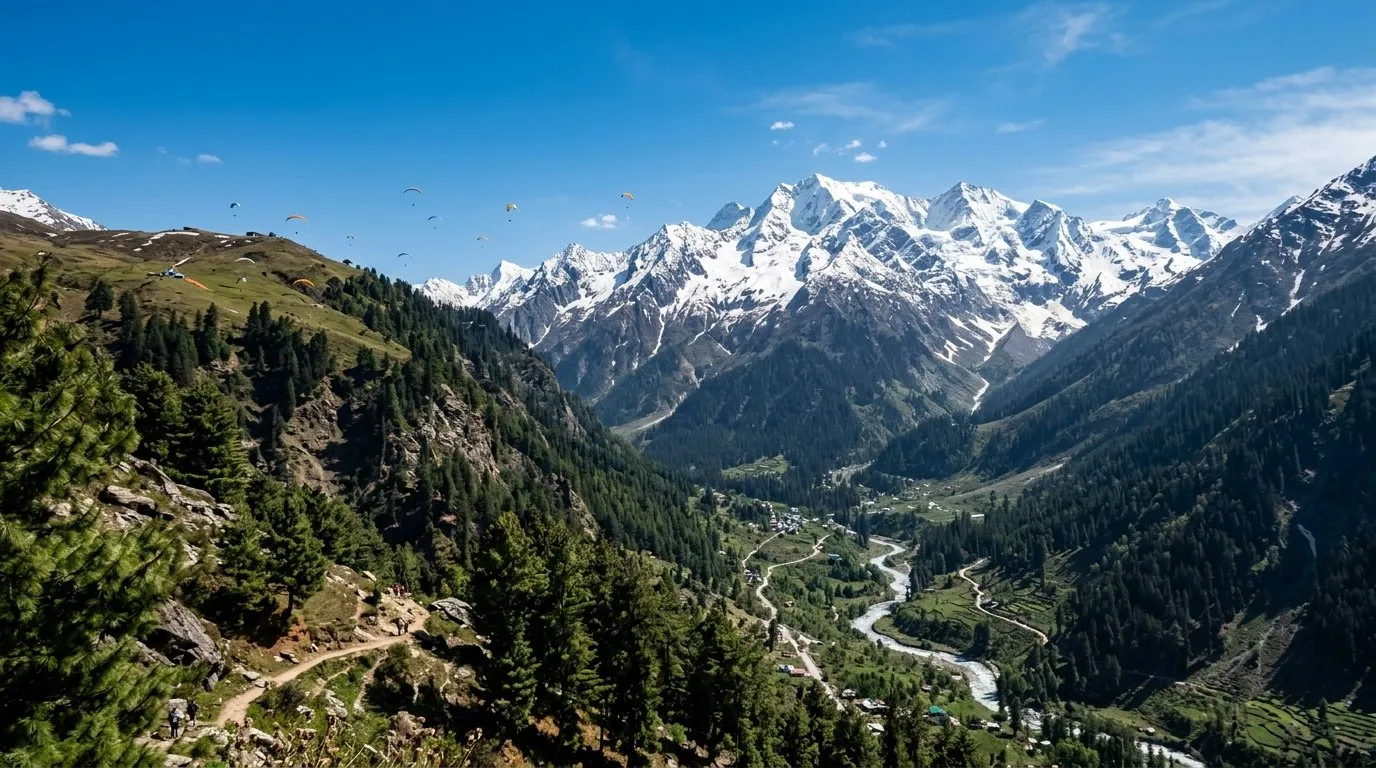
Manali is not one place. New Manali is a respectable hill town — 4/5 safe. Old Manali is the Himachal backpacker-cafe strip with party + drug scene — 2/5 after 10pm. McLeodganj 3 hours away holds 5/5 year-round. Pick deliberately.
5 min read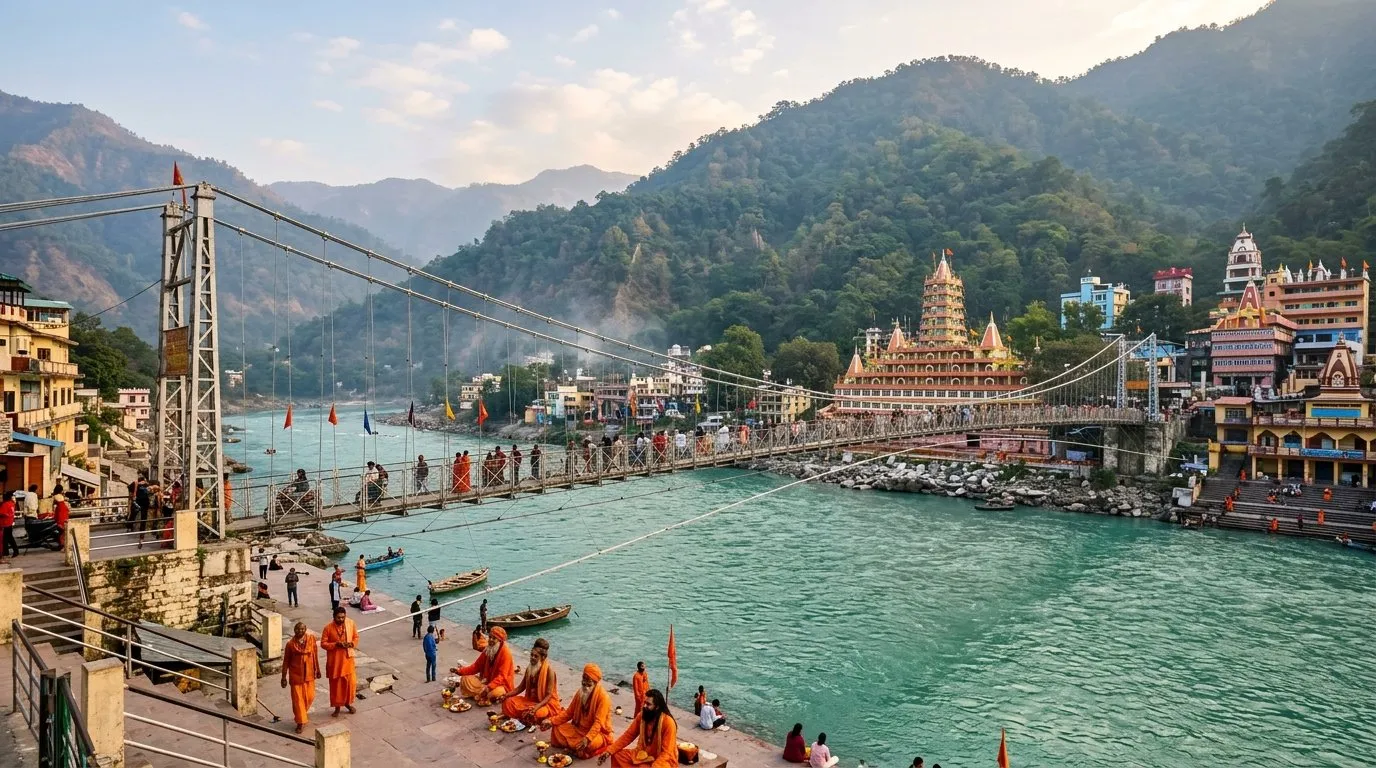
Solo-female travel in India — every destination scored, month by month
Most India travel guides tell women 'use common sense' and call it done. We rated 488 destinations on a 1-5 scale for solo-female safety, with month-specific overrides where it matters. Here's the methodology, the top 15, and the five that don't clear the bar.
10 min read
Is Kashmir safe for solo female travellers? What actually matters
Kashmir is the destination where the generic 'is India safe for women' post fails hardest. The answer depends on which month, which valley, which houseboat operator, and whether you're willing to dress differently than you would in Goa. Here's the concrete version.
6 min read- Access
- Poor to fair. Unpaved. BRO maintains but conditions vary.
- Emergency
- None · Army medical post. Nearest hospital Leh 260km.
- Stay
- ₹500-1500/night · 5 options
- Permit required
- See the process →
Go with confidence.