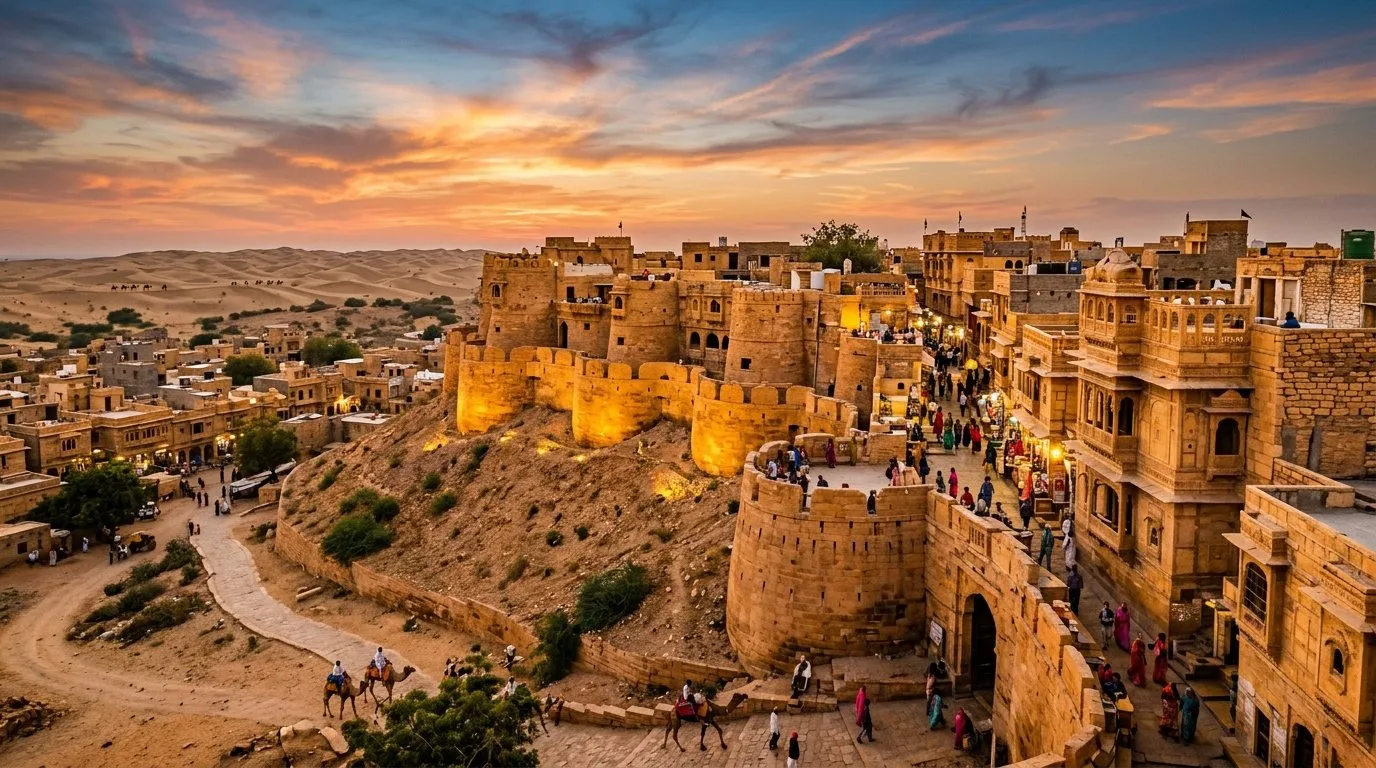
48 Hours in Jaisalmer
A data-informed itinerary for the Golden City — hour by hour, scored by month
Destinations in this article
Why 48 Hours Is the Right Number
Jaisalmer is not Jaipur. It does not sprawl. The fort, the havelis, the desert, and the lake fit into a tight radius that rewards focused exploration over drawn-out wandering. Two days gives you the complete experience — fort, culture, desert, food — without the diminishing returns of day three, when most travelers find themselves drinking lassi on the same rooftop for the third time.
This itinerary is hour-by-hour because Jaisalmer's desert climate makes timing everything. The wrong hour at Sam Sand Dunes means blinding heat instead of golden light. The wrong morning at the fort means tour-bus crowds instead of silence. We've calibrated this schedule around light, temperature, and crowd patterns.
Month-by-Month: When to Do This
October–February (Score: 5/5): The window. Daytime highs of 25–32°C (Oct/Feb edges) to 20–25°C (Dec/Jan core). Desert nights drop to 5–10°C — cold enough for a bonfire to feel essential, warm enough to sleep in a tent comfortably. Clear skies virtually guaranteed. This is when Jaisalmer works.
March (Score: 3/5): Warming rapidly. Afternoons hit 35°C by late March. Still manageable with early starts. Desert camping comfortable at night.
April–May (Score: 1/5): Daytime temperatures reach 42–47°C. The fort's sandstone radiates heat. Sand dunes become an oven. Do not attempt.
June–September (Score: 2/5): Monsoon technically reaches Jaisalmer but rainfall is minimal (150mm total). Humidity rises. Occasional dramatic desert storms can be spectacular but also disruptive. Heat remains intense through September.
Day 1, Morning (7:00 AM – 12:00 PM): Sonar Quila — The Living Fort
7:00 AM — Breakfast
Start at one of the guesthouses inside the fort itself. The Jaisal Italy or Desert Boy's serve breakfast on rooftop terraces overlooking the Thar. Masala omelette, toast, chai — ₹150–250. The point isn't the food. The point is watching the fort wake up.
7:45 AM — Enter the Fort Properly
Sonar Quila (Golden Fort) is unique among India's forts: it is alive. A quarter of Jaisalmer's population — roughly 3,000 people — lives inside its walls. This is not a museum. There are shops, temples, homes, schools, and arguments happening in lanes that are 800 years old. The fort was built in 1156 by Rawal Jaisal and has never been conquered by direct assault.
Walk through the Suraj Pol (Sun Gate), then through the successive gates — Ganesh Pol, Hawa Pol, Rang Pol. Each narrows. By the fourth gate, you are in the fort's interior, and the lanes compress to shoulder width. This is deliberate — medieval defence architecture designed to slow attackers.
8:30 AM — Jain Temples
Inside the fort sit seven interconnected Jain temples built between the 12th and 15th centuries. The stone carving here is among the finest in India — delicate latticework cut from yellow sandstone that the morning light turns to honey. The Chandraprabhu Temple is the most ornate. Photography is allowed in some sections but not all — ask before shooting. Entry: ₹100 (camera fee extra). Give yourself 45 minutes.
9:30 AM — Fort Palace Museum
The former royal residence, now a museum. Highlights: the mirror and painting room, the rooftop with panoramic desert views, and the collection of royal stamps and coins. The audio guide (₹150) is worth it — it adds context that the placards don't. Allow one hour.
10:30 AM — Wander the Fort Lanes
This is unstructured time, and it is the best part. Follow narrow lanes away from the main tourist axis. You will find sandstone facades carved with geometric and floral patterns, tiny temples, residents hanging laundry from 800-year-old balconies, and shops selling genuine (and fake) antique textiles. The fort's drainage system — medieval engineering that still works — is visible in several lanes.
11:30 AM — Rooftop Chai
Find a rooftop café (there are several near the Jain temples) and stop. The view from inside the fort looking out over Jaisalmer and the Thar beyond is one of Rajasthan's best. The golden sandstone of the buildings catches late-morning light in a way that justifies the city's nickname.
Day 1, Afternoon (12:30 PM – 4:00 PM): The Havelis
12:30 PM — Lunch
Exit the fort and eat in the town below. Trio restaurant (near Gandhi Chowk) serves reliable Rajasthani thalis for ₹200–350. The ker sangri (desert beans and capers) is a Jaisalmer specialty — get it here. Avoid the restaurants immediately flanking the fort entrance; they are overpriced and underwhelming.
1:30 PM — Patwon Ki Haveli
The grandest haveli in Jaisalmer — actually five connected mansions built by the Patwa merchant family in the 1800s. The facade is a wall of carved sandstone balconies, jharokhas (overhanging enclosed windows), and stone screens. Inside, original painted ceilings and mirror work survive in several rooms. One section is government-maintained (better preserved), another is privately run (more atmospheric). Visit both. Entry: ₹100. Allow one hour.
2:45 PM — Nathmal Ki Haveli
Ten minutes' walk from Patwon Ki Haveli. The story: the prime minister commissioned two Muslim brothers to build his residence, each working on one half independently. The result is a facade that is symmetrical at a glance but asymmetrical in its details — the left side has different motifs than the right. The stone elephants flanking the entrance are a signature Jaisalmer image. This is a private residence; you can view the exterior and the first floor for a small donation.
3:30 PM — Return to Hotel and Rest
Jaisalmer afternoons are warm even in peak season. Rest, hydrate, and prepare for the desert.
Day 1, Evening (4:00 PM – Next Morning): Sam Sand Dunes and Desert Camp
4:00 PM — Drive to Sam Sand Dunes
Distance: 42 km from Jaisalmer, approximately 1 hour by road. Book through your hotel or arrange a private jeep (₹1,500–2,500 return). The road is excellent — flat, paved, straight through the desert.
5:00 PM — Camel Safari
The classic Jaisalmer experience. A 1–2 hour camel ride through the dunes, timed to reach the highest dune for sunset. Cost: ₹300–800 per person depending on duration and operator. The camels are well-managed at reputable camps. The dunes at Sam are not the Sahara — they reach 30–40 metres — but they are photogenic, and the silence of the open desert is genuinely affecting.
6:15 PM — Sunset
From the crest of the main dune, you watch the sun drop into a flat horizon. The sand turns from gold to copper to deep orange. This is one of India's iconic sunset experiences. Arrive early for position — even in off-season, the main dune draws a crowd.
7:00 PM — Desert Camp Dinner
Most camps serve buffet Rajasthani dinners — dal baati churma, gatte ki sabzi, bajra roti. Quality varies by camp. The better camps (Real Desert Man, one of the desert camps on the Jaisalmer stays page) serve food that is genuinely good, not just "good for a camp." Budget camps (₹1,500–2,500/person) are adequate. Luxury camps (₹8,000–15,000/person) include proper beds, attached bathrooms, and dining that rivals city restaurants.
8:30 PM — Stars and Bonfire
This is why you stay overnight. Jaisalmer's desert has some of the darkest skies in western India. The Milky Way is visible to the naked eye on clear nights. Camps provide blankets around a bonfire. Some arrange Rajasthani folk musicians — the Manganiyar and Langa communities of this region are hereditary musicians whose desert ballads are UNESCO-recognized.
Sleep in the desert. Swiss tents or traditional tents depending on your budget. The silence at 3 AM is absolute.
Day 2, Morning (6:00 AM – 12:00 PM): Desert Sunrise and Return
6:00 AM — Sunrise Over the Dunes
Set an alarm. Walk to the dune crest. The desert at dawn is a different landscape — cool air, long shadows, sand ridged by overnight wind. The light shifts from grey to pink to gold in twenty minutes. This is the better photo opportunity of the two golden hours.
7:30 AM — Breakfast at Camp and Drive Back
Most camps include breakfast. Paranthas, chai, maybe eggs. Pack up and drive back to Jaisalmer by 9:00 AM.
9:30 AM — Gadsisar Lake
An artificial lake built in 1367 by Maharawal Gadsi Singh as the city's water reservoir. The arched gateway (built by a royal courtesan, refused by the king, saved by adding a Krishna temple on top — the politics are delicious) frames the lake beautifully. Rent a paddleboat (₹100) or walk the perimeter. Migratory birds in winter make this a birding spot. The ghats and chhatris around the lake are atmospheric in morning light.
11:00 AM — Desert Culture Centre and Museum
Small but well-vetted museum covering Rajasthani textiles, instruments, and fossils. The wood fossil park in the grounds contains 180-million-year-old fossilized tree trunks found in the Thar Desert. Entry: ₹100. Thirty minutes is sufficient.
Day 2, Afternoon and Evening (12:00 PM – 8:00 PM): Final Explorations
12:00 PM — Lunch
Try Kuku Coffee Shop inside the fort for its balcony seating and surprisingly good Italian food alongside Indian options. Or for pure Rajasthani, Bhang Shop (yes, that is its name) near the fort serves bhang lassi alongside excellent samosas and kachori. The lassi is legal and mild — or strong, your call.
1:30 PM — Shopping the Fort Lanes
Jaisalmer is known for mirror work, embroidered textiles, leather journals, and silver jewellery. The fort lanes offer the most concentrated shopping. Bargain — starting prices are typically 2–3x the fair rate. Fixed-price shops like Jaisalmer Handloom exist for the negotiation-averse.
3:00 PM — Bada Bagh
A set of royal cenotaphs (chhatris) 6 km north of Jaisalmer, overlooking an old dam. The carved sandstone memorials, set against the desert horizon, are particularly photogenic in afternoon light. This is a quieter alternative to the fort for golden-hour photography. Entry: ₹100.
5:30 PM — Sunset from a Fort Rooftop
Return to the fort for your final evening. Book a rooftop table at Mystic Jaisalmer or 1st Gate Fusion for dinner with a view. As the sun sets, the fort's sandstone glows — the "Golden City" name earns itself in these twenty minutes. Order dal baati churma one more time.
7:30 PM — Dinner and Done
Your 48 hours are complete. The night bus to Jodhpur (5 hours, ₹400–800) or the morning train (6 hours, ₹300–600) connects you onward.
Budget Breakdown
Budget (₹1,500/day): Fort guesthouse dorm ₹300–500. Street food and thali meals ₹300–500. Basic desert camp (shared tent) ₹800–1,200. Walking everything inside town. Total for 48 hrs: ₹3,000–3,500.
Mid-range (₹3,500/day): Private room in haveli hotel ₹1,500–2,500. Restaurant meals ₹500–800. Swiss tent desert camp ₹2,500–4,000. Auto-rickshaws and shared jeep ₹300–500. Total for 48 hrs: ₹7,000–9,000.
Luxury (₹8,000/day): Heritage hotel (Suryagarh, Fort Rajwada) ₹5,000–10,000. Fine dining ₹1,000–2,000. Luxury desert camp (Damodra) ₹8,000–15,000. Private jeep throughout ₹2,000–3,000. Total for 48 hrs: ₹16,000–25,000.
Kids Report: 5/5
Jaisalmer is one of the best destinations in India for children. The fort is a giant sandcastle come to life. Camel rides are thrilling for all ages (operators have kid-friendly camels). The desert camp is an adventure. Gadsisar Lake has boats. The food is mild and familiar (dal, rice, roti). The town is walkable and low-traffic. No significant altitude or health concerns. Strong recommendation for families.
Infrastructure
Network: Jio and Airtel work throughout Jaisalmer town and on the road to Sam. Coverage at Sam dunes is patchy but present. 4G in town.
Medical: Jaisalmer has a government hospital and several private clinics. Sufficient for routine issues. Serious trauma cases go to Jodhpur (5 hours). Carry basics.
ATMs: Multiple ATMs in town (SBI, HDFC, ICICI). All functional. Card acceptance at mid-range and above establishments.
Roads: Jaisalmer is connected to Jodhpur by excellent NH-15. Sam Dunes road is good. Internal town roads are narrow but fine for autos and small vehicles.
Monthly Scores
| Destination | Jan | Feb | Mar | Apr | May | Jun | Jul | Aug | Sep | Oct | Nov | Dec |
|---|---|---|---|---|---|---|---|---|---|---|---|---|
| Jaisalmer | 10.0 | 10.0 | 8.0 | 4.0 | 2.0 | 2.0 | 4.0 | 4.0 | 6.0 | 10.0 | 10.0 | 10.0 |
The Window · Every Sunday
Liked this? Get one every Sunday.
Best score of the week, one honest skip, road updates. Four minutes. No spam.
More in Field guide
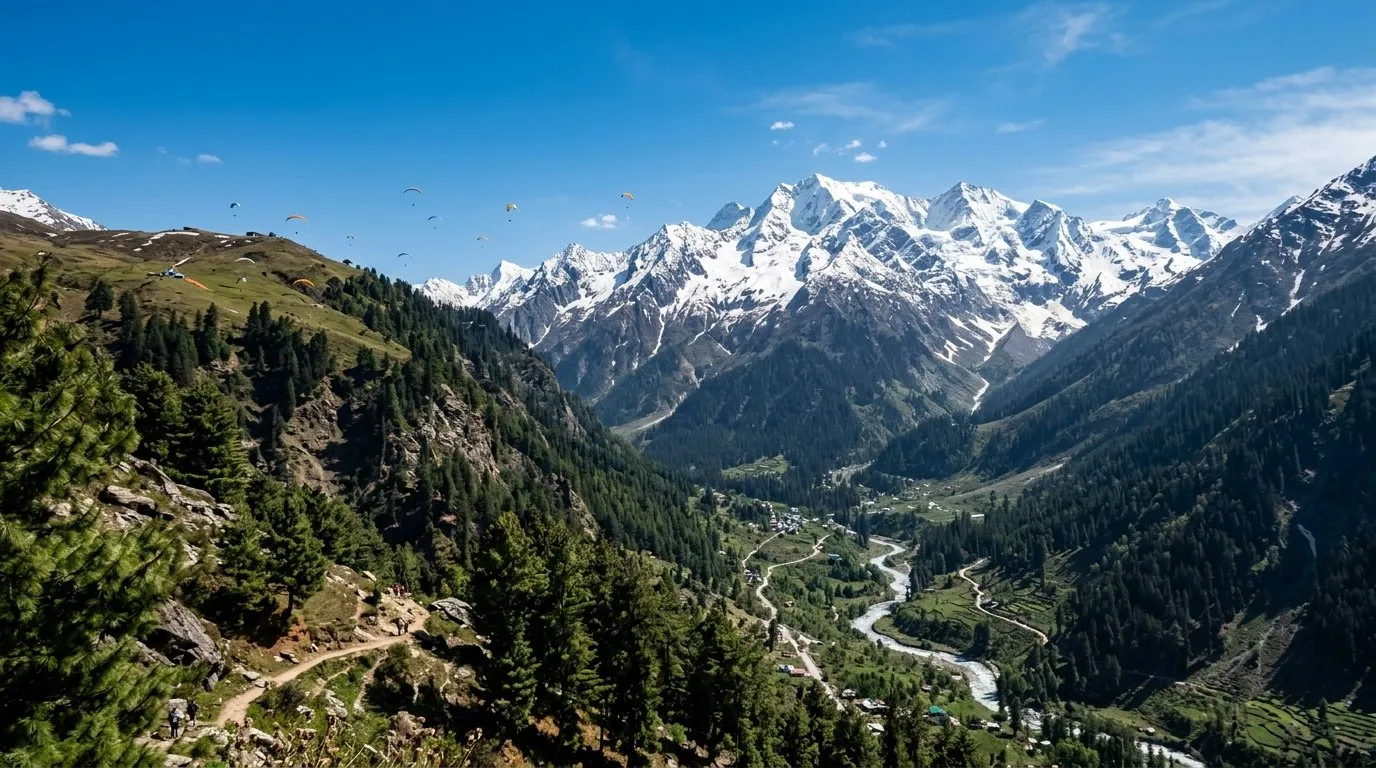
Is Manali safe for solo female travellers? Which Manali, and when
Manali is not one place. New Manali is a respectable hill town — 4/5 safe. Old Manali is the Himachal backpacker-cafe strip with party + drug scene — 2/5 after 10pm. McLeodganj 3 hours away holds 5/5 year-round. Pick deliberately.
5 min read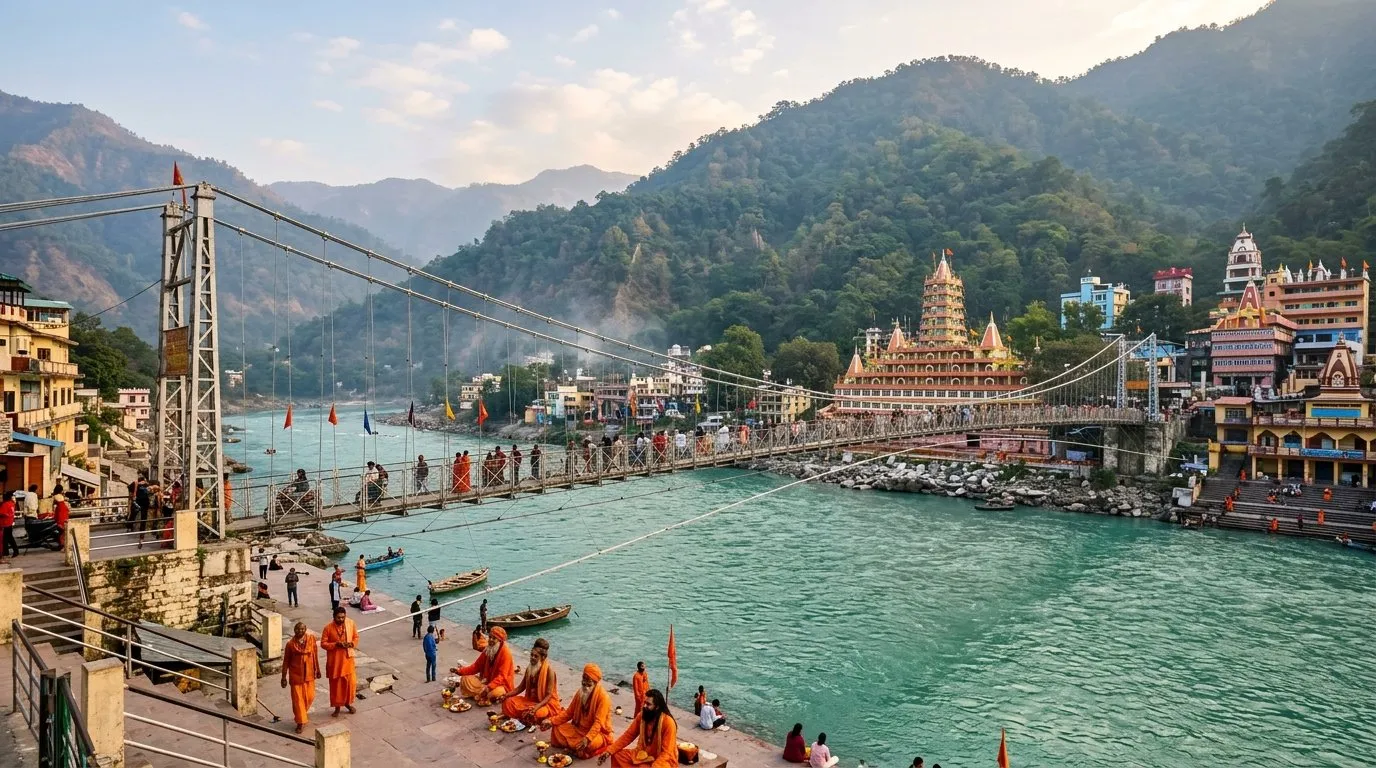
Solo-female travel in India — every destination scored, month by month
Most India travel guides tell women 'use common sense' and call it done. We rated 488 destinations on a 1-5 scale for solo-female safety, with month-specific overrides where it matters. Here's the methodology, the top 15, and the five that don't clear the bar.
10 min read
Is Kashmir safe for solo female travellers? What actually matters
Kashmir is the destination where the generic 'is India safe for women' post fails hardest. The answer depends on which month, which valley, which houseboat operator, and whether you're willing to dress differently than you would in Goa. Here's the concrete version.
6 min read- Access
- Good highway.
- Emergency
- 108 · Govt Hospital Jaisalmer (basic). Jodhpur 5hrs for serious.
- Stay
- ₹500-10000/night · 200 options
Go with confidence.