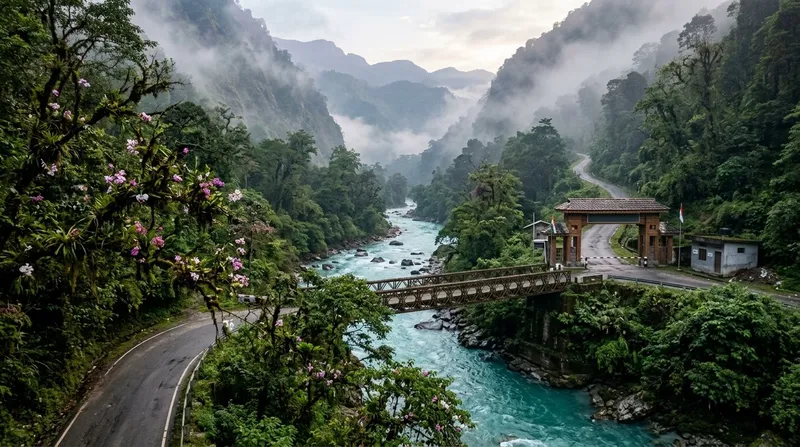
Daporijo.
Beyond the tourist frontier — no infrastructure, no guides, no foreignersWHY NOBODY KNOWS
Tagin tribal territory at the confluence of two rivers — as far from tourist India as you can drive
DISPATCH · ISSUE Nº 48
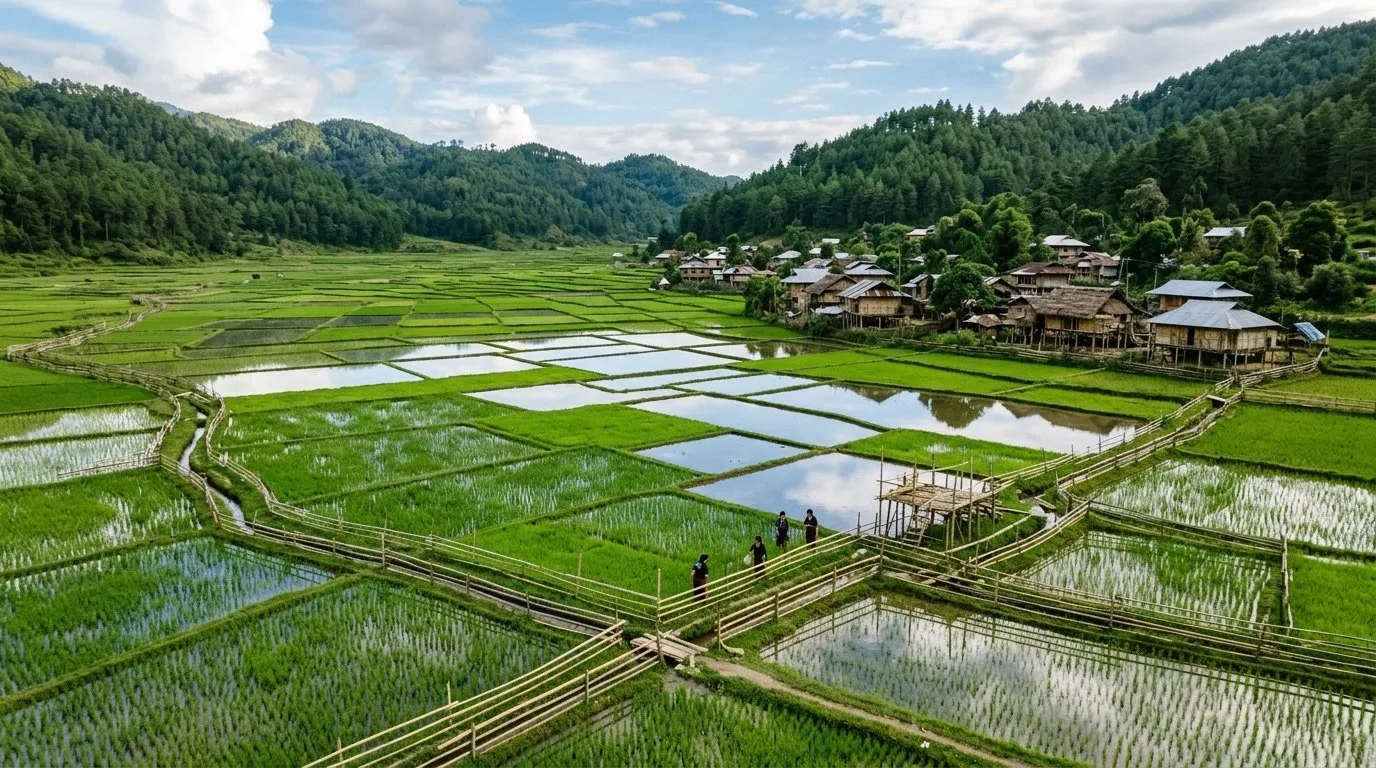
Apatani tribal homeland with UNESCO-nominated rice paddies and the iconic Ziro Music Festival
VERIFIED APR 2026 · ISSUE Nº 48
5 MIN READ·Or skip to the verdict ↓
“Apatani tribal homeland with UNESCO-nominated rice paddies and the iconic Ziro Music Festival”
WHY SPECIAL
The Apatani tribe's living cultural heritage — distinctive nose plugs, facial tattoos, and sustainable wet rice cultivation recognized by UNESCO — makes Ziro unlike anywhere else in India. The annual Ziro Music Festival transforms this remote valley into India's coolest outdoor music gathering every September.
Know before you go
Every month rated on the 0–10 editorial scale. Click any cell to read the month-specific verdict — what to do, what to skip, what crowds you'll meet.
↑ Tap any month for the full read · colours match verdict bands
Read our scoring methodology →
ELEVATION
The Apatani tribe's living cultural heritage — distinctive nose plugs, facial tattoos, and sustainable wet rice cultivation recognized by UNESCO — makes Ziro unlike anywhere else in India. The annual Ziro Music Festival transforms this remote valley into India's coolest outdoor music gathering every September.
Every destination carries trade-offs. The cards below score the practical ones: confidence in the data, kids-suitability, solo-female read, and the emergency floor.
Itanagar 115km, 5-6 hrs
₹₹600-1200 – ₹1200-2500/night
Nearest: Hapoli town center
EV charging: Not available
Pleasant summers 10-20°C at night. Winters drop to 0-5°C.
Hospital: District Hospital Hapoli
Rescue: District administration
Ambulance: 108 limited
BSNL works. Airtel available in Hapoli town. Jio patchy.
KIDS · FAMILY READ
HIGHLIGHTS FOR KIDS
REASONS
CONCERNS
Apatani plateau — Ziro Music Festival (Sep) draws female solo travellers. Apatani homestays (Pine Grove) are vetted. Off-festival, thinner flow.
UNESCO World Heritage tentative site. Apatani tribe with distinctive facial tattoo tradition (now discontinued). Famous for Ziro Music Festival (September). Ask before photographing elders.
Casual, comfortable. Light warm layers. Modest in tribal villages.
Homestays serve excellent Apatani food — rice, fish from paddy fields, bamboo shoot. Limited restaurants. Bottled water.
None — Apatani community is welcoming and honest
Very limited — ATM available in Hapoli but unreliable. Carry cash.
Low to moderate — younger Apatani speak some English. Hindi more useful.
BSNL works in Ziro/Hapoli. Airtel patchy. No Jio.
Kolkata (~1,400km). Guwahati (~500km).
e-Visa for India. ILP MANDATORY — apply online or at Guwahati/Tezpur.
EMERGENCY · SOURCE-VERIFIED
Dense pine and rhododendron forest walks. Bird-watching spot. Paths through sacred groves.
Traditional Apatani settlements like Hong Village. Unique culture with nose plugs and facial tattoos (elderly women).
India's premier outdoor music festival held every September amidst rice paddies and pine forests.
UNESCO Tentative List cultural landscape. Stunning terraced rice paddies of the Apatani tribe.
NEIGHBOURHOODS · WITHIN ZIRO VALLEY
Largest Apatani village — traditional bamboo houses, nose-plugged elders, rice-fish culture
Largest Apatani village — traditional bamboo houses, nose-plugged elders, rice-fish culture
Dense subtropical forest — clouded leopard habitat, orchids, rare birds
Dense subtropical forest — clouded leopard habitat, orchids, rare birds
Terraced rice paddies of the Apatani tribe — UNESCO World Heritage tentative list
Terraced rice paddies of the Apatani tribe — UNESCO World Heritage tentative list
HIDDEN GEMS · 3 NEAR ZIRO VALLEY
Beyond the tourist frontier — no infrastructure, no guides, no foreignersWHY NOBODY KNOWS
Tagin tribal territory at the confluence of two rivers — as far from tourist India as you can drive
A 337 sq km IUCN Category IV reserve ranging 1200-3000m, blanketed in subtropical and temperate broadleaved + conifer forest. Beyond clouded leopards, you have Malayan giant squirrel, northern red muntjac, Asian palm civet, plus rare flora like Panax sikkimensis and Lilium grandiflora. The standard trek is Pange-Talley camp — 6km in, overnight in forest hut, 6km out.
Walk the bunds between rice paddies in Hari, Hong, Hija and Bamin villages. Fish (carp species) are reared in the same flooded plots that grow rice, millet sits on the elevated partition bunds, and mithun dung fertilises everything. Done by Apatanis for ~600 years without external inputs. Best in April (planting) or October (harvest).
OR INSTEAD · NEIGHBOURING READS
How Ziro Valley stacks against the closest alternatives.
WHAT CROWDS LOOK LIKE
Busiest in September (Ziro Music Festival) and October (autumn harvest, peak clarity) — book months ahead. March–May and the cold winter months stay far quieter.
INFRASTRUCTURE · ON THE GROUND
Limited local taxis in Ziro. Most tour logistics via homestay + shared sumos. Guwahati-Ziro by taxi: ₹12,000 one-way (2-day drive). Shared sumos Guwahati-North Lakhimpur-Ziro: ₹700/person. Local village tours arranged via homestay: ₹800–1500/half-day.
Homestays accept arrival any time (flexible + family-run). Arunachal Pradesh ILP is MANDATORY for Indian nationals — apply at arunachalilp.com (₹100, 30-day validity). Foreigners require PAP (Protected Area Permit) in groups of 4+. Apatani culture is respected — remove shoes when entering traditional homes, don't photograph in ritual spaces without permission.
Cash essential. Apatani villages are predominantly cash-only. Homestays accept UPI at major ones but prefer cash. Carry ₹10,000+ per person for 3-day Ziro trip — ATM situation is precarious.
Ziro/Hapoli has 2 ATMs that work ~40% of the time. Stock up cash at Itanagar or Guwahati before arrival.
Hapoli Town shops 9am–7pm. Villages: no formal shops. Homestay kitchens serve meals on schedule — book in advance.
Apatani + Hindi. English at homestays that cater to international travelers. Village elders speak only Apatani — smile + gesture works. Foreigners face language barriers in villages but homestay owners translate.
BSNL is dominant + Jio has coverage in Hapoli town only. Villages have no signal. Most homestays have basic Wi-Fi via BSNL broadband — intermittent. Go to Ziro to disconnect.
HOW TO REACH
AIRPORT
Lilabari (115 km)
RAIL
North Lakhimpur (115 km)
WHERE TO EAT · 5 VERIFIED PICKS
Signature: chicken and egg cooked inside a bamboo tube over open fire
Run by Kago Kampu and Kago Habung as an organic farmstay 2.5km from Hapoli; the kitchen serves food next to the central traditional fireplace. Bamboo-tube chicken here is one of the few places non-Apatani guests can taste an actual Apatani household preparation rather than a restaurant reinterpretation. ₹1500 per person per day includes breakfast + dinner.
Tip: Dinner must be arranged at booking — they cook to headcount, no walk-in. Vegan options available from the garden in summer. No alcohol served except house apong (rice beer).
Signature: cafe-style snack platter
Casual cafe at the Tri-Junction in Hapoli's Centre Point Complex — one of the few year-round cafe-format options in Ziro outside the Ziro Festival of Music week. Listed on Restaurant Guru and Justdial; cafe menu with small meals.
Tip: Hapoli is the upper town (district HQ) — Ziro proper is a 6km drive down. If you're staying in Old Ziro, time your meal for when you're in Hapoli for groceries or permits.
Signature: filter coffee
First-floor cafe opposite Best Bakers on MG Road, Hapoli — one of Ziro's few standalone coffee-shop format venues. Rated 3.8 across 51 Justdial reviews. Casual fast-food + coffee, popular with returning Ziro Festival regulars.
Tip: Wi-Fi is the unannounced reason locals come — for a digital nomad doing email between Ziro sightseeing, it's the most reliable connection in Hapoli outside government offices.
Signature: pike pila fermented bamboo shoot with smoked pork
Punyo Chada runs this homestay in Hong (largest Apatani village, ~10,000 residents) as a sustainable-tourism anchor — meals come from his own organic plot plus neighbours' fish-rice fields. The pike pila preparation here uses a 6-month-fermented bamboo paste, the technique that earned the Apatani agricultural landscape its UNESCO tentative listing in 2014.
Tip: Ngunu means "home" in Apatani. Punyo organises village walks to explain the rice-fish-millet system — combine the walk with a meal to get the most out of either.
Signature: Apatani-style smoked pork
Resort kitchen in Siiro village (one of the seven Apatani villages) cooking proper Apatani-style smoked pork and bamboo-smoked chicken — not the tourist-softened version most hotel kitchens default to. Sticky rice with house-made chutneys is the pairing locals approve of.
Tip: Pre-book the Apatani-style pork at least 4 hours ahead — the smoking is done fresh, not pre-cooked from a hot box. Vegetarians have limited options here; this is a meat-forward Apatani kitchen by design.
WHERE TO SLEEP · EDITOR'S PICKS
Farmstay guesthouse
We recommend this for honest homestay comfort, working fish ponds you can visit, and owners who actually cook from their garden—experience-to-rupee ratio wins here.
Luxury farmstay resort
We recommend this for its commitment to organic farming, Apatani cultural immersion, and design that sits genuinely within the valley's rice-terrace landscape rather than imposing on it.
Mid-tier hotel
We recommend this for its position in Hapoli town center, walkable to Apatani markets, tribal museum, and the weekly Sunday market without needing transport.
Treehouse-style cottage
We recommend this for its elevated timber design that actually reflects Apatani pile-house architecture, offering a stay that teaches you something about the valley's building tradition.
BOOK A STAY · CURATED PROPERTIES
We sit before the booking layer, not beside it — compare prices on the platforms below.
Treks, safaris and day tours — compare on the platforms below.
We don't take payment to feature any destination, stay or operator. Book through a link here and we may earn a small commission, at no extra cost to you. It never affects our scores or recommendations. Editorial policy
FESTIVALS · BY THE MONTH
India's coolest indie music festival set in the Apatani tribal valley. Camping under stars, craft beer, independent artists from across Asia. Intimate crowd, no corporate sponsors.
Hong Village (old Ziro, 7km from new Ziro town) by 8am — Apatani tribal village with traditional bamboo houses. Old Apatani women may still have tattooed faces + nose plugs (practice discontinued 1970s but visible on women 60+). Photography — always ask permission, small tip (₹50–100) appreciated. 90 min.
Siiro Village + Hari Village — similar Apatani cluster villages, quieter than Hong. Lunch at a homestay kitchen (arranged through your accommodation). Apatani cuisine: bamboo-shoot pickle, rice-beer (Apong, offered with respect), smoked fish. No beef (culturally prohibited for Apatanis).
Tarin Fish Farm + Apatani rice-fish fields (the integrated paddy-cum-pisciculture UNESCO-recognized traditional system). Walk the terraced fields with a local guide to understand the unique agricultural heritage. 2 hours. Meghna Cave Temple (10km, Shiva temple in limestone cave).
Ziro Town (Hapoli) — small town with basic shops. Dinner at Siiro Resort or your homestay kitchen.
If weather turns
Ziro monsoon (Jun–Sep) heavy rain — Apatani rice paddies at peak green during this time (secretly the most photogenic season). Winter (Dec–Feb) cold (4–12°C) + often foggy. Indoor fallback: homestay + a book + millet beer.
Tap any traveler type below to see how this place feels for them.
Suitable for families with older kids (10+) who can appreciate tribal cultural depth. Young kids find the long drive exhausting. Apatani homestays are warm + family-friendly. Best: Oct–Mar (dry + cool). Medical: basic PHC in Hapoli; serious cases require Itanagar (5h).
Best for
Apatani culture is among the most intact tribal cultures in South Asia — UNESCO-recognized traditional knowledge (paddy-fish farming), unique facial tattoos (discontinued but visible on elders), matrilineal land inheritance elements. For ethnographic tourism, this is the Arunachal anchor.
Best for
India's most respected outdoor alternative music festival. Set in paddy fields with Himalayan backdrop. International + Indian independent artists. Sep–Oct is the only time to attend; all other Ziro visits are cultural-tourism focused.
Best for
Talley Valley + surrounding Apatani Plateau are Himalayan wildlife hotspots (clouded leopard, black bear, hornbills). Combined with Namdapha (further east, 5h drive) for a serious Arunachal wildlife circuit.
Best for
Ziro is the logical Arunachal second-trip destination after Tawang or Kaziranga. Deeper tribal cultures + less infrastructure + more authentic than Itanagar + Bhalukpong tourist gateways.
ALSO ON NAKSHIQ
Guides
Everything the guidebook won't tell you — written for India in 2026.
Blog
Long-form reads on regions, festivals, and the offbeat circuit.
Road trips
Driving itineraries with day-by-day stops, distance, and difficulty.
Collections
Wettest places. Sacred lakes. Solo-female-safe. Curated cuts.
NakshIQ 100
India's highest-scoring places, ranked across all 12 months.
The Window
One honest spread, every Sunday. The full back catalogue.
Skip list
Overhyped places with honest alternatives.
First trip
Safety, scams, what to wear, food survival, solo female travel.
FEATURED IN COLLECTIONS
The villages that look like they belong in a travel documentary.
Skip the Instagram spots. These are places most Indians haven't visited — raw, quiet, and unforgettable.
Not a zoo. Not a performance. These are communities that welcome visitors on their terms — with homestays, shared meals, and genuine cultural exchange.
Two weeks. Eight states. One circuit. The logical route through India's most underexplored region — what to see, what to skip, and how to not waste time backtracking.
— The NakshIQ editors
TRAVELLERS' VOICE
SHARE YOUR EXPERIENCE
ASK A QUESTION