Brahmaputra Dolphin Watch (Nimati Ghat).
Dolphin spotting isn't marketed — ferry passengers see them by accidentWHY NOBODY KNOWS
Ganges River Dolphins surface near the Nimati-Majuli ferry route — wild dolphins in a river crossing
DISPATCH · ISSUE Nº 48
World's largest inhabited river island — Vaishnavite monasteries, mask-making, and a culture fighting the Brahmaputra.
VERIFIED JUN 2026 · ISSUE Nº 48
4 MIN READ·Or skip to the verdict ↓
“World's largest inhabited river island — Vaishnavite monasteries, mask-making, and a culture fighting the Brahmaputra.”
WHY SPECIAL
Majuli is the world's largest inhabited river island in the Brahmaputra, though it's shrinking due to erosion. The Vaishnavite Satras (monasteries) — Kamalabari, Auniati, Garamur — preserve 500-year-old traditions of dance, music, and mask-making. The Raas Leela festival (November) features masked dance performances. The island's artisans create stunning papier-mache masks of Hindu mythological characters. Ferries from Nimati Ghat (Jorhat) are the only access — 1-hour crossing. The island may disappear within decades due to erosion.
Know before you go
Every month rated on the 0–10 editorial scale. Click any cell to read the month-specific verdict — what to do, what to skip, what crowds you'll meet.
↑ Tap any month for the full read · colours match verdict bands
Read our scoring methodology →
ELEVATION
Majuli is the world's largest inhabited river island in the Brahmaputra, though it's shrinking due to erosion. The Vaishnavite Satras (monasteries) — Kamalabari, Auniati, Garamur — preserve 500-year-old traditions of dance, music, and mask-making. The Raas Leela festival (November) features masked dance performances. The island's artisans create stunning papier-mache masks of Hindu mythological characters. Ferries from Nimati Ghat (Jorhat) are the only access — 1-hour crossing. The island may disappear within decades due to erosion.
Every destination carries trade-offs. The cards below score the practical ones: confidence in the data, kids-suitability, solo-female read, and the emergency floor.
Jorhat — 20km to Nimati Ghat + 1hr ferry.
Road: Island roads are earthen/gravel — muddy in rain.
Public transport: Government ferry from Nimati Ghat. Bicycles best on island.
Self-drive: Vehicles can go on ferry but bicycle is ideal.
₹₹300-800/night — satra guesthouses, basic homestays – ₹1000-2000/night — La Maison de Ananda, better homestays/night
Nearest: Jorhat — before ferry
EV charging: Available
Hospital: PHC Majuli — very basic. Jorhat Medical College — 2hrs (including ferry)
Police: Majuli PS — Garamur area
Rescue: SDMA Assam. In flood emergency, Indian Army assists.
Ambulance: 108 — extremely delayed due to ferry
Helpline: 100, 108
WiFi: Very limited — some guesthouses
Patchy 4G. Works near Kamalabari and Garamur. Dead zones across island. BSNL most consistent.
KIDS · FAMILY READ
HIGHLIGHTS FOR KIDS
REASONS
CONCERNS
World's largest river island + Vaishnavite satras — ferry from Jorhat, community-homestays at Kamalabari (Mishing family-run) are female-safe.
World largest river island and Vaishnavite cultural hub. 22 satras (neo-Vaishnavite monasteries) with living traditions of mask-making, dance, and pottery. Remove shoes at satras.
Modest — especially at satras. Conservative clothing for monastery visits. Casual for cycling around island.
Limited options — homestays and small eateries serve simple Assamese food. Fish and rice staples. Carry snacks. Bottled water essential.
None — Majuli community is deeply spiritual and honest
No — cash only. No reliable ATMs on the island. Withdraw in Jorhat before ferry.
Low — basic English at tourist-facing homestays. Assamese and Hindi more useful.
Very patchy — Jio may work in Kamalabari. BSNL slightly more reliable. Do not depend on signal.
Kolkata (~1,100km). Guwahati (~350km).
e-Visa for India. No ILP needed. Ferry from Nimatighat (Jorhat) — schedule depends on water levels.
EMERGENCY · SOURCE-VERIFIED
Neo-Vaishnavite monasteries founded by Srimanta Sankaradeva. Kamalabari, Auniati, and Dakhinpat satras.
Traditional Assamese mask-making workshop. Watch artisans create elaborate ritual masks from bamboo and clay.
World's largest river island. Cycle through paddy fields, wetlands, and traditional Mising tribal villages.
NEIGHBOURHOODS · WITHIN MAJULI
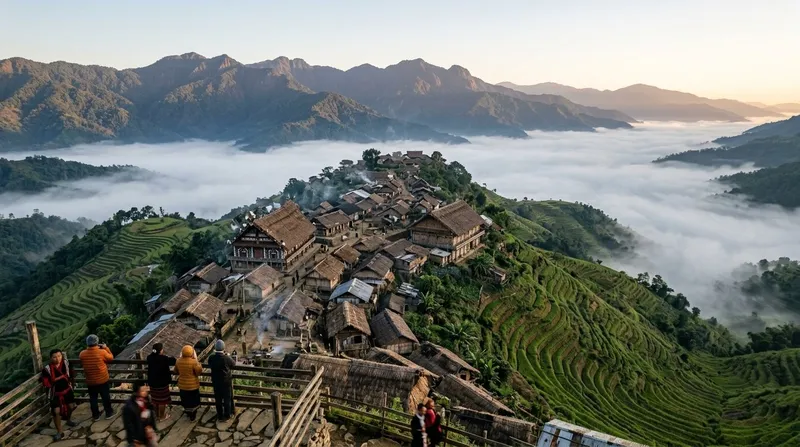
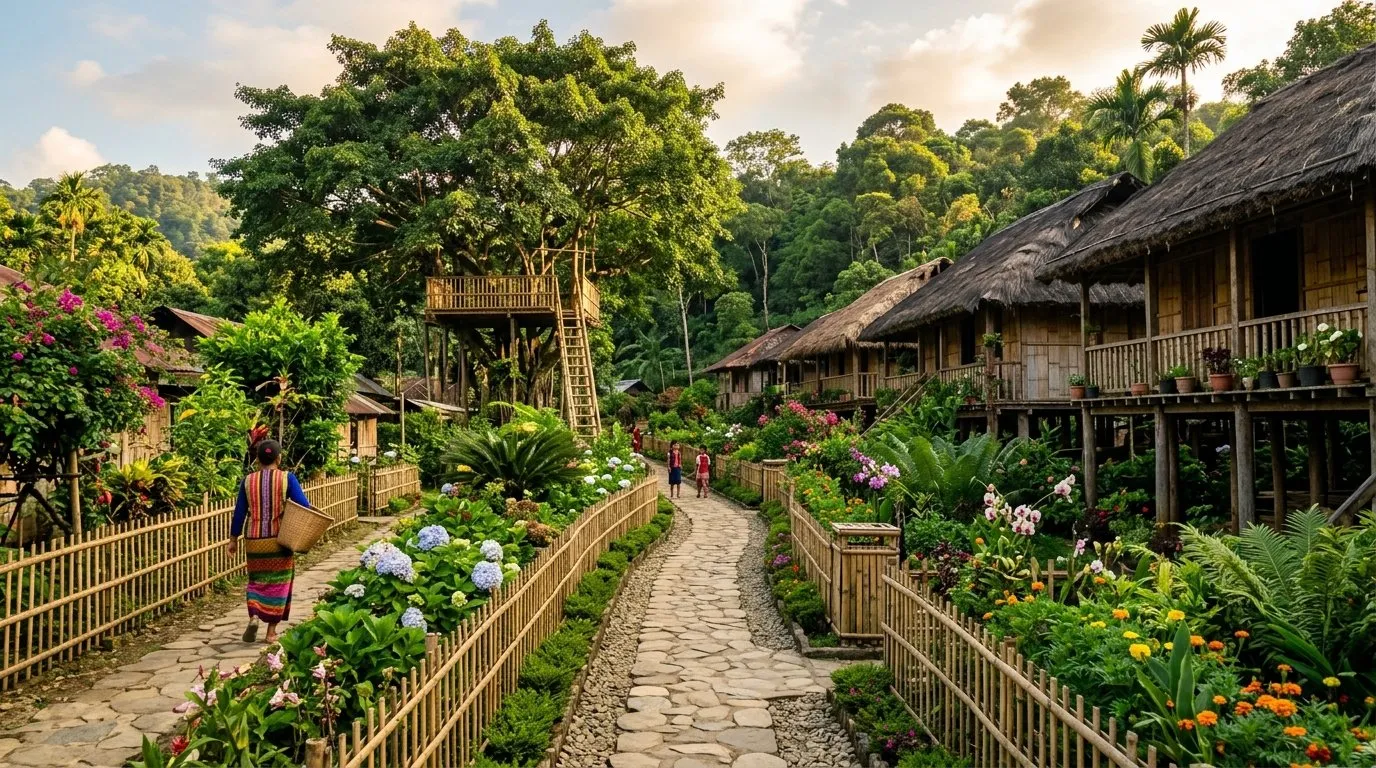
Stilted bamboo houses of the Mishing tribe — rice beer, weaving, river life
Stilted bamboo houses of the Mishing tribe — rice beer, weaving, river life
Artisans create elaborate masks for Raas Leela performances from bamboo and clay
Artisans create elaborate masks for Raas Leela performances from bamboo and clay
500-year-old Vaishnavite monastery — center of Assamese neo-Vaishnavite culture
500-year-old Vaishnavite monastery — center of Assamese neo-Vaishnavite culture
HIDDEN GEMS · 3 NEAR MAJULI
Dolphin spotting isn't marketed — ferry passengers see them by accidentWHY NOBODY KNOWS
Ganges River Dolphins surface near the Nimati-Majuli ferry route — wild dolphins in a river crossing
A working monastery that has kept Sankardev-era mask-craft alive since the 15th century — and is the last satra still actively practising it. The masks (mukha) are built up in layers: bamboo skeleton, jute-cloth skin, river-clay from the Brahmaputra bank, cow-dung paste, sun-dried, then painted with natural pigments. Hem Chandra Goswami — Padma Shri 2023 — has run a mask-making school here since 1984. Visit on a Bhaona performance day (Sankardev's Janmotsav in September) and you'll see them worn in their proper context, not as souvenirs.
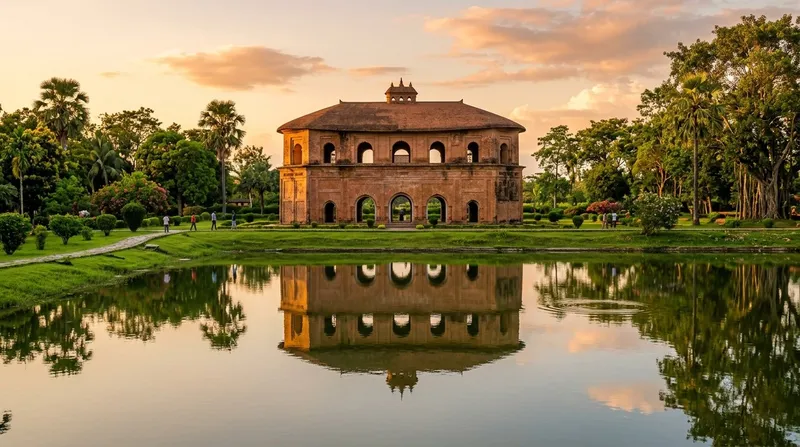
Founded 1653 by Sri Sri Niranjana Deva Goswami under the patronage of Ahom king Jayadhwaj Singha — the same satradhikar who initiated the king into the Vaishnava fold and effectively Sanskritised the Ahom dynasty. Auniati holds a museum of 17th-19th-century Ahom royal artefacts (swords, jewellery, manuscripts on sanchi-bark, sattriya costume). Catch the Kati Bihu evening (mid-October): the satra hoists Akash Bonti — earthen oil lamps on tall bamboo poles raised by pulley — a continuous tradition since 1653.
OR INSTEAD · NEIGHBOURING READS
How Majuli stacks against the closest alternatives.
WHAT A DAY ACTUALLY COSTS
Ferry ₹20 per person. Bicycle rental ₹100-200/day. Mask-making workshops ₹200-500.
WHAT CROWDS LOOK LIKE
Raas Leela festival (Nov) is spectacular but book accommodation weeks ahead. Monsoon floods the island — do NOT visit Jun-Sep.
INFRASTRUCTURE · ON THE GROUND
On Majuli — local taxis + auto-rickshaws limited. Cycles (₹200/day) + scooters (₹500/day) rented from Kamalabari or Garmur are the best. Ferry Jorhat-Majuli: government ferries ₹15/person, private speed boats also available. Ferry timings seasonal — CHECK locally. Vehicle ferry ₹100–200.
Homestays (Ygdrasill, La Maison de Ananda, Me:po Okum Mishing Cottage) accept arrival any time. No permits for domestic tourists. Foreigners: standard Form C registration. Dress modestly at sattras; remove shoes; no photography during ritual prayers.
Cash essential. Majuli has 2 ATMs that work unreliably. Stock up cash at Jorhat. Some homestays accept UPI on BSNL — intermittent.
Majuli has 2 unreliable ATMs. Jorhat has many. Plan cash at Jorhat.
Sattras open 6am–6pm daily. Samaguri mask workshop opens 9am–5pm. Homestays flexible. No formal shops beyond basic provisions.
Assamese + Mishing. Hindi limited. English at homestays catering to tourists. Sattra guides speak Assamese; written pamphlets are multilingual. Foreigners manage via homestay translators.
BSNL dominant. Jio limited to Kamalabari town area. Most homestays have basic BSNL Wi-Fi — functional for email, marginal for video. Go to Majuli for slow disconnection.
HOW TO REACH
AIRPORT
Jorhat (Rowriah) — 20km to Nimati Ghat + ferry
RAIL
Jorhat — 20km to Nimati Ghat
WHERE TO EAT · 5 VERIFIED PICKS
Signature: Assamese Veg Thali
Tripadvisor #1 of 14 Majuli restaurants (4.7) — the only proper sit-down Assamese restaurant on the river island, since most Majuli food infra is homestay-served. Bamboo-themed interior, 9am-10pm seven days, on the road between the ferry ghat (Kamalabari) and Garamur. 'Joha' is the aromatic Assamese rice variety the restaurant takes its name from.
Tip: If you're staying at La Maison de Ananda or Risong Family homestay, the homestay food is more authentic — Joha is the lunch stop between Mishing village visits and the satras (monasteries). Skip cycling to Garamur to find food; eat at Joha en route.
Signature: thalis and chowmein near Garamur Satra
Garamur's reliable thali-and-chowmein stop, on the Kamalabari road three kilometres from the satra. Justdial 4.7, Restaurant Guru 4.4 across 86 reviews — among the first on the island to offer online ordering.
Tip: Order before you head to Garamur Satra for the evening prayer — the wait gets long after 6.30pm when day-tour groups return from the eastern satras. Cash works; UPI patchy.
Signature: Pamnam — chicken or fish steamed in banana-leaf parcels
A Mishing chang-ghor (stilt-house) kitchen run by Monjit and Nayanmoni Risong inside La Maison de Ananda. Walk-in non-residents welcome — they'll set you a low bamboo table on the verandah. Pamnam is the Mishing technique: marinated meat sealed in banana leaf, slow-cooked on charcoal until the leaf chars and the meat is silk. Apong (rice beer) comes in two strains: nogin (clear, sweet) and poro (smoke-aged, stronger). This is among the only places in Majuli where the food is openly tribal Mishing, not pan-Assamese satra-vegetarian.
Tip: Order an hour ahead if you're not a houseguest — pamnam takes that long. Veg thali is ₹100, non-veg ₹300, banana-leaf-cooked pork/chicken adds ₹100. Closes after dinner (8 pm) — Majuli sleeps early.
Signature: Assamese fish-and-rice thali
Garamur's small streetside Assamese kitchen — no English signage, faded paint, plastic chairs. The thali is what every Majuli homestay reproduces, but here it costs a third and you eat with ferry-staff and satra-school teachers. Masor tenga is fresh-river-fish (rohu or borali from the Brahmaputra), khar is genuine alkali-from-banana-ash rather than the hotel-version baking-soda shortcut.
Tip: Lunch 12-2 pm only; weekends busier. Cash-only; no Wi-Fi. If you've just got off the Kamalabari ferry, it's a 12-minute scooter to Garamur Tinali (the three-road junction) where Ural sits.
Signature: local Assamese plates with island produce
Garamur's low-key local-Assamese counterpoint to the Mising-foodway homestay kitchens — good for travellers who want a sit-down meal off the bamboo-house circuit. Featured across Majuli travel writeups and Sluurpy.
Tip: Best for breakfast jolpan (rice flake and curd) before the ferry back to Kamalabari ghat. Don't expect English menus — point and order, and the cook will translate.
WHERE TO SLEEP · EDITOR'S PICKS
homestay
Beda's all-bamboo cottage colony surrounded by paddy and a private bird-pond — see-through bamboo walls, attached bathrooms, the most consistently positive reviews on Majuli. Address: Garamur, Majuli Island, Majuli District 785104, Assam.
homestay
First bamboo cottage on the island, run by Monjit and family in Garamur — the pioneer that taught Majuli homestay tourism, eco-built and meal-included with home-cooked Mising fare. Address: Garamur, Majuli Island, Majuli District 785104, Assam.
character_homestay
Garamur is the operational centre of Majuli — Samuguri Satra 12 km, Auniati 8 km, Kamalabari ferry 6 km. Okegiga puts you inside the village, not on a tourist strip. The build is genuine Mishing (bamboo over mud-and-thatch base), not concrete-with-bamboo-skin. Tripadvisor 4.4 with 50+ reviews and steady 2024-2025 stays. Dipmoina is one of the few women-led homestay hosts on the island.
“Mishing bamboo-and-mud-house cluster on Chitadar Chuk in Garamur — tiny river Kherkuti suti curling through, wooded surrounds, attached bathrooms with hot water, dinner on a low table in the chang-ghor. Owner Dipmoina arranges Majuli circuit tours and books your onward train.”
character_resort
Majuli's lodging is mostly bamboo huts or basic guesthouses; almost nothing sits between rustic and "real hotel". Enchanting Majuli is the answer for travellers who want Mishing food and satra access without an outdoor-bathroom-in-the-rain trade-off. Pick it if you're carrying delicate camera kit, travelling with elders, or you simply value a power-backup that holds.
“Recently built deluxe property — collaboration between the Risong family (of La Maison/Risong's Kitchen) and a Guwahati travel operator. Better-finished rooms than the bamboo-cluster homestays — proper attached bathrooms, fan + light reliable on the island grid — while still serving Mishing thali and arranging satra-circuit guides.”
BOOK A STAY · CURATED PROPERTIES
We sit before the booking layer, not beside it — compare prices on the platforms below.
Treks, safaris and day tours — compare on the platforms below.
We don't take payment to feature any destination, stay or operator. Book through a link here and we may earn a small commission, at no extra cost to you. It never affects our scores or recommendations. Editorial policy
LOCAL LEGENDS · WHO MAKES THIS PLACE
Artisans at Majuli island Satras who create traditional Satriya dance masks from bamboo, clay, and fabric. Each mask takes 7-15 days.
FESTIVALS · BY THE MONTH
A grand theatrical celebration held across 65+ satras of Majuli, showcasing Raas Leela performances that depict Lord Krishna's divine life through Bhaonas (religious plays). Dancers, musicians, and actors from the satras perform with traditional instruments, masks, and artistic costumes, attracting hundreds of thousands of devotees and visitors who are hosted by local families during the 4-5 day festival.
Reach Majuli via ferry from Neamati Ghat (Jorhat, 45 min, ₹15 passenger + ₹100 vehicle). First ferry 6:30am. On Majuli: head to Kamalabari Sattra by 8am (one of 4 active sattras of the original 65; Vaishnavite monastery tradition founded by Srimanta Sankardev 16th century). Morning prayers + bhaktas chanting. 90 min.
Samaguri Sattra — the mask-making sattra, famous for bhaona (dance-drama) papier-mache masks. Watch active mask-making; buy directly from artisans ₹500–5000. Uttar Kamalabari Sattra + Auniati Sattra (Auniati has the royal museum of Ahom artifacts). Lunch at Ygdrasill Bamboo Cottage or traditional Mishing homestay.
Mishing tribal village visit — Majuli has both Assamese Vaishnavite culture + indigenous Mishing tribal culture. Bamboo stilt houses, traditional weaving, rice-beer (apong) offered. Garmur village for a quieter Mishing experience.
Sunset over the Brahmaputra from the northern shore of Majuli. Return ferry from last crossing (typically 4pm winter, 5pm summer — VERIFY locally, do not miss it). Overnight in Jorhat if you miss. Dinner at Jorhat.
If weather turns
Majuli is a river island — monsoon (Jul–Sep) sees Brahmaputra floods, ferries reduced + sometimes cancelled. Summer (Apr–Jun) tolerable. Winter (Nov–Feb) is the peak season with foggy mornings but dry days. If ferry cancelled: you'll stay overnight at Jorhat and re-attempt next day. Homestays on Majuli are flexible — book only when physically arrived.
Tap any traveler type below to see how this place feels for them.
Good for families with kids 10+ interested in cultural depth. Cycling the island is kid-engaging. Mask-making workshops for kids. Avoid monsoon (flood risk + ferry unreliability). Medical: Majuli has basic PHC; serious cases require Jorhat (1h ferry + drive).
Best for
Majuli is the heart of Assamese Vaishnavism founded by Srimanta Sankardev (15th century). The sattra institution + bhaona dance-drama + borgeet music tradition are unique to Assam. Raas Mahotsav (Nov) is the pinnacle religious festival.
Best for
Majuli is officially the world's largest river island (880 sq km at formation, erosion-reduced to ~450 sq km). The Brahmaputra cradles it. For geographical-superlative collectors, Majuli is unique.
Best for
Samaguri Sattra is the world's foremost bhaona mask-making tradition. Papier-mache mask production for ritual drama is centuries old; visitors watch + buy direct from artisans. Paired with Chhau masks (West Bengal/Odisha) it's India's mask-craft pilgrimage.
Best for
Mishing community on Majuli retains stilt-house architecture, matrilineal elements, and indigenous culinary traditions (rice beer, smoked fish). Homestays offer genuine cultural immersion outside the dominant Assamese Vaishnav frame.
ALSO ON NAKSHIQ
Guides
Everything the guidebook won't tell you — written for India in 2026.
Blog
Long-form reads on regions, festivals, and the offbeat circuit.
Road trips
Driving itineraries with day-by-day stops, distance, and difficulty.
Collections
Wettest places. Sacred lakes. Solo-female-safe. Curated cuts.
NakshIQ 100
India's highest-scoring places, ranked across all 12 months.
The Window
One honest spread, every Sunday. The full back catalogue.
Skip list
Overhyped places with honest alternatives.
First trip
Safety, scams, what to wear, food survival, solo female travel.
FEATURED IN COLLECTIONS
Not a zoo. Not a performance. These are communities that welcome visitors on their terms — with homestays, shared meals, and genuine cultural exchange.
You do not have to suffer to travel cheap. These destinations offer clean rooms, solid food, and real experiences for under ₹2,000 per day — midrange comfort, not survival mode. Every price verified against actual 2026 costs.
Two weeks. Eight states. One circuit. The logical route through India's most underexplored region — what to see, what to skip, and how to not waste time backtracking.
ROAD TRIPS THROUGH HERE
— The NakshIQ editors
TRAVELLERS' VOICE
SHARE YOUR EXPERIENCE
ASK A QUESTION