Dzongu.
Restricted area — Lepcha homeland, needs special permit, deliberately kept isolatedWHY NOBODY KNOWS
The Lepcha heartland — hot springs, cardamom plantations, and a tribe fighting to preserve their identity
DISPATCH · ISSUE Nº 47
India's cleanest hill town — monasteries, momos, and jaw-dropping Kanchenjunga views from a state where plastic bags have been illegal since 1998.
VERIFIED APR 2026 · ISSUE Nº 47
6 MIN READ·Or skip to the verdict ↓
“India's cleanest hill town — monasteries, momos, and jaw-dropping Kanchenjunga views from a state where plastic bags have been illegal since 1998.”
WHY SPECIAL
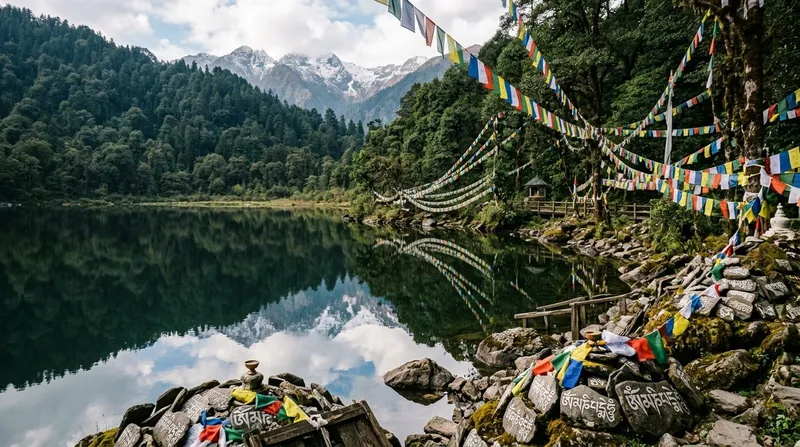
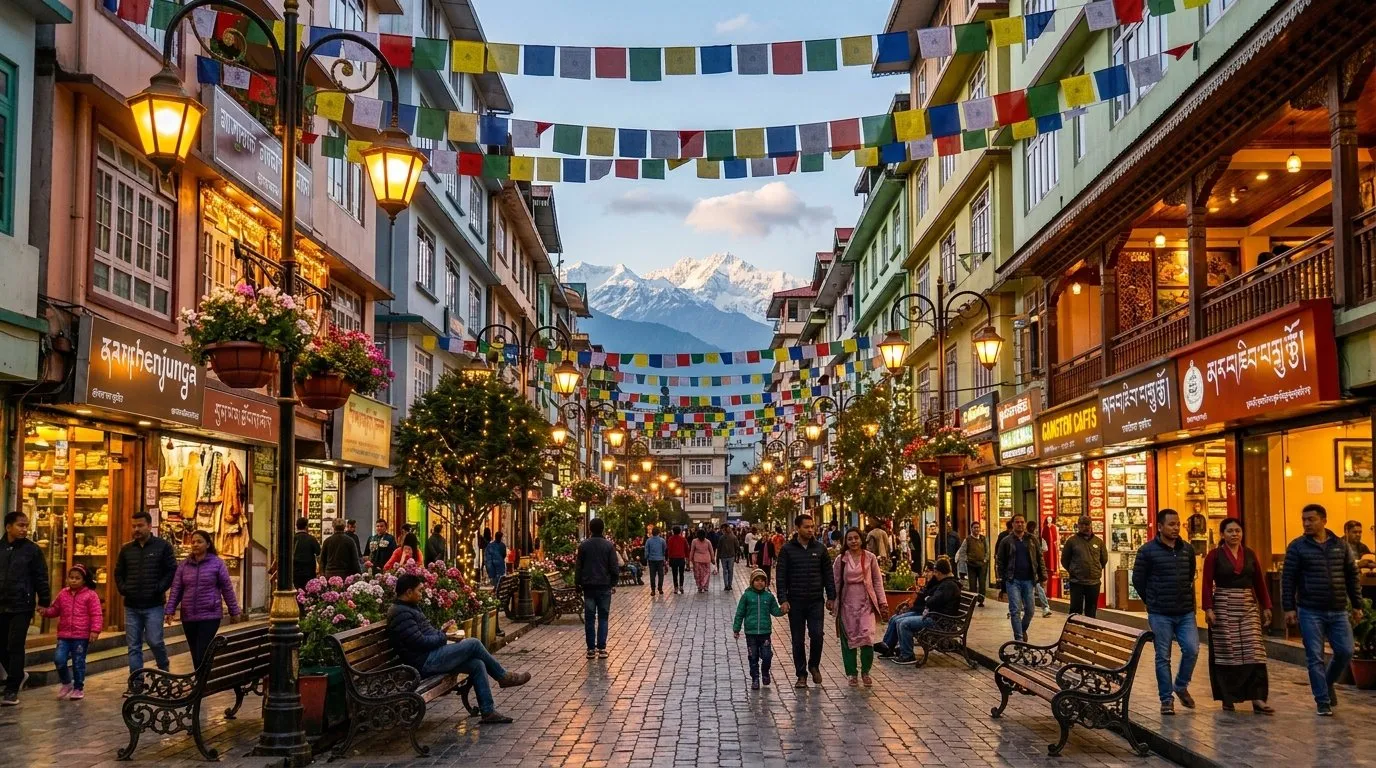
Gangtok is the capital of Sikkim, India's least populated and cleanest state. Rumtek and Enchey monasteries hold their own against anything in Ladakh. MG Marg pedestrian street is one of the best-designed public spaces in India — no vehicles, no touts, you just walk. Nathula Pass (Indo-China border at 4,310m) is a surreal day trip. Tsomgo Lake at 3,753m freezes in winter and mirrors in summer. Permits required for some areas; process is smoother than Ladakh.
Know before you go
Every month rated on the 0–10 editorial scale. Click any cell to read the month-specific verdict — what to do, what to skip, what crowds you'll meet.
↑ Tap any month for the full read · colours match verdict bands
Read our scoring methodology →
DEEP-DIVE READS
ELEVATION
Gangtok is the capital of Sikkim, India's least populated and cleanest state. Rumtek and Enchey monasteries hold their own against anything in Ladakh. MG Marg pedestrian street is one of the best-designed public spaces in India — no vehicles, no touts, you just walk. Nathula Pass (Indo-China border at 4,310m) is a surreal day trip. Tsomgo Lake at 3,753m freezes in winter and mirrors in summer. Permits required for some areas; process is smoother than Ladakh.
Before you decide
Here's what they miss.
At least now you know what's out there.
Every destination carries trade-offs. The cards below score the practical ones: confidence in the data, kids-suitability, solo-female read, and the emergency floor.
Bagdogra Airport — 125km, 4.5hr. NJP Station — 120km, 4hr
Road: NH10 good condition, some sections under repair
Public transport: Shared jeeps from Siliguri/NJP. SNT buses available
Self-drive: Doable but parking difficult in town. Local taxis better
₹₹600-1500/night — homestays near Deorali – ₹2000-5000/night — Hotel Denzong, Chumbi Residency/night
Nearest: Deorali — 2km from MG Marg
EV charging: Available
Hospital: STNM Hospital — central Gangtok, well-equipped
Police: Gangtok PS — near MG Marg
Rescue: SDMA Sikkim — state disaster management
Ambulance: 108 service active in Sikkim
Helpline: 100 (police), 108 (ambulance), 1912 (Sikkim helpline)
WiFi: Hotels and MG Marg cafes have WiFi
Good 4G in Gangtok city. No signal beyond Tsomgo Lake area
KIDS · FAMILY READ
HIGHLIGHTS FOR KIDS
REASONS
CONCERNS
MG Marg is India's cleanest + most female-walkable hill town. No-vehicle zone + CCTV + local women's police. Stay in MG Marg area hotels.
Buddhist culture with strong Tibetan influence. Respectful behavior expected at monasteries — remove shoes, walk clockwise, do not touch prayer wheels anticlockwise.
Modest clothing at monasteries. Warm layers essential year-round at 1,650m altitude.
Safe in established restaurants. Thukpa, momos, and Sikkimese thali widely available. Tap water not safe — drink bottled or filtered.
Minimal — Sikkim has strong governance and is one of India cleanest states
Yes — most hotels, restaurants, and shops in MG Marg accept cards and UPI.
High — Gangtok is the state capital with strong tourism infrastructure.
Jio and Airtel work well in Gangtok. Buy SIM in town with passport + visa copy.
Kolkata (~600km) — US, UK, German, and Japanese consulates.
e-Visa accepted for India entry. No additional permits needed for Gangtok itself.
EMERGENCY · SOURCE-VERIFIED
Pedestrian-only shopping street with local eateries, boutiques, and mountain views. Heart of Gangtok.
200-year-old monastery on a hilltop with views of Kanchenjunga. Hosts the Chaam dance festival.
Giant stupa built in 1945 with 108 prayer wheels around it. One of the most important stupas in Sikkim.
Seat of the Karmapa, largest monastery in Sikkim. Stunning Tibetan architecture with golden stupa inside.
Rich collection of Tibetan Buddhist manuscripts, statues, thangkas, and tapestries. Research library.
Hilltop Hanuman temple maintained by the Indian Army. Closest viewpoint for Kanchenjunga from Gangtok.
Indo-China border pass at 14,140 ft. Open to Indian tourists on Wed-Sun with permit. Historic Silk Route trade post.
Panoramic viewpoint for Kanchenjunga sunrise. On clear days, the entire eastern Himalayan range is visible.
Theme park with waterfalls, caves, and bamboo bridges. Named after traditional Lepcha shamans.
NEIGHBOURHOODS · WITHIN GANGTOK
Car-free promenade — Gangtok's showcase street with cafes, shops, and mountain views
Sikkim's living room — benches, blooms, coffee, and Kanchenjunga peeping above rooftops
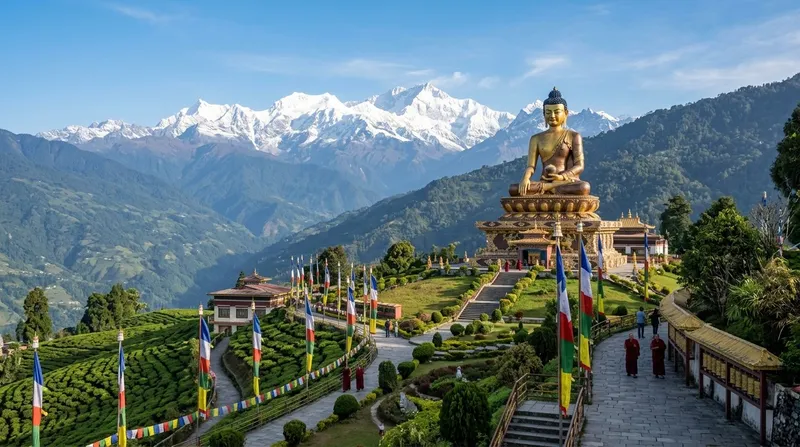
Seat of the Karmapa — largest monastery in Sikkim with a golden stupa housing relics
The most important monastery in Sikkim — Tibetan Buddhist art, golden stupa, monk debates
200-year-old monastery on a hill — Chaam masked dance festival in December/January
Small, authentic monastery without the tourist crowds of Rumtek
Sunrise viewpoint for Kanchenjunga range — the entire eastern Himalayan wall visible on clear days
If the sky is clear, this is where you see the world's third-highest peak from a paved road
HIDDEN GEMS · 3 NEAR GANGTOK
Restricted area — Lepcha homeland, needs special permit, deliberately kept isolatedWHY NOBODY KNOWS
The Lepcha heartland — hot springs, cardamom plantations, and a tribe fighting to preserve their identity
Where the Lepcha and Bhutia tribes signed their blood brotherhood pact — the founding treaty of Sikkim
At 7,200 ft this is the highest viewpoint inside Gangtok municipal limits, with a 270-degree opening onto the Kanchenjunga massif on a clear morning. The temple itself is small and unfussy; the draw is the cremation ground of the Sikkim royal family on the slope below, marked by white chortens of the Namgyal dynasty.
OR INSTEAD · NEIGHBOURING READS
How Gangtok stacks against the closest alternatives.
WHAT A DAY ACTUALLY COSTS
Sikkim is pricier than typical Indian hill stations. Nathula Pass permit ₹200 + vehicle ₹3000-5000. Tsomgo Lake trip ₹1500-3000.
WHAT CROWDS LOOK LIKE
MG Marg gets crowded on weekends. Tsomgo Lake permit queues can be 2+ hours in peak.
INFRASTRUCTURE · ON THE GROUND
Sikkim Taxi Syndicate runs rates. Local Gangtok: ₹2000/half-day. Tsomgo + Nathu La: ₹4500 + permits. Rumtek + local: ₹1800. Bagdogra drop: ₹3000–3500. Shared sumos are the local lifeblood — MG Marg to Pakyong: ₹150/person, to Namchi: ₹200. No Ola/Uber. Self-drive possible but Sikkim mountain roads + fog make local drivers a better choice.
Hotels accept arrival from noon. Sikkim Inner Line Permit is required for ALL visitors at the Rangpo border checkpoint (free, 15-day validity, apply at checkpoint or online). Foreigners need Restricted Area Permit (RAP) for Nathu La/Tsomgo — more complex, tour operator required. Alcohol allowed at hotels; restaurants mix — most serve. Smoking and spitting in public places is fined aggressively.
UPI works throughout Gangtok on Jio/Airtel. Card + UPI widely accepted at MG Marg establishments. Rumtek + Tsomgo: cash only. Monastery donations cash. Carry ₹5000 per person for day trips.
Gangtok has 10+ ATMs on MG Marg and around Paljor Stadium. SBI, HDFC, Axis all reliable. Tsomgo/Nathu La: no ATMs, cash-only.
MG Marg open 10am–8pm. Lall Bazaar 7am–7pm. Sundays: Lall Bazaar reduced, MG Marg normal. Monasteries typically 6am–6pm. Namgyal Institute Mon–Sat 10am–4pm (closed Sundays).
Nepali is the dominant language, Hindi widely spoken, English universal in tourist areas. Bhutia + Lepcha + Tibetan among indigenous communities. Foreigners face zero barriers; hotel and tour operators all speak good English.
Jio is the most reliable in Gangtok. Airtel works. BSNL is slow but covers remote Sikkim valleys better than Jio. Most hotels have Wi-Fi — decent quality. Higher elevations + north Sikkim have very limited connectivity.
HOW TO REACH
AIRPORT
Bagdogra — 124km
RAIL
New Jalpaiguri (NJP) — 148km
WHERE TO EAT · 8 VERIFIED PICKS
Signature: Sikkimese thali
The most-cited address in Gangtok for traditional Sikkimese-Nepali cooking — name means 'invitation' in Nepali. Interiors use traditional earthen pots and stoves; the kitchen runs nakimo ka torkari, sandheko, mutton pakku and the buckwheat-rice-millet Sikkimese thali that most tourist menus skip.
Tip: Order the Sikkimese thali over the multi-cuisine menu — it's the only place around MG Marg where you'll get gundruk, sinki and churpi pisyako together on one plate. Reserve for dinner; 62 seats fill quickly.
Signature: pork shafalet
Founded as a three-table place called Tashi Restaurant on Tibet Road; renamed Taste of Tibet when it moved to MG Marg in 1999. Run by the Dhoundup family — the mother chose the name to anchor the menu in Tibetan staples (momo, thenthuk, bhakthuk). Reopened as a 108-seat two-floor space in June 2025.
Tip: It's on the second floor — easy to walk past. Order the pork shafalet (deep-fried Tibetan pastry filled with minced meat) and the flat thenthuk noodles; the steamed pork momos arrive faster than the chicken.
Signature: Tibetan gyakok hotpot
Hotel Tibet is owned and run by the Federation of Tibetan Cooperatives (Nyamdel) — proceeds support the Tibetan refugee community. The Snow Lion restaurant inside serves Tibetan dishes (gyakok hotpot, phing, tingmo) alongside Indian and Chinese. One of the few places in Gangtok where Tibetan home-style cooking is the headline.
Tip: Ask for the gyakok hotpot — it needs 30 minutes' notice, but it's the only proper Tibetan hotpot service on MG Marg. The decor is heavily Tibetan-thangka — ask for a window table for the valley view.
Signature: fresh-baked croissant
The MG Marg flagship of Gangtok's most-recognised café chain — outlets at Lal Bazaar, Deorali and Tadong all run off the same kitchen template. First-floor balcony tables overlook the pedestrianised promenade; opens 9am for breakfast tourists heading to North Sikkim or Nathula.
Tip: Croissants come out of the oven around 9.30am — go before 10am for the freshest batch. The mud cake is the locals' order, not the touristy chocolate truffle.
Signature: live-music dinner platter
The closest thing Gangtok has to a proper live-music bar — local bands play Wed/Thu/Fri nights, DJs Fri/Sat. One of the few kitchens in town that serves until 11.30pm in a city that mostly shuts at 9. Canopied deck seating for families away from the stage volume.
Tip: Walk in by 7.30pm on a band night — by 9pm the floor is full and there's no list. Ask for the deck if you want to talk; the indoor section gets loud once the set starts.
Signature: masala dosa
Pure-veg multi-cuisine on MG Marg — the default lunch stop for Marwari, Gujarati and South Indian travellers who want a familiar plate before heading into the Sikkimese-Tibetan menus elsewhere. Open 10am-10pm, ₹600-1000 for two.
Tip: South Indian arrives faster than the North Indian thalis. If the queue at the entrance is long, the takeaway counter on the side serves the same kitchen with no wait.
WHERE TO SLEEP · EDITOR'S PICKS
Mid-Tier Hotel
We recommend Nor-Khill for its position on MG Marg—Gangtok's main bazaar—meaning morning walks to cafés, shops, and the market happen naturally without taxis.
Monastic Guesthouse
We recommend staying in the guesthouse attached to one of Sikkim's oldest monasteries (1717)—you wake to chanting, attend prayer rituals, and eat vegetarian meals in a functioning spiritual community.
Heritage Hotel
We recommend The Elgin for its colonial architecture, afternoon tea service, and working knowledge of Sikkim's trekking routes—the kind of property that justifies splurging for a slower stay.
Homestay
We recommend this for travellers who want a local Sikkimese family's kitchen, kitchen access, and honest conversation about the region at a third of hotel rates.
BOOK A STAY · CURATED PROPERTIES
We sit before the booking layer, not beside it — compare prices on the platforms below.
Treks, safaris and day tours — compare on the platforms below.
We don't take payment to feature any destination, stay or operator. Book through a link here and we may earn a small commission, at no extra cost to you. It never affects our scores or recommendations. Editorial policy
LOCAL LEGENDS · WHO MAKES THIS PLACE
Sikkimese driver-guide who makes the standard Tsomgo-Nathula trip actually interesting. Buddhist by birth, knows every monastery story. His wife packs lunch — momos and thukpa in a tiffin that beats any restaurant.
FESTIVALS · BY THE MONTH
The Tibetan New Year is celebrated across Gangtok with monastery rituals, Cham dances, traditional food, and community gatherings.
Tibetan Buddhist New Year — masked Cham dances at monasteries, ritual offerings, butter sculptures, community feasting, and monastery rituals across Sikkim and Arunachal.
The holiest month in the Tibetan Buddhist calendar. Monastery pujas, sacred Cham dances, circumambulation of sacred peaks, and the dramatic unfurling of the Thangka at Rumtek.
The holiest Buddhist festival marking Buddha's birth, enlightenment, and parinirvana. Devotees circumambulate monasteries and release caged birds.
A grand festival unique to Sikkim celebrating the guardian deity Kanchenjunga with the spectacular Warrior Dance performed by monks in elaborate costumes.
Real experiences by traveler type — not generic star ratings
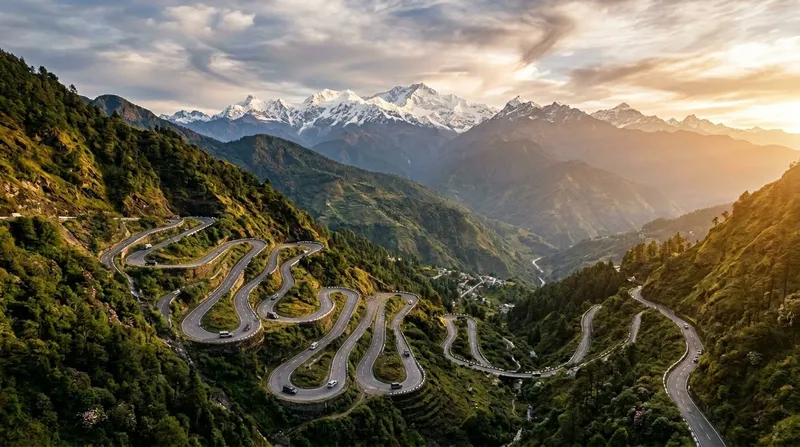
MG Marg at night with the lights and the mountain chill — perfect for an evening walk together. The Rumtek Monastery drive through the winding roads was scenic. Tsomgo Lake is beautiful but the Nathula Pass trip was the real highlight — standing at the India-China border together.
💡 Tip: Apply for Nathula Pass permit through a registered tour operator at least 2 days in advance. Indian nationals only — foreigners cannot visit.
Gangtok is clean, organized, and surprisingly affordable. Rs 400 rooms near MG Marg. The food scene is Tibetan-heavy — momos and thukpa on every corner. The shared jeep to Tsomgo Lake is Rs 400 return. Pelling is the better backpacker base for West Sikkim treks.
💡 Tip: Skip the packaged Gangtok sightseeing tour. Hire a shared cab to Tsomgo and Nathula — same places, half the price, your own pace.
Kanchenjunga at sunrise from Tashi Viewpoint — if the clouds cooperate, it is magnificent. The prayer flags at Enchey Monastery against clear blue sky make a strong composition. MG Marg at blue hour with the clean lines and mountain backdrop is unexpectedly photogenic.
💡 Tip: Hanuman Tok viewpoint at dawn. Less known than Tashi, higher altitude, better angle on Kanchenjunga, and almost empty.
Sikkim is one of the safest states in India for women. The culture is respectful and the streets feel secure at all hours. MG Marg is pedestrian-only and well-lit. The locals are friendly but not intrusive. Did the Tsomgo-Nathula day trip with a shared group — comfortable and fun.
💡 Tip: The women-run homestays in Gangtok are excellent. Search for them specifically — they offer a more intimate cultural experience.
Start MG Marg by 9am — Sikkim's pedestrian-only boulevard with flower beds and benches. Spotless (Sikkim is India's first 100% organic state + Gangtok is no-smoking + no-spitting enforced). Breakfast at Baker's Cafe or Roll House. Walk to Tashi viewpoint (1km, 20min walk or ropeway) for Kanchenjunga views on clear mornings.
Rumtek Monastery (24km, 1h drive) — seat of the 16th Karmapa + the Dharmachakra Centre. Extensive complex, 60 min minimum. Return via Ranka Monastery if time permits. Lunch at Tibet Restaurant (near Tsuglakhang Palace) — thukpa, momos, butter tea.
Enchey Monastery + Ganesh Tok viewpoint (both on the ridge above town). Himalayan Zoological Park (red pandas, Himalayan wolves, snow leopards) — closed Mondays, open 9am–4pm.
MG Marg evening stroll — street musicians, fairy lights, stupa at the south end. Dinner at 9'INE Restaurant (Nepali fusion) or The Square (rooftop with views).
If weather turns
Gangtok's fog + rain (Jun–Sep monsoon) can close Tsomgo Lake, Nathu La, and higher excursions for days. Fallbacks: MG Marg + Rumtek + Enchey all work in rain. Namgyal Institute of Tibetology is an indoor winner — Tibetan artifacts + manuscripts + library of 70,000 volumes. Do Drul Chorten stupa is also quick + indoor-ish.
Tap any traveler type below to see how this place feels for them.
Excellent. Sikkim is India's cleanest, most organized mountain state. Gangtok itself is kid-safe, pedestrian-friendly MG Marg, good medical infrastructure (Central Referral Hospital). Himalayan Zoo is a winner. Tsomgo Lake day trip is doable for kids 10+. Avoid Nathu La for kids under 14 — 4310m altitude.
Best for
Rumtek is the seat of the 16th Karmapa — one of the most important Kagyu-lineage monasteries outside Tibet. Pemayangtse, Tashiding, Enchey, Phensang — Sikkim has 200+ active monasteries. For Kagyu/Nyingma Buddhism, Sikkim is the Indian pilgrimage.
Best for
Sikkim has the best tourism infrastructure in the Northeast — safer, cleaner, more English-friendly, more organized than Arunachal or Nagaland. A perfect Northeast starter: Gangtok + Pelling + Yuksom in a week covers the essentials with zero friction.
Best for
Pelling (West Sikkim) and Tashi Viewpoint (Gangtok) both deliver Kanchenjunga views — arguably better-framed than Tiger Hill from Darjeeling. Sikkim is culturally + spatially closer to the mountain.
Best for
Sikkim is India's first fully organic state (2016) + has enforced plastic bans + has the highest forest cover among Indian states. For travelers who want to see environmental policy actually working, Sikkim is the case study.
ALSO ON NAKSHIQ
Guides
Everything the guidebook won't tell you — written for India in 2026.
Blog
Long-form reads on regions, festivals, and the offbeat circuit.
Road trips
Driving itineraries with day-by-day stops, distance, and difficulty.
Collections
Wettest places. Sacred lakes. Solo-female-safe. Curated cuts.
NakshIQ 100
India's highest-scoring places, ranked across all 12 months.
The Window
One honest spread, every Sunday. The full back catalogue.
Skip list
Overhyped places with honest alternatives.
First trip
Safety, scams, what to wear, food survival, solo female travel.
FEATURED IN COLLECTIONS
30 legendary dhabas on every major highway across North India. Real names, real dishes, real ratings — from Murthal to Chitkul, Yamuna Expressway to Manali-Leh.
The ₹5,000/day tier unlocks the best of North India without the luxury price tag. Good hotels, guided experiences, comfortable transport, and restaurant meals — the tier where you stop counting and start enjoying.
Kolkata is the gateway to the Eastern Himalayas, the Sundarbans mangroves, and Bengal's cultural heartland. Within 8 hours, you can reach tea estates, tiger territory, or the most peaceful town in India.
Buddhist monasteries that have survived centuries. Each holds living traditions.
Places with solid infrastructure, welcoming locals, active tourism presence, and reliable connectivity — tested and trusted by women who travel alone.
ROAD TRIPS THROUGH HERE
— The NakshIQ editors
TRAVELLERS' VOICE
SHARE YOUR EXPERIENCE
ASK A QUESTION