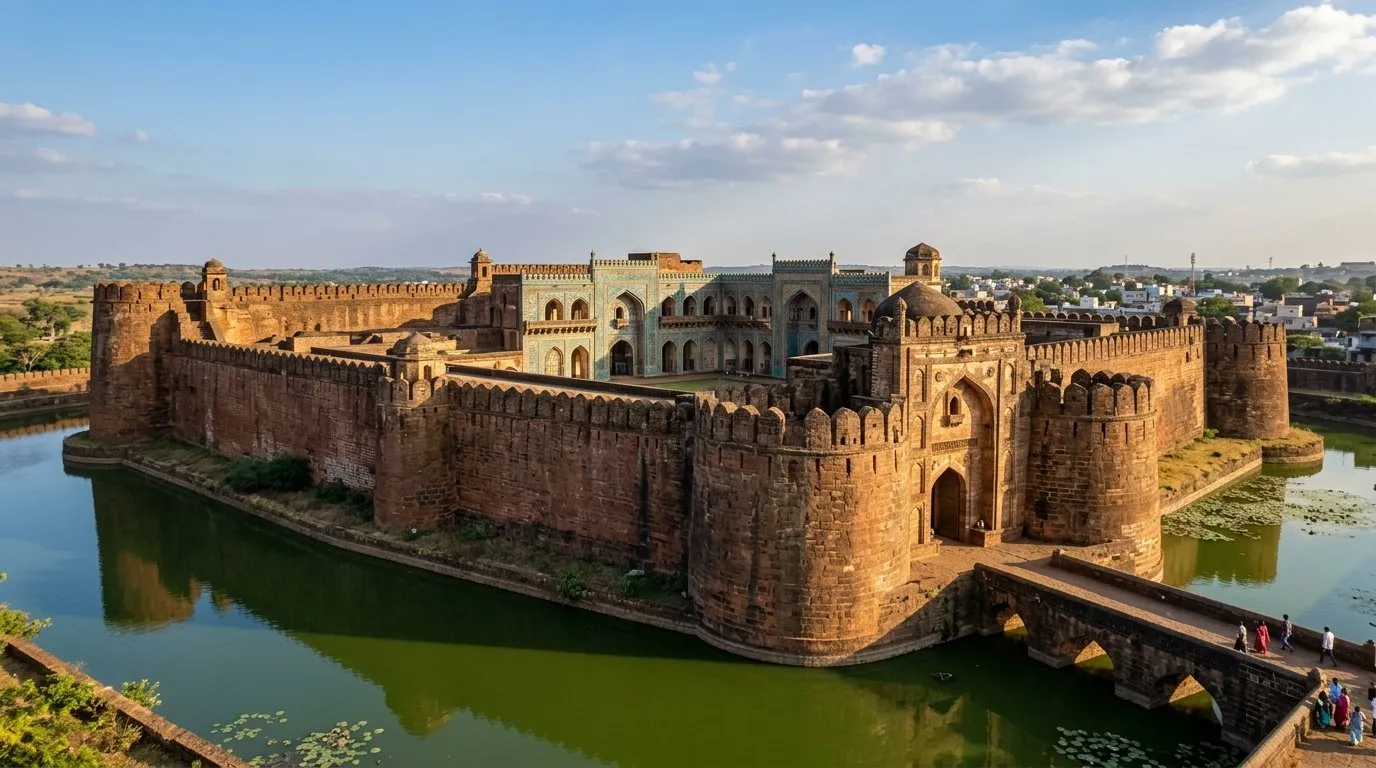
Madarasa of Mahmud Gawan.
Tourists clear the Bidar Fort and Rangin Mahal, then head to the Bahmani Tombs — the Madarasa sits inside the old city walls on the route between fort and bazaar but ASI signage is minimal. The ruined east minaret (struck by lightning in 1696 and never rebuilt) makes it look "less impressive" from the road, so most day-trippers don't enter.WHY NOBODY KNOWS
Built 1472 by Mahmud Gawan, the Persian-born prime minister (wazir) of the Bahmani Sultanate — modelled on the great Islamic colleges of Khurasan (Iran) and Samarkand. Three storeys tall with a 33m surviving minaret in deep-blue Persian tilework — one of only two structures in India built in the Timurid (Persian) architectural tradition. Housed a 3000-volume library and accommodated 100 students and teachers. ASI-protected; entry free, open sunrise-sunset. The west minaret tiles are 80%+ intact; the cellar (still locked) once held the library. Best photographed 7-9am for east-light on the surviving tilework.